Correct Method for Applying Evodia rutaecarpa to the Sole of the Foot and How to Tell Genuine from Fake
Evodia rutaecarpa warms the middle, relieves pain, regulates qi, and dries dampness; it treats vomiting and acid regurgitation, Jueyin headache, cold-related vomiting and diarrhea, epigastric and abdominal distension and pain, menstrual abdominal pain, diarrhea before dawn, hypertension, beriberi, hernia, mouth ulcers, toothache, eczema, and impetigo. Below, let us look at the method for applying Evodia rutaecarpa to the sole of the foot and how to identify genuine vs. fake Evodia rutaecarpa.
I. Applying Evodia rutaecarpa to the Sole of the Foot
1. Buy Evodia rutaecarpa at the pharmacy and have it ground into powder.
2. Take 3 grams of Evodia rutaecarpa (use a small spoon for eating yogurt, one level spoonful), and mix it with good vinegar into a paste.
3. Divide it into two portions and apply them to the soles of the feet (Yongquan acupoint), then fix them in place with adhesive tape.
4. Change the medicine once every three days. Cold feet are caused by qi and blood failing to descend; while tonifying the spleen and stomach to strengthen qi and blood, you should also open the meridians to let qi and blood descend. In his book, Zhongli describes a three-step method for "guiding qi and blood downward," namely pushing the abdomen, kneeling, and standing on one leg like a golden rooster.
II. Identifying Genuine vs. Fake Evodia rutaecarpa
Evodia rutaecarpa is the unripe fruit of the Rutaceae plant Evodia rutaecarpa. It is warm in nature, pungent and bitter in taste, and toxic. It has the effects of warming the middle, relieving pain, regulating qi, and drying dampness, and is used to treat vomiting and acid regurgitation, Jueyin headache, cold-related vomiting and diarrhea, epigastric and abdominal distension and pain, mouth ulcers, toothache, hernia, beriberi, eczema, and impetigo, among other conditions. It is a commonly used medicine for relieving stagnation, transforming stagnation, expelling cold, and directing qi downward. On the market, the unripe or nearly ripe fruit of the same-family plant Evodia daniellii is used to pass off as Evodia rutaecarpa, so attention should be paid to identification when using it.
1. Genuine Evodia rutaecarpa
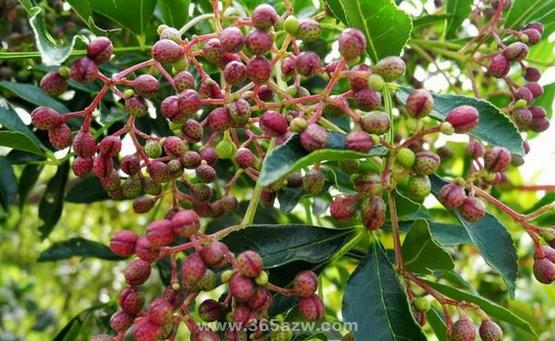
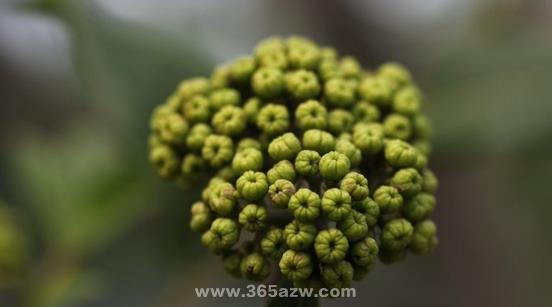
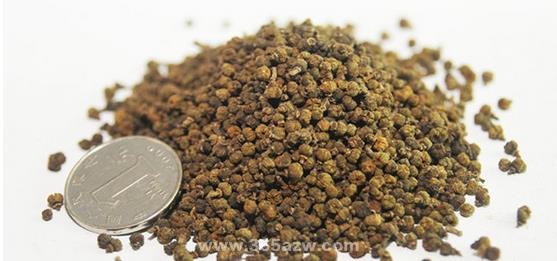
The appearance is five-ridged, flattened spherical, 2-5 mm in diameter, about 1.5-3 mm high, with a green or greenish-brown surface, rough, with fine wrinkles and bristle-like eyes (scientifically called oil chambers); the top is flat and truncate, with a concave hollow and 5 cracks in the middle, sometimes with a protruding stigma remnant in the center of the cracks; the base has a calyx and fruit stalk, the fruit stalk is square-rounded, about 3 mm long, brownish-green, densely covered with hairs; the cross-section shows 5 locules in the ovary, each with 1-2 pale yellow seeds; the seeds are oily, hard, and easily broken; it has a strong aroma when smelled, and tastes bitter and slightly pungent when chewed.
2. Fake Evodia daniellii
The appearance is star-shaped and flattened spherical, 4-8 mm in diameter, slightly larger than the genuine product, mostly composed of 4-5 separate follicles, with a brown or dark brown surface, also rough, with wrinkles, but the protruding oil dots are not as obvious as in genuine Evodia rutaecarpa. The top is deeply split in a plum-blossom shape, and the fruit stalk has few hairs; the cross-section also shows 5 locules in the ovary, each also with 1 seed, but it is oval and dark brown, with raised wrinkles on the seed; it has no strong aroma when smelled, but has a peculiar odor, and tastes bitter but not pungent when chewed. Modern pharmacological studies show that Evodia rutaecarpa decoction has a strong inhibitory effect on Vibrio cholerae; a 10% water infusion has varying degrees of inhibitory effect on 11 kinds of dermatophytes including Epidermophyton floccosum; its extract can excite the central nervous system, has relatively good analgesic and hypnotic effects, and can increase carotid artery blood flow, enhance the action of adrenaline, increase the excitability of spinal reflexes, relax small intestinal smooth muscle, increase striated muscle tension, and also has a significant anthelmintic effect against roundworms; although the fake Evodia daniellii is a same-family plant, it does not have these effects, so it cannot be used as a substitute for Evodia rutaecarpa medicinally.
III. Proven Prescriptions of Evodia rutaecarpa for Treating Illness
1. For deficiency-cold stomach pain
Use 6 grams of Evodia rutaecarpa, 15 grams of fresh ginger, 12 grams of ginseng, and 5 jujubes, and take them decocted in water.
2. For cold hernia
It is often combined with honey-processed costus, fennel, Sichuan chinaberry, and Corydalis yanhusuo.
3. For damp beriberi due to cold-dampness stagnation
Seven areca nuts, 30 grams of dried tangerine peel, 30 grams of papaya, 6 grams of Evodia rutaecarpa, 15 grams of Platycodon grandiflorus, 15 grams of fresh ginger, and 9 grams of perilla, ground into powder.
4. For diarrhea before dawn caused by deficiency-cold of the spleen and kidneys
Use 120 grams of Psoralea corylifolia, 120 grams of Evodia rutaecarpa, 60 grams of nutmeg, and 60 grams of Schisandra chinensis, made into pills.
5. For stomach cold with vomiting and acid regurgitation
Evodia rutaecarpa and blast-fried ginger, 9 g each, ground into powder, 3 g each time, taken mixed with water.
6. Eczema
Evodia rutaecarpa 30 g (fried), cuttlefish bone 20 g, sulfur 6 g, ground together into a fine powder for later use. If the affected area has much exudate, sprinkle the dry powder; if there is no exudate, mix it with castor oil or melted pork fat and apply, once every other day, and bandage with gauze after applying the medicine.
7. Cold dysentery
Evodia rutaecarpa 6 g, ground into powder, mixed with yellow rice wine, and applied to the navel.
8. Insomnia due to disharmony between the heart and kidneys
Evodia rutaecarpa 9 g, ground into powder, mixed with rice vinegar and applied to the soles of the feet.
9. Dysmenorrhea (cold-coagulation and blood-stasis type)
Cinnamon 10 g, Evodia rutaecarpa 20 g, fennel 15 g, ground together into a fine powder, mixed with wine and applied to the navel, fixed with adhesive tape, then place a hot water bag on top to warm it.
10. Cold pain in the epigastrium and abdomen
Evodia rutaecarpa 5 g, dried ginger 6 g, costus and dried tangerine peel 9 g each, decocted in water and taken.
11. Deficiency-cold of the spleen and kidneys, diarrhea before dawn
Evodia rutaecarpa 5 g, nutmeg 6 g, Schisandra chinensis and Psoralea corylifolia 9 g each, decocted in water and taken.
12. Ulcerative stomatitis
Mix Evodia rutaecarpa powder with an appropriate amount of vinegar into a paste, place it on a clean cloth, and wrap it separately on both Yongquan acupoints and around them, then remove after one day.
13. Stomach duct pain
Evodia rutaecarpa 15 g, ground into powder, mixed with vinegar and applied to the navel.
14. Hypertension
Evodia rutaecarpa 10 g, a small amount of vinegar. Mix Evodia rutaecarpa with vinegar, apply it to the Yongquan acupoint on the foot, and change it once a day.