How to grow a Bodhi tree (Ficus religiosa): repot once every two years
The Bodhi tree (Ficus religiosa) is a large tree of the mulberry family (Moraceae). It is a tree full of Buddhist spirituality and wisdom. In its seedling stage it can be grown as a potted plant, often used to accent living rooms, studies and the like, and it can also be planted in courtyards, adding a touch of mystery, solemnity and holiness to the home.
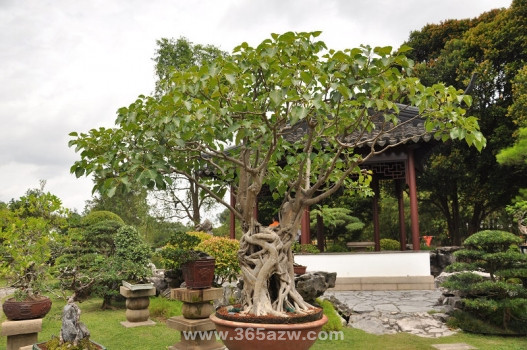
How to grow a Bodhi tree (basic knowledge)
1. Potting: For a home potted plant, use garden soil, leaf mold and coarse sand mixed in a 5:3:2 ratio as the growing medium, and add a small amount of cake fertilizer powder as a base fertilizer, applied at 1/20 of the potting soil. Before planting, place plenty of broken tile pieces in the bottom of the pot to aid drainage; for courtyard planting, choose fertile soil or a loose, slightly acidic sandy loam. When potting, be careful not to damage the seedling roots.
2. Watering: The Bodhi tree grows fastest above 20°C, and at this time its water demand is high, so the potting soil must always be kept moist, following the principle of watering when dry and letting it dry out between waterings. In midsummer, besides ensuring the water supply, mist the leaves frequently. After the temperature drops in late autumn, gradually reduce watering.
3. Fertilizing: Apply a dilute cake fertilizer solution about once every 15 days. Stop fertilizing in midsummer and when the temperature is below 12°C.
4. Temperature: The optimum growing temperature is 15-25°C, but a room temperature above 5°C is enough for normal growth. A lower room temperature can keep the flowering period going longer, but the flowers open slowly; a higher room temperature makes the flowers open quickly, but the flowering period is short.
5. Light: It is best placed in a bright spot such as a window or balcony, and the position of the pot should be changed frequently. Plenty of light makes the flowers more vivid and the leaves more glossy. Although it is a relatively shade-tolerant plant, long-term insufficient light easily causes the leaves to turn yellow and drop.
6. Pruning: Pruning can be done in winter to keep the tree shape attractive.
7. Pest and disease control: Potted plants rarely suffer from pests or diseases. When planted in the ground in a courtyard, it may be affected by leaf spot disease; in the early stage of the disease, spray Bordeaux mixture once every 15 days, for 2-3 times in a row.
Growing a Bodhi tree: raising seedlings
The common methods of raising Bodhi tree seedlings are sowing and cuttings; the specific steps are below.
Growing seedlings by sowing
1. Seed collection requirements: Choose a vigorous mother plant more than 10 years old, and collect the seeds when the fruit ripens and turns red-black; 2. Seed treatment: Rub the collected fruit repeatedly, remove the flesh, skin and debris to take out the seeds, and sow them after drying them slightly; 3. Sowing method: Generally broadcast sowing on a sand bed is used. Before sowing, press the bed surface down slightly with a small wooden board and level the bed surface, then scatter the seeds evenly over the bed surface. When sowing, avoid letting the seeds overlap into small clumps; try to spread every seed on the bed surface, then sift a thin layer of fine soil over the seeds with a fine sieve, just enough to cover the seeds; 4. Care after sowing: After sowing, use rice straw or a shade net to build a shade shed to reduce water evaporation from the seedbed and keep the bed surface moist. At the same time, scatter ant-killing powder and the like around the sand bed to prevent the seeds from being damaged by ants, mole crickets and so on when they sprout; 5. Management after sprouting: Bodhi tree seeds have no dormancy habit, and about 10 days after sowing they sprout and emerge. When about half of the seeds have sprouted one after another, remove all the rice straw, provide proper shade, and water thoroughly every morning and evening. When the seedlings reach 2-4cm, transplant them into 10cm x 12cm nutrition bags already filled with soil (surface soil with a fairly high humus content) to grow on, and take good care of them; when the seedlings reach 30-50cm, they can be transplanted.
Growing seedlings by cuttings
1. Selecting cuttings: In spring or autumn, choose a vigorous mother plant 8-15 years old, select branches with plump axillary buds from the mother plant, and cut semi-lignified sections about 15cm long as cuttings (about 0.5-0.8cm in diameter) for propagation by cuttings;
2. Cutting requirements: The cutting depth is about 3cm; after cutting, build a small arched frame covered with white plastic film;
3. Care after cutting: After cutting, provide proper shade and keep it ventilated and airy, and water several times a day to maintain the relative humidity of the soil and air (if conditions allow, timed mist spraying can be used). Spray the cuttings every 7 days with a 0.125%-0.2% solution of a broad-spectrum fungicide (chlorothalonil, carbendazim, etc.) to prevent the cuttings from rotting under high temperature and high humidity;
4. Transplanting time: The cuttings root in about 10 days, and can generally be transplanted at 20 days, but be careful to keep the soil ball around the roots, as this can increase the survival rate of the seedlings.
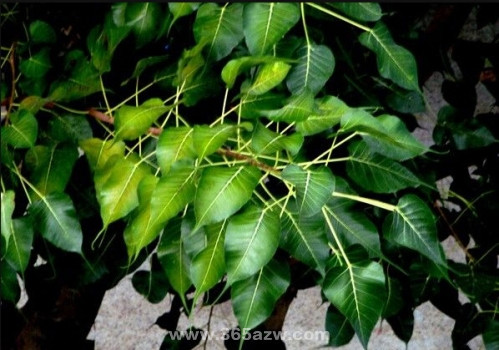
Points to note
1. Generally, potted plants need to be repotted once every two years.
2. Water according to the principle of watering when dry and letting it dry out between waterings, and water thoroughly each time. In summer, water again after the soil has dried out for two or three days; in winter, water once a week.