What kind of plant is the "Peace Tree," and what are its characteristics?
During the Christmas season, a plant called the "Peace Tree" is popular among flower enthusiasts. From the triplinerved veins of its leaves, one can tell that it is a plant of the Lauraceae family. "The Peace Tree is an elegant name for cinnamon-type plants of the genus Cinnamomum in the family Lauraceae, and the one most sold on the market is Cinnamomum kotoense from Lanyu Island, Taiwan, China. It was originally a garden ornamental tree, and has now been developed into a beautiful potted foliage plant.
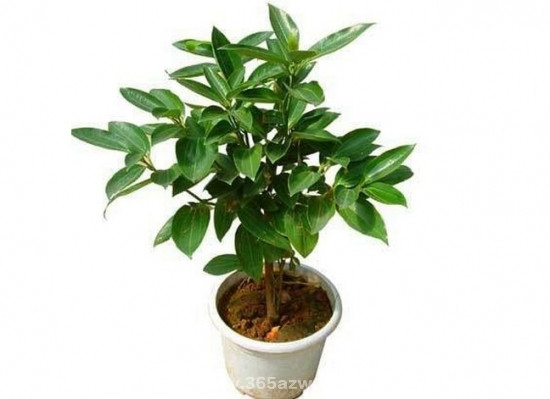
Cinnamomum kotoense prefers a warm, humid environment with plenty of sunlight. It is native to high-temperature, foggy mountainous areas, so it likes partial shade and cannot tolerate waterlogging, severe cold, or dryness. For cultivation, a loose, fertile, well-drained, acidic sandy loam rich in organic matter should be used.
Its optimum growth temperature is 20°C to 30°C. In winter it should not go below 5°C. In midsummer, once the temperature exceeds 32°C, shade frames and leaf misting should be provided to increase humidity and lower temperature, so that it can maintain vigorous growth. Cinnamomum kotoense likes partial shade. Especially in summer, if the light is too intense, it easily causes leaf scorch. Outdoors, it needs to be moved under tree shade or under 40% to 50% shade netting.
Water management for Cinnamomum kotoense is rather difficult. It grows fast in summer and evaporates a lot of water, so it needs more watering; potted plants should keep the potting soil moist at all times, but there must be no water accumulation. The relative humidity of the environment is best kept above 80%. To maintain environmental humidity, the leaves and surrounding environment should be misted frequently. After autumn begins, watering should be controlled. In winter, misting should be increased and watering reduced. If water accumulates in the potting soil, it easily causes the plant to turn yellow, with lower leaves turning yellow and then falling off; in severe cases it can cause root rot and plant death, so special attention should be paid during the plum rain season.
Cinnamomum kotoense plants are full, with large leaves and relatively vigorous growth, so they also have a relatively high fertilizer requirement. For potted Cinnamomum kotoense, from mid-spring to early autumn, a thin application of cake fertilizer water or alum fertilizer water can be given once a month. After autumn begins, phosphorus and potassium fertilizer should be applied twice in succession to increase the plant's cold resistance and encourage the young shoots to become woody early. In winter, all forms of topdressing should be stopped to prevent fertilizer damage to the roots.
In propagation production, sowing is commonly used; at home, layering propagation can be tried.