A detailed guide to violet cultivation techniques: master the planting and management methods completely
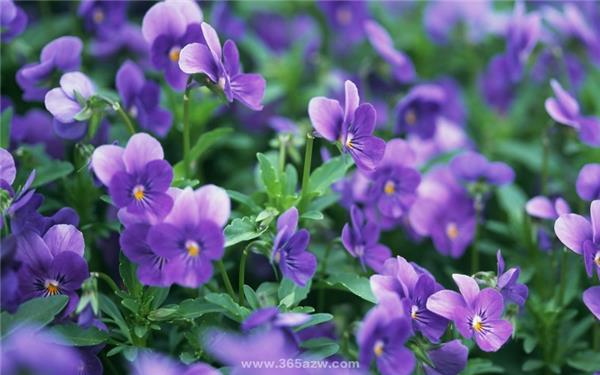
Violet cultivation methods
Violet, also known as herb violet, herb stock, and muskmelon pair, is an annual or biennial herbaceous plant of the genus Matthiola in the Brassicaceae family. The plant height is 20 cm to 40 cm, and the whole plant has grayish-white fuzz. The leaves are alternate, long elliptical or oblanceolate, with rounded-obtuse tips and gradually narrowed bases, green in color. The raceme is terminal or axillary, and the flowers are divided into single-petaled and double-petaled types. The flower colors are rich, including pure white, pale yellow, bright yellow, light red, red, purple, and mixed colors, and they have a strong fragrance. After flowering, it forms cylindrical long siliques containing white seeds with membranous wings. The seeds have a very long lifespan, and their germination capacity can be maintained for 4 months to 6 years.
Sow in autumn for propagation. The suitable germination temperature is 16-18°C, and germination occurs in about 4 days. Overwinter in a cold frame, then plant out in the open field in the following spring. It blooms around May 1. Annual varieties can be sown in all four seasons in cool summer regions and can supply flowers year-round. Cultivation must not be too dense, and fertilization should be noted during the growth period. If maintained properly, it can bloom in mid-April. After flowering, cut off the flowering branches and apply additional fertilizer 1-2 times, and it can bloom a second time in June-July.
Violet originated in southern Europe and prefers a cool climate. The suitable temperature for flower bud differentiation is 15°C. It has no strict requirements for soil, but grows better in well-drained, neutral to slightly alkaline soil, and strongly acidic soil should be avoided. During cultivation, fertilizer should not be applied too much, so as to avoid excessive vegetative growth of the plant, which is unfavorable for flowering. Violet leaves are thick, have fewer stomata, and the whole plant is covered with fuzz, so it has a certain resistance to drought. Therefore, watering should not be excessive; keeping the soil moist is sufficient. Too much moisture will cause root rot. During the growth period, sufficient light and good ventilation are required; otherwise, it is prone to physiological disorders, causing poor plant growth.
Violet is propagated by sowing. Because the stamens and pistils of double-petaled varieties are degenerated and cannot set seed, seeds must be collected from single-petaled plants of the same variety. After the obtained seeds are sown, 60%-80% of the seedlings are double-petaled plants. The seeds and seedlings of double-petaled varieties and single-petaled varieties have certain differences: the seeds of double-petaled varieties are smaller, the cotyledons are long elliptical, and when there are 7-8 true leaves, the leaf margins have many serrations; while the seeds of single-petaled varieties are larger and plump, the cotyledons are short elliptical, and the serrations on the margins of the true leaves are fewer.
The sowing time for violet is generally from mid-to-late August to early October. Seedlings emerge about 10 days after sowing. Pay attention to cold protection in winter. At the end of autumn, the seedlings can also be moved into a greenhouse for pot cultivation or planted in a seedling bed. Because it is a taproot plant, it is not tolerant of transplanting. When transplanting, more soil must be carried, the root ball must not be broken apart, and the roots should be damaged as little as possible. Once the roots are damaged, it is not easy to recover. After the seedlings undergo one transplanting and seedling separation, they can be planted out, and they can bloom in May of the second year. In addition, the flowering period can also be adjusted according to the timing of sowing. For example, if sown in a greenhouse in February, it blooms in May; if sown in April, it blooms in July; if sown in late May, it blooms in August. The suitable sowing temperature is 16°C-18°C, and it should not be too dense; otherwise, the seedlings are prone to damping-off disease.
Violet has many varieties and rich colors, with abundant and luxuriant flowers, and it has a strong fragrance. It is a good material for cut flowers, potted plants, and flower beds. Because it grows rapidly, is easy to manage, and has a strong self-seeding ability, it is also often used to fill gaps in green spaces.