A detailed guide to jasmine cultivation technology, from planting to care, the complete process
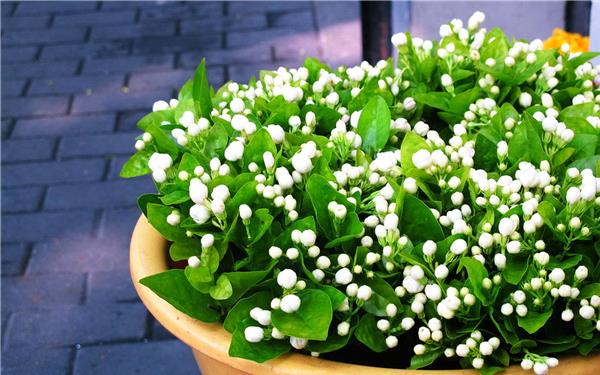
Jasmine cultivation methods
(1) Jasmine is mostly propagated by cuttings, but also by layering or division.
[Cutting propagation]: Carry out from April to October, select mature 1-year-old branches, cut them into cuttings with more than two nodes, remove the lower leaves, insert them into a cutting bed of half sand and half soil, cover with plastic film, maintain relatively high air humidity, and roots will form after about 40-60 days.
[Layering propagation]: Choose a relatively long branch, gently notch the lower part of a node, bury it in a small pot filled with sandy soil, keep it moist regularly, roots will begin to form in 20-30 days, and after 2 months it can be cut away from the mother plant as a new plant and planted separately.
(2) Key cultivation points
Potted jasmine: In midsummer, water every morning and evening; if the air is dry, supplement with misting; during the winter dormant period, control the amount of watering, because if the potting soil is too wet, it will cause root rot or leaf drop. During the growing period, apply a thin cake fertilizer once a week. After repotting in spring, pinch and shape regularly; after the peak flowering period, prune heavily to encourage new branches, so the plant is neat and robust and blooms abundantly.
Fertilization method: From June to September during the flowering period, frequently apply liquid fertilizer containing more phosphorus, preferably once every 2-3 days. The fertilizer can be well-rotted soybean cake and fish waste water fertilizer liquid, or ammonium sulfate and superphosphate; generally, if chemical fertilizer components are mixed too strongly, it will burn the jasmine plant to death. A 0.1% potassium dihydrogen phosphate aqueous solution can also be sprayed on the leaves in the evening, which can also encourage more flowering.