A detailed guide to hyacinth planting methods, teaching you how to plant step by step
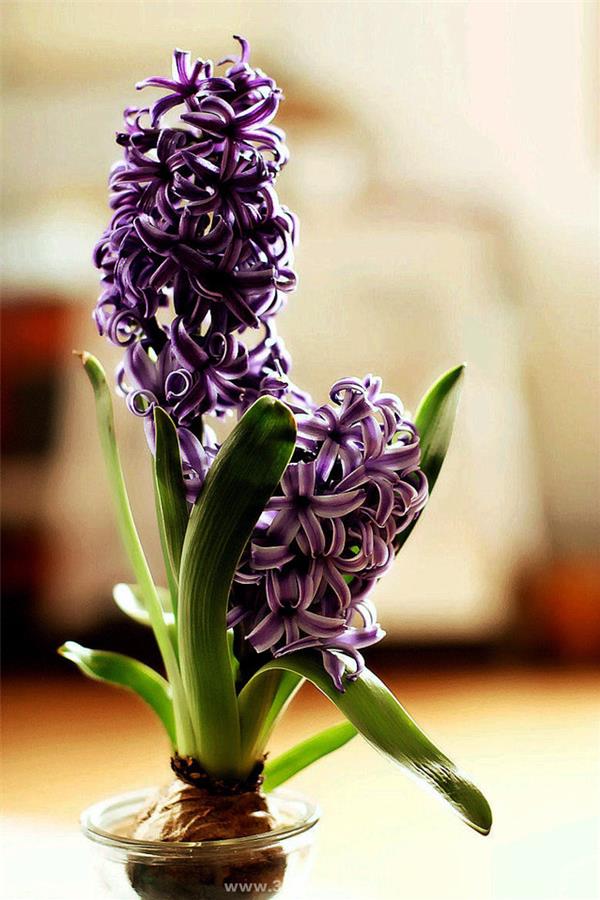
Hyacinth planting methods
Bulb division
After digging up the bulbs in June, separate the large bulbs from the small offset bulbs. "The large bulbs planted in autumn can bloom in early spring of the following year, while the offset bulbs need 3 years of cultivation before they can bloom. Because the natural bulb division rate of hyacinths is low, generally a mother plant can only produce 1-2 offset bulbs after one year of planting. To increase the propagation coefficient, the large bulbs can be subjected to a scoring operation during the summer dormancy period to stimulate them to grow offset bulbs.
Sowing
Mostly used when breeding new varieties. In autumn, sow into the culture soil in a cold frame, cover with 1 cm of soil, and they sprout at the end of January to early February of the following year. The small bulbs cultivated from seedlings bloom after 4-5 years. Under ordinary storage conditions, the seeds' germination capacity can be maintained for 3 years.
Field management
Selection and purchase
The nutrients needed for hyacinth flowering are mainly supplied by the nutrients stored in the bulb leaves. As long as you choose seed bulbs with undamaged skins, fleshy scales that are not excessively shriveled, and that are relatively hard, heavy, and plump, they can produce abundant and beautiful flowers. When selecting bulbs, pay attention to choosing those with bright skin color, firm texture, and no disease spots or insect holes. Usually the color of the flower it will produce can basically be judged from the color of the bulb skin.
For example, if the outer skin is purplish red, it will bloom with purplish red flowers; if it is white, it will bloom with white flowers. However, some varieties developed through crossbreeding have more complex colors, and sometimes they cannot be clearly distinguished, so you need to ask the seller clearly before buying. After the bulbs are purchased, soak them in carbendazim and let them dry. In order to break their dormancy, first put them in the lowest compartment of the refrigerator for cold storage for about one month, so that they can bloom smoothly later. But when taking them out of the refrigerator, it is best to move them to a cool place for seven or eight days before planting.
Soil
For hyacinths, it is advisable to choose well-drained, not-too-dry sandy loam, requiring fertile soil, high organic matter content, good granular structure, neutral to slightly alkaline, with a pH level of 6-7; the culture soil can be mixed in a ratio of 5 parts leaf mold : 3 parts garden soil : 1.5 parts coarse sand : 0.5 part bone meal; before planting, chemical agents such as formalin can be used. At a soil temperature of 10-15°C, apply the agent to the soil surface and immediately cover with plastic film; after 3 days of warm weather, remove the film, let it air for 1 day, then plant, keeping the soil moist. Before planting, apply sufficient base fertilizer; for field cultivation, avoid continuous cropping.
It is suitable to carry out in October-November, and choosing well-drained soil is the most important condition. Before planting, apply sufficient base fertilizer, add a thin layer of sand on top, then arrange the bulbs, with a plant spacing of 15 cm-18 cm, and cover with 5 cm-8 cm of soil. Also cover with grass to keep the soil loose and moist. Generally no other management is done before flowering. After flowering, if you do not plan to collect seeds, the flower stems should be cut off to promote bulb development, and the cutting position should be as high on the flower stem as possible. In early June, the bulbs can be dug out, spread out, graded, and stored in a cold storage room. The summer temperature should not exceed 28°C.
Use loam, leaf mold, fine sand, etc. mixed as nutrient soil. Generally, a 10 cm diameter pot is planted with one bulb, and a 15 cm diameter pot is planted with 2-3 bulbs. Then bury the pots in the soil, cover with 10 cm-15 cm of soil, and after 7-8 weeks, when the buds grow to more than 10 cm, remove the covering soil to allow sunlight exposure. Generally planted in October-November and blooms in March.
Water culture
For hyacinth water culture, the water level must leave 1-2 cm of space from the basal plate of the bulb, so that the root system can breathe and ventilate. It is strictly forbidden to fill the water so full that it submerges the bottom of the bulb. In December, place the seed bulb in a wide-mouthed glass bottle with a grid, and add a little charcoal to help prevent rot and disinfect. The seed bulb only needs to be soaked up to the bottom of the bulb, then place it in a dark place and cover the bottle with black cloth. After about 20 days of sprouting in a completely dark environment, put it outdoors to receive sunlight. At first, expose it to 1-2 hours of light per day, then gradually increase to 7-8 hours. In most cases, under good weather conditions, it will bloom by the Spring Festival.
Timing selection
After late July, treat the bulbs at a low temperature of 8°C for 70-75 days, then pot them in early October and cultivate them in a greenhouse, which can make them bloom at the end of the year. Because the forcing sensitivity of cultivated varieties varies greatly, varieties suitable for forcing should be selected when carrying out forcing cultivation.
Light
Hyacinths only need more than 5000 Lx to maintain normal physiological activity. Too weak light will lead to weak plants, overly long stems, small flower buds, early flower fading, yellowing leaves, and other conditions. An incandescent lamp can be used at about 1 m away for supplementary lighting; but too strong light can also cause scorching of leaves and petals or shorten the flowering period.
Humidity
Soil humidity should be kept between 60-70%. If too high, root respiration is inhibited and rot easily occurs; if too low, the aboveground parts wilt and may even die. Air humidity should be kept at about 80%, and humidity can be increased by misting and sprinkling water on the ground, or reduced by measures such as ventilation.
Temperature
If the temperature is too high, even higher than 35°C, flower bud differentiation will be inhibited, deformed growth will occur,
and the rate of blind flowers will increase; if the temperature is too low, the flower buds will suffer freezing damage. In the early 20th century, flower growers began to produce hyacinths in greenhouses and subject them to certain temperature treatments. Like tulips and other bulbous plants, their bulbs need to be maintained at low temperatures for a period of time, otherwise they will not produce high-quality flowers and stems of sufficient length.
The growth process of hyacinths includes a leaf formation stage, a flower formation stage, and an elongation stage. By advancing the flower formation stage while providing the most effective low-temperature period, the bulbs are forced to bloom. This is why hyacinths planted in the Mediterranean region can often bloom very early. By maintaining a relatively high temperature during the bulb planting stage, the leaf formation stage can be accelerated, and thus the flower formation stage is also advanced.
Compared with other bulbous plants, hyacinths are made to form flowers earlier through special temperature treatments applied to them. One method of achieving this is to increase the soil temperature during bulb growth. Because this method has relatively high costs, it is rarely used. More commonly, the bulbs are dug up early and subjected to temperature treatment in air-conditioned rooms, thereby achieving the purpose of promoting flower formation. The digging period and the treatment temperature are the factors that distinguish potted and cut-flower hyacinths.
The digging period and the treatment temperature are the factors that distinguish potted and cut-flower hyacinths.