Detailed Guide to Carnation Planting Methods and Care Techniques
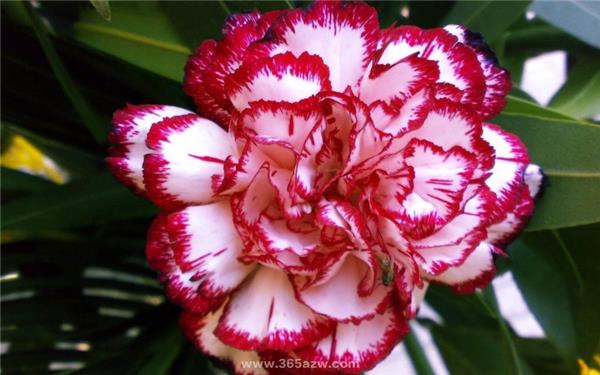
Carnation Planting
Carnation propagation is divided into two types: asexual propagation and sexual propagation. Propagate with seeds or by layering.
Sexual propagation: Sexual propagation often has a low seed-setting rate, and the offspring grown from seeds show great variation in traits and slow seedling growth, so it is rarely used in production. In production, asexual propagation is widely used, mainly cutting propagation, which has the advantages of abundant cuttings, stable traits and quick results.
Establishment of the stock plant garden for cutting collection. Practice has proved that the stock plants for cutting collection must meet the following conditions: the plants are relatively young in age, have good flowering traits, have a disease index of zero, and the cutting position should be strictly controlled above the 6th node. Therefore, establishing a dedicated stock plant garden for cutting collection is very necessary and crucial, and it is also an indispensable part of the modern carnation seedling production process. It is both the prerequisite for producing high-quality seedlings and the foundation for large-scale seedling raising throughout the year.
The stock plants in the stock plant garden for cutting collection must be tissue-cultured seedlings. The key to the cultivation and management of the stock plant garden is: strengthen soil disinfection, advocate crop rotation, ensure sufficient base fertilizer, there must be rain shelter and shade measures, advocate drip irrigation, and do a good job in pest and disease control
Cutting propagation: Selection of cuttings. Select plants that are free of pests and diseases, grow robustly, and have tight internodes, with 3~4 pairs of expanded leaves and 1 pair of unexpanded leaves, and the rate of cuttings bearing flower buds in the population is less than 10%.
Cutting time. Generally, the hot summer months of July~August should be avoided. The cuttings are required to be of good quality, and relatively large-grained perlite is used as the cutting medium, the water quality is good, and the cutting bed is a raised bench.
Collection and insertion of cuttings. The collection of cuttings is generally carried out at the same time as the bud thinning of carnations. Cuttings should be collected according to standards. When collecting cuttings, break off the buds by hand rather than cutting with scissors, so as to avoid cross-infection of viruses. The base should slightly carry the cortex of the main stem, but without damaging the mother branch, and 4~5 leaves at the top of the cutting should be retained, with all the rest removed. After arranging into bundles, soak them in clean water for 30 minutes so that the cuttings absorb enough water. The cut surface should be close to the internode, and it should be treated with growth regulators to increase the survival rate and the rate of seedlings leaving the nursery. When inserting the cutting, it is appropriate to insert it 1 cm into the medium. In summer, insert deeper, generally 1.5~2 cm. After cutting, spray enough water, and afterwards control it so it is not too wet, so as to avoid root rot.
(4) Storage of cuttings. Storing cuttings can provide great convenience for raising seedlings throughout the year and for balanced flower supply throughout the year, and can also allow batch operations at one time, saving manpower and material resources. Storage requirements: temperature 1~2°C, and the smaller the fluctuation range the better, preferably within ±1°C; a slight dehydration treatment before storage; cuttings should be packaged with ultra-thin plastic film.
(5) Cutting management. The cutting bed should have intermittent misting facilities, and the amount of mist should be controlled so that the leaves are just moist. If there is no misting measure, plastic film should be used for covering, and after 1 week switch to reed curtains, but do not shade too much, to prevent excessive growth. When the roots of the cutting seedlings are 1 cm long, transplant them, taking care to damage the roots as little as possible
Pot Cultivation
Carnations are mainly propagated by seeds and by cuttings. The optimum germination temperature for seed sowing is 20°C. Seeds take a relatively long time to germinate, requiring 10~15 days. After sowing, it takes 140~160 days to bloom. The optimum growth temperature for the plants is 5~20°C. When the temperature is higher than 30°C, the plants stop growing and may even die. Therefore, in South China, cultivation is suitable in winter and spring. When production is required for blooming at Spring Festival, sowing and cultivation should be carried out from August to early September in cool regions (on high mountains).
The pot cultivation medium for carnations requires good drainage and richness in organic matter, and the cultivation environment requires sufficient sunlight. If the temperature is too high, or the light is insufficient, the plants tend to grow excessively, the branches are slender, the plant shape is poor, and it is difficult to bloom.