How to Grow and Care for the Peace Tree: Mastering Watering, Fertilizing, Light and Temperature
The Peace Tree (Cinnamomum kotoense, also known as Lanyu cinnamon) is both a beautiful potted foliage plant and a very attractive landscape tree. It is currently quite popular on the market and has broad prospects. So how do you grow a Peace Tree? What good methods are there for growing it? And what should you pay attention to during cultivation? Please read on with your questions and join me below!
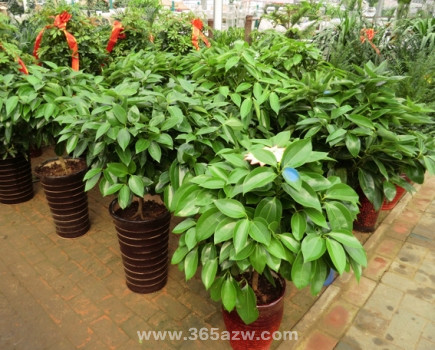
How to grow a Peace Tree (basic knowledge):
Best propagation time: The best time to propagate a Peace Tree is from April to May in the first half of the year and from September to October in the second half, when the temperature is between 22°C and 28°C.
Best growing soil: For potted or bag-cultivated Peace Trees (Cinnamomum kotoense), it is advisable to use a loose, breathable, well-draining, fertile acidic culture soil or leaf mold rich in organic matter.
Humidity requirements: The Peace Tree likes a humid environment and does not tolerate drought. Its potting soil should be kept relatively moist. In dry weather, mist the leaves; in summer, mist the leaves once a day, and maintain the relative indoor air humidity, preferably above 60%.
Best growing temperature: The optimum growing temperature for the Peace Tree is 20°C to 30°C. Young trees are not tolerant of low temperatures. If there is a frost lasting more than 5 days, plants maintained or cultivated in the open field are prone to frost cracks in the bark, withered branches and leaves, and may even die entirely from freezing. Whether it is a small number of plants grown as household potted plants or large-scale commercial cultivation, the greenhouse temperature in winter should be kept no lower than 5°C so that the leaves can always maintain their beautiful green appearance.
Best growing light: The Peace Tree not only likes sunlight but is also quite shade-tolerant. However, it must not be placed in direct blazing sun. Especially in summer, when placed in the sun, it needs some shading, preferably about 50% shading, otherwise the sunlight may scorch the leaf surface. In winter, it can be exposed to direct sunlight without any shading.
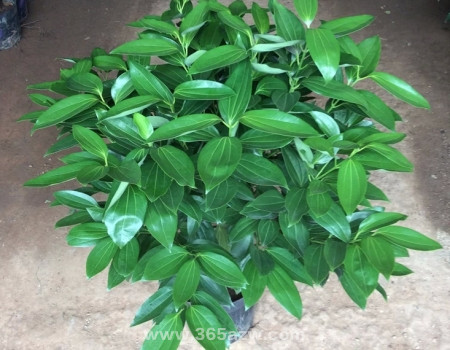
Precautions for growing a Peace Tree:
Fertilizing: In addition to requiring fertile culture soil, from mid-spring to early autumn the Peace Tree can be given a top dressing of dilute cake fertilizer water or alum fertilizer water once a month. After the beginning of autumn, apply phosphorus and potassium fertilizer twice in succession, such as a 0.3% potassium dihydrogen phosphate solution, to increase the plant's cold resistance, promote early lignification of young shoots, and help it survive the winter safely. In winter, all forms of top dressing should be stopped to prevent fertilizer burn to the roots, which can cause yellowing of the leaves or scorching and dropping, from which it is otherwise very difficult for the plant to recover its original appearance.
Watering key points: The Peace Tree likes a humid environment and does not tolerate drought; its potting soil should be kept relatively moist. The frequency of watering depends on the season; water whenever the surface soil looks slightly dry. In dry weather, mist the leaves; in summer, mist the leaves once a day. After the beginning of autumn, watering should be controlled, and in winter it should be misted more and watered less. If water accumulates in the potting soil, it can easily cause the plant to turn yellow.
Propagation key points: The Peace Tree (Cinnamomum kotoense) is mostly propagated by sowing seeds. In South China, ripe purple-black fruits can be sown from September to October. After the seeds crack open and show white, sow them in the ground or in bags. For seeds that have not been stratified in sand to promote germination, before sowing they can be soaked in a 0.3% formalin solution for 30 minutes, then the excess liquid poured off, sealed for 2 hours, then rinsed with clean water to remove the liquid attached to the seed coat, and immediately soaked in clean water for 24 hours, which can increase the germination rate. If the seeds are not disinfected, they can be soaked directly in warm water at about 40°C, which can also increase the germination rate. Usually, sowing in furrows in holes is the main method, with a row spacing of 20 cm to 25 cm, a plant spacing of 5 cm to 7 cm, and a soil covering depth of 1.5 cm to 2 cm. Cover with straw to retain moisture, and they will germinate after 20 to 30 days. Keep the seedbed moist. After one-third of the seeds have emerged, remove the covering grass in 2 to 3 stages, and then build a shade frame. When the seedlings have grown 3 to 4 true leaves, apply liquid fertilizer once a month, stop applying it after autumn, do a good job of cold protection, and overwinter at a greenhouse temperature of no lower than about 5°C.
Pruning key points: For spring pruning of the Peace Tree, when the temperature is 20°C, cut back some branches to increase the number of branches. However, when pruning, note that the distance from the cut to the bud eye at the node should be larger, otherwise water loss may cause the branch to wither. Also, the cut must be smooth, not torn. During the vegetative growth of the Peace Tree, timely pinching to promote more branches can prevent the plant shape from becoming unbalanced. Practice has proved that when maintaining a Peace Tree in the north, timely pinching gives better results than pruning.
Repotting: During the growing season of a potted Peace Tree, it is best to loosen the soil once a month to keep its root system in a well-aerated state at all times. Small Peace Trees can be repotted once a year, while large Peace Trees can be repotted once every 2 to 3 years. When repotting, some of the dead root system can be cut off to ensure normal growth of the potted plant.
Pest and disease control:
Leaf roller: It mostly occurs in summer and autumn. It rolls several new leaves into a nest, and the larvae hide inside and feed on the leaves. It can be sprayed with 90% trichlorfon crystal at 800 times dilution, or 40% dimethoate emulsifiable concentrate at 1000 times dilution.
Aphids: Aphids are prone to infesting and sucking on the young leaves and new buds of Cinnamomum kotoense, causing the leaves to become covered with a greasy film and subsequently inducing sooty mold, which affects the plant's growth and its ornamental display. Control methods: sprinkle plant ash on the plant, then rinse it clean with water; spray chinaberry leaf juice, which can effectively kill the insects; spray with 10% imidacloprid wettable powder at 2000 times dilution.
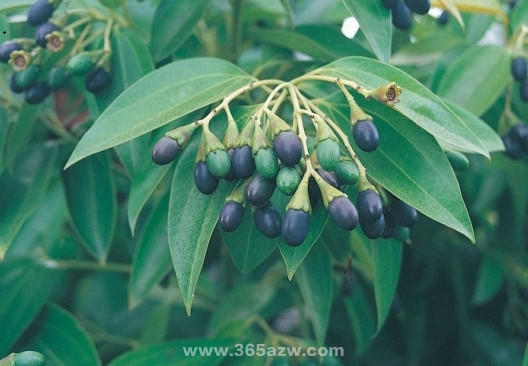
Tips for growing a Peace Tree:
When growing a Peace Tree, pay attention to moderate light at ordinary times. In summer, when placed in the sun, it needs some shading, preferably about 50% shading, otherwise the sunlight may scorch the leaf surface. It is best to keep the temperature between 20°C and 30°C.
Except in winter, fertilize once every other month; fertilizing in winter may damage the roots and stems. The Peace Tree can develop anthracnose, which turns the leaf surface, leaf tips and leaf margins brown. When found, in addition to promptly removing the diseased leaves, apply more phosphorus and potassium fertilizer to improve the plant's resistance to pests and diseases. During the plum rain season, prevent water from accumulating in the pot, otherwise it may damage the roots and stems.