The Best Time and Method for Repotting Pothos: A Detailed Guide to the Steps
Pothos (Epipremnum aureum) is a plant with remarkably strong vitality, and its graceful form makes it very suitable for display in the home. Thanks to its tough vitality, pothos also grows quite quickly, which brings up the following questions: when should pothos be repotted? How do you repot pothos? Let's take a look together at the methods and precautions for repotting pothos.
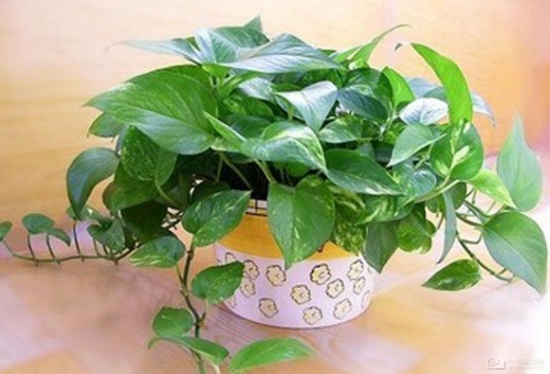
Pothos has strong vitality, its roots grow quickly, and it divides fast too, so the size of the pot will restrict its growth. Only with strong roots can the leaves be vigorous. If we want our pothos to grow stronger, we can expand the growing space for its roots by moving it into a larger pot. So what are the tricks for repotting?
1. The best time to transplant is spring
Pothos is usually repotted once a year or every other year. The best time to repot is when dormancy ends and new buds begin to swell.
2. The replacement pot should be an appropriate size
When repotting, choose a pot based on the size of the pothos root ball (the growing medium gets tangled by the roots into a ball). A pot whose diameter is 3 to 6 cm larger than the diameter of the root spread is fairly suitable. You can also choose a pot based on the leaf crown: a crown diameter 20 to 40 cm wider than the pot diameter is fairly suitable.
However, it is not advisable to switch to an overly large pot. Although a large pot can give pothos more room to grow, it is hard to control the amount of water and fertilizer the pothos needs in a large pot, which will instead affect its growth.
3. Clay pots are the most suitable
Among flower pots, clay pots are relatively good: low in price and good in breathability. Purple clay pots are exquisitely made, but their breathability is not as good as clay pots; porcelain pots are pretty but have poor breathability; plastic pots are light and handy, but their drainage and breathability are poor. Black flower pots should not be used.
Pothos likes a shady, moist living environment, so it has few requirements regarding pot drainage. Using flower pots made from eco-friendly materials is encouraged, to reduce energy consumption.
4. De-dry new pots and sterilize old pots
A. If using a new pot, soak it in clean water for a full day and night before planting the pothos, then scrub it, let it dry, and use it, in order to remove its dryness.
B. If the replacement pot is an old one, it should be exposed to sunlight to sterilize it. Before reusing it, scrub the old pot clean inside and out, clear away any possible insect eggs, and if necessary spray it with a chemical agent to disinfect it.
5. The steps for repotting
A. Root pruning: Before entering the new pot, cut away some of the pothos's coiled roots, old roots, overly long roots and injured roots. If too many roots are damaged, some leaves should also be cut off.
B. Watering: After repotting the pothos, water it thoroughly so the potting soil absorbs enough water; spray water on the pothos leaves.
C. Fertilizing: A pothos that has just been repotted must not be fertilized, because after transplanting the roots cannot immediately take up nutrients. Wait until the pothos has grown new leaves or sprouted new roots in the new pot before fertilizing. Fertilize in small amounts but often.
D. Placement: A pothos that has just been repotted should be placed in a shady spot. It must not be exposed to direct sunlight, nor placed in a drafty spot with strong wind, so as to avoid harming the plant.
Although pothos has strong vitality, as growers we should still repot it according to its growth rhythm, so as to avoid causing unnecessary harm to its growth through repotting.