How often does the giant taro bloom? A clear explanation of whether its flowering is a good thing
The giant taro is favored by consumers for its thick, lush green leaves. Placed in the home, such a potted plant always gives people the feeling that spring has arrived, and it is a delight to the eye. But when it comes to whether the giant taro is good or not, and how often it blooms, many people are not very clear. Next, let's learn about it together with the editor.
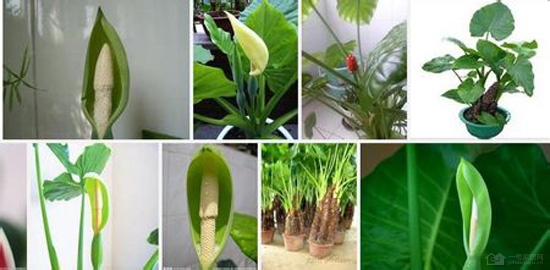
In fact, the giant taro is a tropical plant. In the north it is very common as a potted ornamental plant, but it generally does not bloom. However, if conditions such as temperature are suitable, it will also bloom. The flowering period is about one week. After one week, the upper part of the giant taro's flower begins to wither, while the lower part of the flower column is still emerald green. After nearly half a month, the top of the flower column will burst open and reveal a cluster of red berries similar to a pinecone, which look especially beautiful against the green leaves.
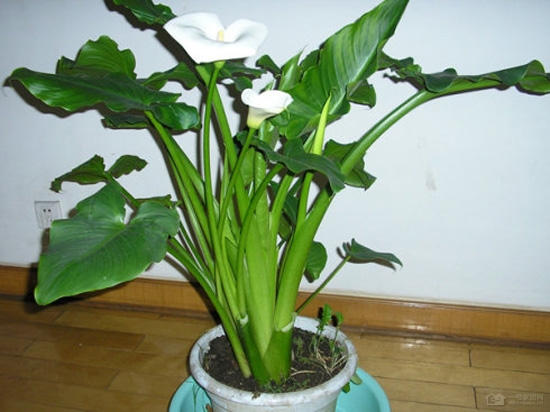
It is very rare for the giant taro to bloom, so the meaning of the giant taro blooming is also very good. When the giant taro blooms, a column of milky white flower stick stands elegantly, and behind the flower stick rises a green oval spathe. The flower stick seems to stand in front of this spathe, embraced by the spathe. That milky white flower stick is just like the jade body of Guanyin, and that spathe is even more like the halo of Buddhist light radiating from Guanyin's body. The pure white flower stick stands in a stretch of Buddhist light, just as if Guanyin Bodhisattva has appeared in your home, so it is a very auspicious good omen.
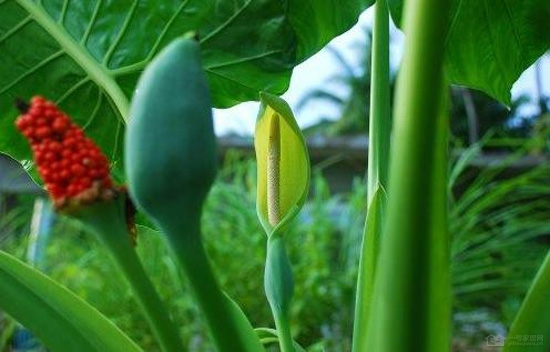
Flower growers should be reminded, and it is also something many people do not know, that the sap in the stem of the giant taro is toxic. If the stem is damaged and the sap is accidentally touched or eaten, it will cause discomfort in the throat and mouth, and a burning pain in the stomach.
The above is the answer about the giant taro blooming. I hope the above content has explained it to you.