What to Do When the Leaves of a Variegated Spider Plant Turn Yellow? 4 Methods to Teach You Prevention
The variegated spider plant (Chlorophytum comosum 'Vittatum'), as an indoor ornamental plant that also functions as an air purifier, is quite popular among modern households. However, quite a few friends have found that yellowing leaves on variegated spider plants is a fairly common phenomenon. They are completely puzzled by this. In fact, as with any plant, you need to understand its characteristics and know the key points of growing and caring for it.
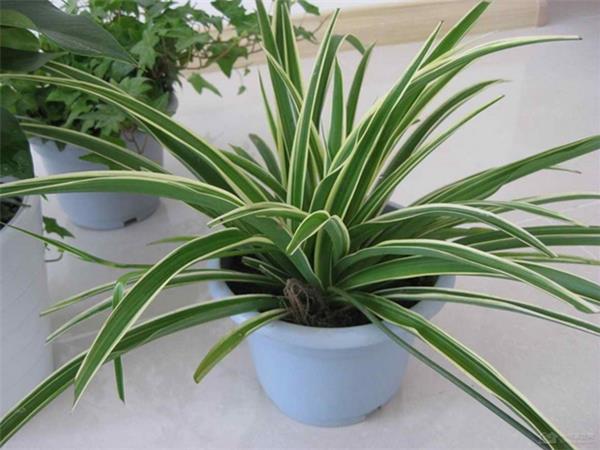
Spider plants (Chlorophytum comosum) originate from tropical and subtropical regions and are perennial evergreen herbaceous plants. The rhizome is short, with clustered cylindrical fleshy fibrous roots. The leaves are basal, slender, rather stiff, bright green, with entire or slightly wavy margins. Runners emerge from the leaf cluster, and after flowering they form stolons, which send out aerial roots at the nodes to produce new plants. The flower stems are slender, often rising above the leaves; the flowers are small and white, with many small flowers arranged in rows at the top, forming a raceme. The flowering period is spring and summer.
Spider plant cultivation and management is relatively easy. The leaves are sensitive to light: with insufficient light, the leaves are light green or yellow-green; with too strong light, the leaves wither and turn yellow, or even die. It is suitable for growing at around 20°C. During the peak growing season, water thoroughly to keep the potting soil moist; in hot weather, mist the leaves appropriately; in winter, reduce the amount and frequency of watering. Division propagation is extremely easy: generally, in early spring, separate the root clumps of old plants for separate propagation, or at any time of year, cut off the plantlets on the stolons and plant them in soil. Repot once every year in early spring, trim away excess fibrous roots, and replant in the pot using well-drained leaf mold soil; first place it in a shaded spot, and after the plant recovers its growth, move it to a suitable position. In the vigorous summer growing season, apply a dilute liquid fertilizer once every 10-15 days, and frequently spray the leaves with clean water at the same temperature as the room.
The variegated spider plant is a fairly easy plant to grow and care for. When leaf yellowing occurs, it mainly stems from the following situations.
1. Too much fertilizer, exceeding the plant's needs
At first the leaves are glossy but uneven, then the root system rots and the leaves turn yellow. Fertilizing should be stopped, more clean water should be poured, or the pot should be repotted, the roots cleaned, and fresh soil replaced.
2. No repotting or soil change for a long time
The various nutrient elements contained in the potting soil have been exhausted, and the three key elements nitrogen, phosphorus and potassium have not been replenished in time, so the plant lacks nutrients and the leaves become yellow and thin. It should be promptly repotted with fertile loam and watered with alum fertilizer water.
3. Insufficient sunlight
Although the spider plant is a semi-shade flower, it still needs at least four hours of diffused light per day; otherwise chlorophyll decreases and the leaves turn yellow.
4. Poor air permeability and water permeability of the potting soil
If the potting soil stays waterlogged and does not dry out for a long time, the root system has difficulty breathing, causing the leaves to turn yellow. Loosen the soil and control the water in time. Fifth, watering with an amount that never penetrates through for a long time. The roots of the spider plant lose water, and the lower old leaves turn yellow. Water thoroughly to keep the potting soil warm and moist.
When growing and caring for a variegated spider plant, pay attention to avoiding the above factors that cause leaf yellowing, and follow the habits of the variegated spider plant when fertilizing, repotting and misting. It is believed that this can effectively prevent the occurrence of leaf yellowing.