Is Areca Palm Toxic? Get to Know This Graceful Foliage Plant
Areca palm (Dypsis lutescens) is mostly kept indoors. It has a graceful form and evergreen leaves, and using it to decorate the home brings a fresh feeling. But is areca palm toxic? Is it suitable for growing indoors? To answer these questions, it helps to first understand the growing habits and care methods of the areca palm.
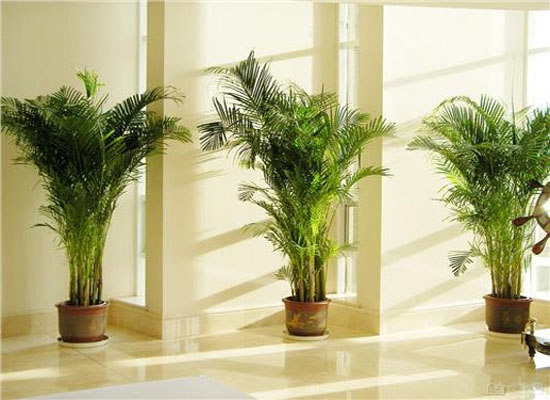
The areca palm belongs to the palm family (Arecaceae) and the genus Dypsis, with the aliases yellow palm and phoenix-tail bamboo. Its place of origin is Madagascar, Africa.
I. Morphological Characteristics
Evergreen shrub or small tree. The plant grows 3-8 m tall, clump-forming, with many tillers at the base. The stem is smooth, yellow-green, with obvious leaf scars, resembling bamboo nodes. Pinnate compound leaves, smooth and slender, the base of the petiole slightly curved, bright green. Leaflets linear or lanceolate, about 30 cm long and 1-2 cm wide. The fruit is purple-black. A common ornamental species in the same genus is the cabada palm (C. cabadae), which grows 10 m tall, with a slender stem that is swollen at the base, alternately arranged leaves, slender bright green leaflets, and small red fruit.
II. Habits
It likes a warm, humid and semi-shaded environment. It fears cold and strong direct sunlight. It is not strict about soil, but loose soil rich in humus is preferable.
III. Care
The areca palm fears cold and strong direct sunlight, which can scorch the leaves. The areca palm likes a semi-shaded environment, and in spring, summer and autumn about 50% of sunlight should be blocked. The suitable growing temperature is 20-25°C; in winter the nighttime temperature should be above 15°C, and around 25°C during the day is better. If it stays below 5°C for a long time, it will inevitably suffer cold damage, or even die. During the growing season, the potting soil must be kept moist frequently and the air humidity around the plant kept relatively high. In winter, the leaf surface should be kept clean, and a small amount of water can be sprayed on the leaves frequently or the leaf surface wiped. During the growing season, fertilize 1-2 times a month. It is not strict about soil, but loose soil rich in humus is preferable. For potted areca palm, a growing medium can be made from leaf mold, peat soil plus 1/3 river sand or perlite and base fertilizer. Repot once every 2-3 years in spring, applying base fertilizer. When repotting, dead branches and leftover leaves should be removed, and depending on growth, overly dense clumps should be cut away to encourage the sprouting of new clumps and maintain a graceful potted shape.
IV. Pests and Diseases
Leaf spot disease, with leaf tips and leaf margins most easily affected, causing drying and curling; in the early stage of the disease, spray with 50% captan wettable powder at 500 times dilution for control. In addition, there may be damage from scale insects, which can be killed by spraying with 40% omethoate emulsifiable concentrate at 1500 times dilution.
The areca palm has an elegant and graceful form and is shade-tolerant. It can be displayed for viewing for a long time in a bright room, and can also be placed continuously for 4-6 weeks in a darker environment, making it a popular high-end ornamental plant. In tropical regions, it is mostly planted as an ornamental tree in courtyards on lawns, in tree shade, and beside houses; in northern regions it is mainly used as a potted plant, and is a high-end potted foliage plant for decorating living rooms, dining rooms, meeting rooms, family rooms, studies, bedrooms or balconies. The areca palm grows very slowly, and is generally planted in medium and small pots.
As for the claim that the areca palm is toxic, there is currently no evidence to substantiate it. But like many plants, the areca palm can effectively remove volatile harmful substances from the air such as benzene, trichloroethylene and formaldehyde.