How effective is pothos at removing formaldehyde? Experiment results reveal the answer
Pothos is one of several major categories of plants that absorb formaldehyde, so many families place a few pots of pothos after renovating to purify the air and reduce the harm of harmful gases to the human body. To this end, an organization conducted a test to see just how effective pothos is at removing formaldehyde.
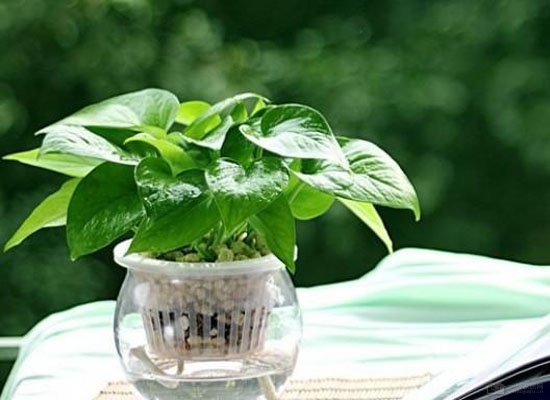
In a newly renovated house, the relevant testing organization first tested the air pollution in the house, then carried out a sealed test: all doors and windows of the home were tightly closed, 10 pots of pothos were placed in the master bedroom with the most severe pollution, watered once every three or four days; 2 kg of activated carbon was split up and placed separately in the cabinets, drawers and on the floor of the second bedroom; an air purifier was placed in the living room, running during the day and turned off at night.
More than 1 month later, the experimenters tested the three rooms again, and the results showed that the benzene content in all three rooms was still not over the standard, but the formaldehyde and TVOC content rose instead of falling.
Why did this happen? According to the explanation, the key problem lies in "closed doors and windows."
First, in theory, plants such as pothos, spider plant and snake plant can indeed remove formaldehyde, because the roots of these plants have a symbiotic bacterium that needs to absorb formaldehyde as a nutrient to sustain life. But its adsorption capacity is limited; once the pollution level is too high, the adsorption effect becomes negligible.
Second, because the doors and windows were tightly closed, after one month the harmful substances all accumulated together, and the pollution level was bound to increase; in addition, due to the climate at the time: the temperature in June was about 15°C higher than in May, and the rise in temperature can also cause pollutants to be released several times over.
Therefore, on site, the relevant organization immediately conducted another test - opening the closed doors and windows of the master bedroom completely, ventilating thoroughly for one hour, and then testing the pollutant content in the room again. As a result, the formaldehyde content in the master bedroom dropped to 0.093 mg/sq m, basically meeting the national standard; the TVOC content was 0.11 mg/sq m, far below the national standard.
This shows that to remove formaldehyde pollution after renovation, whether plants, activated carbon or air purifiers, all can only serve as auxiliary means; opening windows for ventilation is the most effective. Within the few years after house renovation, the habit of opening windows for ventilation should be maintained, especially in summer, when formaldehyde still remains in the renovation boards and will continue to volatilize at high temperatures.
In fact, through the above experiment, there is an undeniable fact: although pothos has limited ability to purify air in an environment with too much pollution, by comparison, the adsorption effect of activated carbon and air purifiers is even worse. That is to say, to purify indoor air after renovation, under the premise of ventilation, the role played by pothos is still irreplaceable.