How do you grow pothos well? Water, fertilizer, soil and all other factors must be suitable
How do you grow pothos? For the technically minded, you need to know the relevant technical parameters to grow pothos scientifically. Therefore, this article starts with the natural environment that pothos needs to grow, and introduces the conditions for its growth in terms of temperature, humidity and other aspects, so that pothos cultivation is better assured.
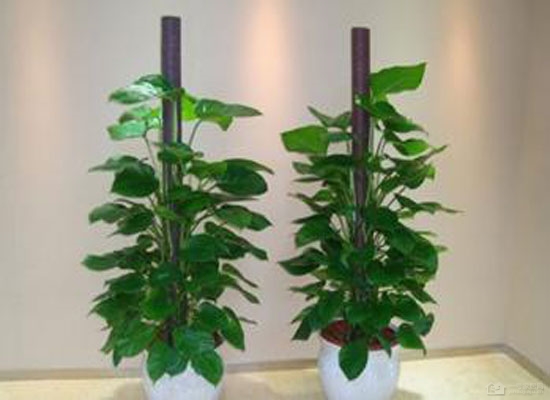
For plants, air and water are the key to growth. So what are the relevant environmental factors that pothos needs? Take soil cultivation as an example.
Temperature
In the north, pothos can safely overwinter at room temperatures above 10°C, and can grow normally at room temperatures above 20°C. Most households have no trouble reaching this temperature; what you need to watch out for is avoiding large temperature differences, and also making sure the leaves do not come close to heating equipment.
Humidity
This refers to the water content of the air in the plant's growing environment. While normal temperature is maintained, increasing humidity is extremely beneficial to plant growth. Humidity can be increased in the following ways. Place the plant near a humidifier, with the humidifier running more than 5 hours a day, so the plant can enjoy the mist it sprays out; use a sprayer set to the mist setting to spray water on the plant's leaves, stems and aerial roots, several times a day; keep a moderate amount of water in the saucer under the pot, and through its evaporation increase the humidity around the plant; gently wipe the leaf surface with a cold damp towel or toilet paper, or apply it lightly to the leaf surface for a short time (1-2 hours per day); cover the plant with a transparent plastic film to create a mini greenhouse effect, supplementing the plant's water through evaporation of moisture from the soil, but for no more than 2 hours a day, as too long will affect the plant's ventilation and photosynthesis.
Water
In autumn and winter, the amount of watering should be strictly controlled according to room temperature. Before heating is switched on, temperatures are lower and the soil of the plant evaporates more slowly, so watering should be reduced, with the amount controlled to between 1/4 and 1/2 of the original. Even after heating is switched on, watering should not be too frequent; if it is a pothos pole, water should be poured sparingly into the pot, and water should seep through the coir. In addition, you should also spray water on the places where aerial roots grow on the coir pole, to reduce insufficient water uptake by the roots caused by overly fast evaporation. Water used for watering in winter is best left to sit for a day, as water that is too cold can easily damage the roots.
Fertilizer
In the autumn and winter in the north, most plants grow slowly or even stop growing, so fertilizing should be reduced. Before the start of winter, mainly apply liquid inorganic fertilizer by watering or spraying, about once every 15 days. After the start of winter, fertilizing should mainly be foliar spraying, with fertilizer absorbed through the stomata on the leaf surface, so the fertilizer effect can act directly on the leaves. Foliar fertilizer should be a dedicated fertilizer; ordinary inorganic fertilizer is not easily absorbed by the leaves.
In fact, the vigorous vitality of pothos gives it strong adaptability to its environment. Therefore, growing pothos is suited to extensive management and does not need excessive pampering.