How to care for a Bromeliad: Six tips to keep it thriving
The bromeliad, also known as the pineapple flower, with the scientific name Guzmania lingulata, belongs to the Bromeliaceae family. It is an indoor ornamental flower for winter and spring, evergreen year-round, with beautiful and varied inflorescences in rich colors. Commonly cultivated varieties include bright red, pink, golden yellow, and rose red. The bromeliad has a long flowering period and is suitable for home cultivation. As one of today's most popular indoor foliage plants, it amazes people with its peculiar flowers and beautiful patterns. So, how do you grow a bromeliad? Let us walk you through the details below.
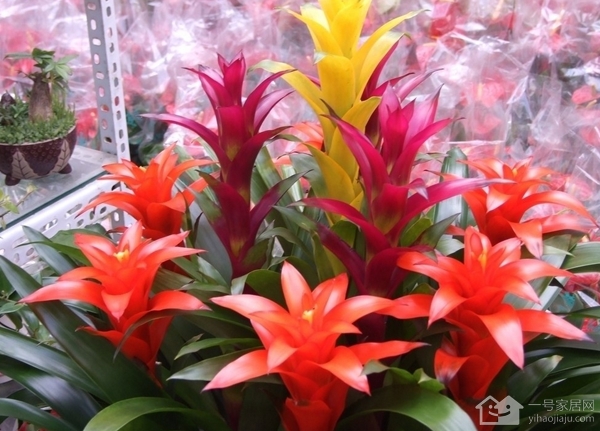
Bromeliad care tip one: Temperature
The bromeliad originates from tropical South America. Its suitable growing temperature is 15°C to 22°C, and the minimum winter temperature must not fall below 10°C, otherwise the plant will suffer cold damage, the leaves will turn yellow, and healthy growth will be affected.
Bromeliad care tip two: Light
To keep the bromeliad's leaves bright and to ensure regular flowering, light is very important. In winter, there must be at least 4 to 5 hours of direct sunlight each day. On cloudy and rainy days, artificial light can be used to supplement lighting. In summer, the pot should be placed in the shade of trees; for indoor cultivation, a shade net can also be set up as needed.
Bromeliad care tip three: Soil
The bromeliad thrives in loose, fertile, humus-rich soil. For home cultivation, you can mix 2 parts peat soil with 1 part fine sand to prepare the growing medium.
Bromeliad care tip four: Fertilizer
The bromeliad's flowering period is in winter, and it requires sufficient fertilizer. Usually, apply a dilute organic liquid fertilizer once every two weeks, such as a soaking solution of soybean cake or sesame paste residue (a concentration of 20% is suitable). Soybean soaking solution or fermented rice washing water can also be used.
Bromeliad care tip five: Watering
The bromeliad likes a humid environment. On ordinary days, simply keep the potting soil moist; generally do not water on cloudy and rainy days. Watering should be done before noon, or in the morning and evening in summer, but it must be poured into the leaf cup, not just into the potting soil. Keep the leaves dry and clean at night. To increase humidity, add moisture to the growing environment, such as sprinkling water on the ground or turning on a humidifier.
Watering should be determined by how much water is in the leaf cup. The leaf cup must have sufficient water, and the water quality must be clean. Fertilizer water can also be poured in, but it must be replaced with clean water about once a week, otherwise the plant core is prone to rot and a foul odor.
For home cultivation, it is best to use water that has been left to stand, and never water directly with tap water. The bromeliad is a flower that offers both beautiful blooms and attractive foliage. It is best to spray clean water on the leaf surface once a day to remove dust, make the leaves bright, and also help photosynthesis, promoting healthy plant growth.
Bromeliad care tip six: Pest and disease control
In environments with high temperature and humidity and poor ventilation, the bromeliad is prone to pest and disease problems, such as sooty mold, red spider mites, and scale insects. If disease is found, spray carbendazim promptly; for pests, spray omethoate. Whichever spray solution is used, it must be applied outdoors to prevent contaminating the indoor environment. In addition, you can buy sterilization and insecticide tablets from a flower market and bury them in the potting soil to eliminate pests and diseases at the root.
Red spots are a symptom of brown spot disease and require timely spraying of strong fungicides such as carbendazim, prochloraz, imazalil, or agricultural streptomycin for control.
This is because the timing of water spraying is chosen too late. Do not spray water after evening, as it easily breeds pathogens, and no water should remain on the leaves at night.
The bromeliad is very suitable for indoor decoration. It likes at least 3 hours of ample sunlight per day, but it also tolerates partial shade. In summer, it prefers cool, ventilated conditions, and it can also tolerate a slightly dry climate. The soil should be acidic sandy loam rich in humus with good drainage.