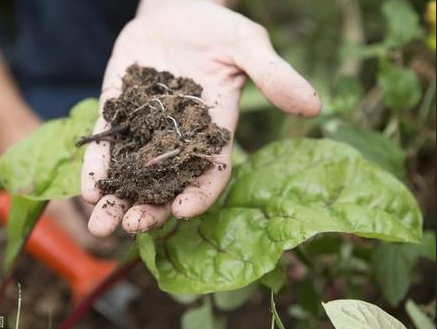
Livestock and poultry manure dried and processed into fertilizer, environmentally friendly and boosting agricultural waste utilization
According to the "Fertilizer Types, Items and Specifications" regulations, at present, if livestock and poultry manure is to be used as fertilizer, it can only be used as livestock and poultry manure compost, general compost or miscellaneous material compost. Chen Chun-chi, deputy chairman of the Council of Agriculture, said on the 29th while reporting to the Legislative Yuan's Social Welfare and Environmental Hygiene Committee that revisions to the "Fertilizer Types, Items and Specifications" are being studied to add items for processed livestock and poultry manure fertilizer and related regulations.
The "Fertilizer Types, Items and Specifications" once stipulated that livestock and poultry manure could be used as processed fertilizer, but because the "Regulations on the Reuse of Agricultural Business Waste" had not, before February of this year, opened up methods other than fermentation for treating livestock and poultry manure, and no fertilizer manufacturer had registered for a long time, it was therefore deleted. Hung Hung-yi, section chief of the Agricultural Machinery and Fertilizer Section of the Agriculture and Food Agency, explained that in the past, livestock and poultry manure absolutely had to undergo fermentation and decomposition before it could be used as fertilizer.
In recent years, the Taiwan Agricultural Research Institute has developed a technology by which livestock and poultry manure can be used as fertilizer directly after drying without fermentation and decomposition. In February of this year, the Council of Agriculture amended the Regulations on the Reuse of Agricultural Business Waste, adding a method by which livestock and poultry manure can be reused after drying. Hung Hung-yi said the Agriculture and Food Agency then began reviewing whether processed livestock and poultry manure fertilizer should be reintroduced into the Fertilizer Types, Items and Specifications, and details such as technology and schedule still await discussion by the Fertilizer Technology Advisory Committee.
In addition, Chen Chun-chi also said during the report that the Council of Agriculture encourages farmers to apply domestically produced organic fertilizer to improve farmland soil fertility, which not only helps dispose of agricultural and livestock waste and surplus farm materials, but can also improve farmland soil fertility at the same time. And wastes such as rice straw and rice husks can not only be used as fuel rods, but are currently also used in cooperation with weaving businesses.