How to grow potted cacti? Detailed guide to care methods and precautions
Nowadays every household uses electrical appliances that emit electromagnetic radiation, so people choose to keep potted cacti in their rooms to reduce the radiation they absorb, and potted cacti have therefore won consumers' favor. So how should potted cacti be grown, and what precautions should be taken during care? Next, the editor will answer your questions.
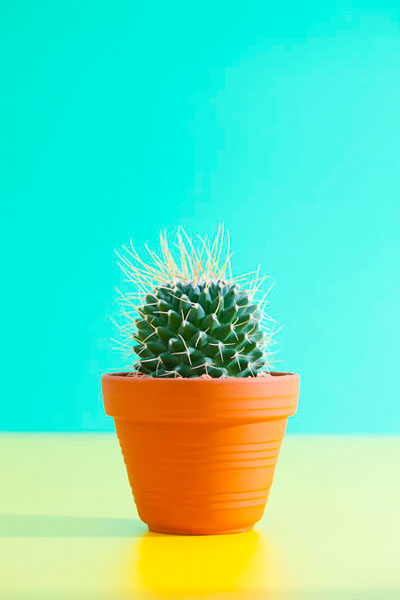
May and June are a good time for cuttings; cacti root most easily at 25-28°C. To make the cuttings root as quickly as possible, besides the cuttings themselves being sturdy and the chosen substrate and cutting time and method being appropriate, management during the rooting period is also very important; it includes the regulation of several aspects: temperature, substrate moisture, air humidity and ventilation, and light. The temperature should be kept within the optimum range for rooting as much as possible, and can be adjusted by means of ventilation, shading or heating. For epiphytic types, relatively high air humidity is required during the rooting period, and if the weather is dry, they should be misted appropriately.
The cutting substrate should be kept moderately moist, neither too dry nor too wet. As much oxygen as possible should be kept in the substrate, so regular ventilation is very necessary. When there are few cuttings and the pot is large, the cuttings should be inserted as close to the edge of the pot as possible; the good air permeability at the pot's edge favors rooting. Light should be half of that for normally cultivated plants, and as the roots form and grow, the light can be gradually increased. Some types are difficult to root, such as some species with hard, fleshy tissue and species containing tannins in their bodies; before cutting, the mother plant can be shaded with paper for a period to soften its tissue, and then the cuttings can be taken and inserted.
Among grafted plants that use Hylocereus undatus as the rootstock, some scions have aged lower portions and do not root easily when removed from the rootstock for cutting; a few cm of the Hylocereus undatus "wooden core" can be retained while the stem flesh of the Hylocereus undatus is completely removed, and then cutting makes rooting easier. In addition, for some cuttings that are difficult to root, soaking them in a 200 ppm naphthaleneacetic acid solution after the wound has dried has a certain effect on promoting rooting.
The soil must drain and breathe well; sandy soil can be chosen. Water once every half month (use water that has been left standing for more than three days), or water by spraying. In winter, when the temperature is low, it will also enter a dormant period, so watering must be controlled. If the temperature in your home is relatively high, then there is no problem; apply a once every 10 days to half a month diluted, fully decomposed liquid fertilizer, and do not fertilize in winter.
Cacti (and cactus balls) like sunlight, so let them sunbathe whenever you have time, but please do not expose them to harsh direct sun. Choose weather with mild sunshine and place them on a windowsill with common light.
The above is the editor's summary shared with everyone on how to grow potted cacti and on care and related aspects. I hope everyone will grow potted cacti correctly and also let potted cacti truly play their role in daily life.