Why won't your hoya bloom? Detailed explanation of the causes (with pictures)
Some flower lovers buy a hoya covered in blooms, yet the next year it does not flower. In fact, the main reason is that many people, after the hoya blooms, find the stems too long and cut them short. The hoya is not like the four-season mandarin or the "dragon spits" plant that need pruning; its growth points and flower-forming hormones are mostly located on the upper part of the stems, so if you cut them off rashly, it will be hard for it to bloom again; you then have to wait for the stems to grow and mature again, which takes a long period. Even the flower stalks of the hoya must not be removed, because the following year flower buds will form at the same growth point.
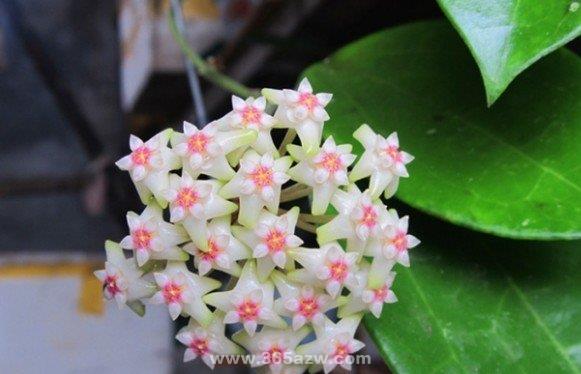
The hoya greatly fears having its roots disturbed, because the young roots are very sensitive by nature, which affects their absorption capacity. If they are disturbed before or after flower bud differentiation, it is even more likely to result in no flowers. Another reason is that the potting soil is too compacted, causing the roots to rot; therefore the potting soil should be mixed so that 40 percent of it is loose peat soil. As for fertilizing, it is better to apply it lightly rather than heavily, mainly with phosphorus and potassium fertilizers and secondarily with nitrogen fertilizer; but when there are pests or fungal diseases and you need to apply pesticide, or on rainy days, it is not suitable to fertilize.
Hoya pruning: Young plants should be pinched back early to encourage branching, and supports should be set up in time so they can climb and grow upward. When repotting, cut away some of the old roots. After the flowers fade, let them wither and drop naturally; the flower stalks must not be cut off.
Hoya repotting: Choose a small pot with feet; young plants should be repotted once every spring, while mature plants can be repotted once every 2-3 years. For plants that already have buds and flowers in bloom, the pot must not be moved casually, otherwise it easily causes bud and flower drop.
Hoya fertilizer and water management: In the growing season, besides watering according to the "water when dry, dry out between waterings" rule, you also need to spray water on the leaves regularly. In summer, watering should be ample, and at the same time pay attention to increasing air humidity to promote healthy growth. In the peak growing season, apply a fertilizer solution combining phosphorus and potassium once or twice a month.
Hoya light selection: For potted hoya, in spring and autumn it is best placed outdoors on a south-facing windowsill or indoors near a south window, which keeps the leaves emerald green and glossy and gives good flowering. In summer it needs to be moved to a shaded spot to prevent direct strong light, otherwise the leaves easily turn yellow. If it is kept in a place with insufficient light for a long time, the leaf color fades and the flowers are few and not vivid.