How to treat pest infestations in spider plants? Regular inspection and frequent fertilizing are key
Plants absorb formaldehyde and purify the air, making this a natural method with few side effects, so it is widely accepted by many households. Among the few plants with this ability, the spider plant (Chlorophytum comosum) is one of them, and with its stronger ornamental appeal it has attracted more households to bring it indoors. So, when it comes to spider plants absorbing formaldehyde, just how effective are they?
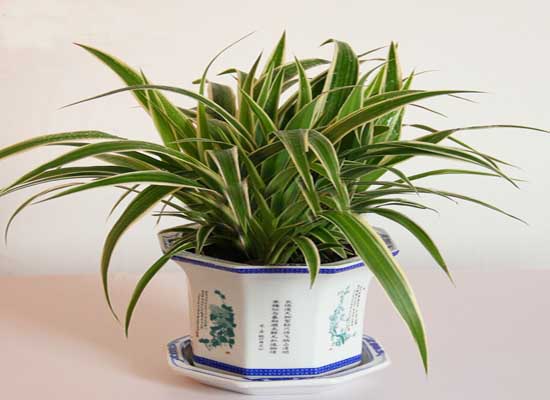
The spider plant has earned the reputation of an air purifier, and this is related to its characteristics.
1. Spider plants can carry out photosynthesis in weak light and can absorb more than 80% of harmful gases indoors, with an especially strong ability to absorb formaldehyde. Generally, keeping 1-2 spider plants in a room can absorb nearly all the toxic gases in the air, and one spider plant in a room of 8-10 sq m is equivalent to an air purifier.
2. Experiments have shown that a spider plant can absorb and purify all the harmful gases in an experimental container within 24 hours. As long as one spider plant is placed in a bedroom, within one day it can absorb harmful gases such as carbon monoxide and nitrogen peroxide released by indoor appliances, stoves, plastic products, paints and so on and transport them to its roots, where microorganisms in the soil decompose them into harmless substances that are then absorbed as nutrients. Therefore, the spider plant also has the fine reputation of being a "green purifier."
3. During its own metabolism, the spider plant can also convert carcinogenic formaldehyde in the air into substances such as sugars and amino acids.
4. Because harmful gases such as formaldehyde in newly renovated houses are continuously released, environmental experts recommend keeping good ventilation after renovation and growing several pots of green plants such as spider plants, so that after the new house is left vacant for three to six months it can basically meet the standard for moving in.
Spider plants are the best plants for purifying indoor air, and this has already been acknowledged by scientists. American environmental expert Bill Wolverton once conducted an experiment in which he placed a spider plant in a specially made plexiglass container, gave it good light, then filled it with air from a polluted room, and after some time measured the composition of the air that had been absorbed by the spider plant. The result showed that almost no harmful gases remained in the container, and its efficiency almost exceeded that of an air filtration program.
Although spider plants have a relatively strong ability to adsorb formaldehyde, and this is also supported by experimental data, we should also clearly see that their ability is limited after all. We should not exaggerate this ability too much, otherwise it will greatly reduce the effectiveness of the air purification process. This may be exactly why many sources emphasize the size of the space, and also why environmental experts, while recommending spider plants, also put ventilation first and moreover emphasize the importance of time.