How to grow spider plants well? Prepare the right potting soil and fertilize sparingly
Spider plants are not only attractive, but also quite powerful at absorbing "toxins," so many families like to grow two or three pots of them at home. So, are spider plants easy to grow? How do you grow spider plants? This article provides a brief introduction to the soil, water, fertilizer, light and other issues involved in cultivating the plant.
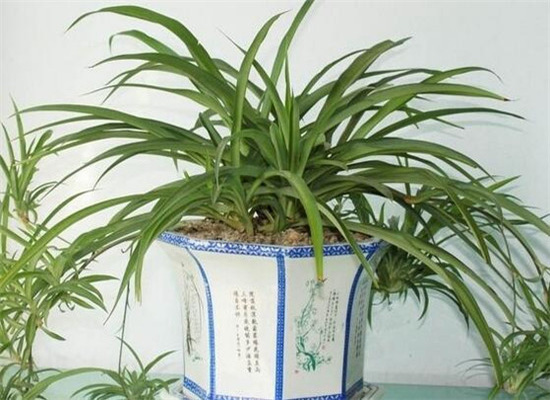
The spider plant has long been known as an air purifier. And this plant is also quite easy to propagate.
[Substrate requirements]
Spider plants adapt well to various soils and are easy to cultivate. Fertile sandy loam, humus soil, peat soil, or fine sandy soil with a small amount of base fertilizer can be used as potting soil.
[Container]
A breathable clay pot is most suitable for growing spider plants.
[Care and management]
①Light
Spider plants prefer a semi-shaded environment. In spring and autumn, avoid direct exposure to strong sunlight. In summer, when sunlight is especially intense, they can only receive some slanting light in the morning and evening, and 50%-70% of the sunlight needs to be shaded during the day; otherwise the leaf tips will dry up. Variegated varieties are especially afraid of strong sunlight. Golden-edge spider plants grow more beautifully in weak light, with the yellow edges more pronounced and the leaves more glossy. But in winter, they should be given more sunlight to keep the leaves tender and fresh green. When grown in pots at home, spider plants should be placed in front of a south-facing window; otherwise the leaves will lose their luster and may even wither. When conditions allow, it is best to turn the pot about 15° in a fixed direction each week to ensure the spider plant hangs down evenly.
②Watering
Spider plants like a moist environment, and the potting soil should be kept moist regularly. In summer, watering should be sufficient; around noon and in the evening, water should also be sprayed on the branches and leaves to promptly wash off dust on the leaves and prevent the leaves from drying out. However, the fleshy roots of spider plants can store a large amount of water, so they have strong drought resistance and will not dry out and die even if not watered for several days. In winter, when the temperature is below 5°C, water less and do not let the potting soil become too wet, otherwise the leaves will easily turn yellow.
③Fertilizing
Spider plants are foliage plants that are relatively tolerant of fertilizer. If fertilizer and water are insufficient, they easily become scorched and aged, with yellowing leaves, losing their ornamental value. From late spring to early autumn, apply an organic fertilizer solution once every 7-10 days, but for variegated varieties such as golden-edge and golden-heart spider plants, less nitrogen fertilizer should be applied, so as not to make the variegated leaf colors fade or even disappear and affect their appearance. Organic fertilizer fermented from bone meal, eggshells, etc. can be appropriately applied. After full fermentation, take an appropriate amount of diluted liquid and apply it once every 10-15 days, which can make the variegated leaves brightly colored.
During the growing season, apply liquid fertilizer once every two weeks. Variegated varieties should be given less nitrogen fertilizer, otherwise the white or yellow markings on the leaves will become less obvious. Stop fertilizing when the ambient temperature is below 4°C.
④Pruning
At ordinary times, cut off yellow leaves at any time. Each year in March, the plant can be repotted once, cutting off old roots, rotten roots and excess fibrous roots. In early to mid-May, cut off some of the old leaves of the spider plant, which will encourage more new leaves and small plantlets to sprout.
Spider plants have quite well-developed root systems. After growing them for a period of time, the pot should be replaced in time to prevent the roots from becoming crowded, which can cause yellowing leaves, withering and other problems.
In fact, spider plants are not as difficult to grow as imagined. This highly ornamental plant is still easy to keep alive. Given its powerful air-purifying function, why not get hands-on and add one or two pots of spider plants to your home.