What to do about root rot in pothos? An expert teaches you the solution
Pothos is an indoor potted plant that stays green all year round. In winter, outdoor plants have already withered, yet pothos remains lushly green. Many owners run into root rot when growing pothos, so what should be done about root rot in pothos? Let an expert teach you the solution.
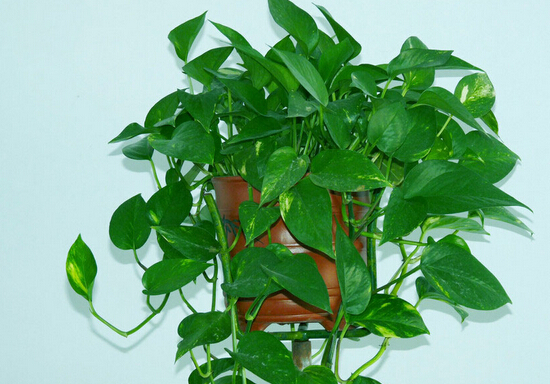
What to do about root rot in pothos?
Pothos has fairly strong shade tolerance, so when grown at home it can be kept indoors all year round. If it is grown outdoors, pay attention to shading, and especially in summer take care to prevent direct strong light, otherwise new leaves will become smaller and the leaf color dull, and the leaf edges are easily scorched.
As the pothos plant keeps growing, its stems grow longer and longer, and nutrients are generally supplied first to the top according to apical dominance. So if fertilizing cannot keep up, the old leaves at the bottom will turn yellow and even dry up and drop off because of insufficient nutrients. In addition, because old leaves have a large area, their transpiration is also relatively high, so their demand for water and nutrient replenishment is relatively greater.
Besides the reasons above, yellowing of old pothos leaves may also be related to overwatering. Although pothos likes water, soil-grown pothos can also develop root rot because of too much water (when soil-grown plants are watered too heavily, the roots become oxygen-deprived). If there is too much water, the plant will show yellowing starting from the old leaves first, then spreading to the whole plant.
Finally, it should be noted that with pothos, if it is a large pole-style plant, the leaves at the base will generally all drop off after 2-3 years. This is a natural rule, and it can be replanted.
Root rot in pothos is mainly because there is too much water and no ventilation, and if there are also pathogens in the soil, the roots rot very easily.
Key points for the daily care of pothos:
(1) Pothos is generally repotted once every 2-3 years. Peat soil (leaf mold or garden soil) and river sand are commonly mixed in equal amounts, and a little base fertilizer is added, making the growing medium.
(2) Watering pothos. From March to September the water requirement is somewhat greater, so it needs frequent watering or spraying, and then the amount of watering is gradually reduced.
(3) Fertilizing pothos. Mainly nitrogen fertilizer is applied, but variegated pothos and pothos should use less nitrogen fertilizer; in the peak growing season, apply dilute liquid fertilizer twice a month.
(4) Pothos should be placed in a ventilated, shady spot, and the growing environment should have a certain humidity. If ventilation is poor and the potting soil is also waterlogged, pothos will develop root rot, and the possibility of root rot disease also increases.
Pothos is one of the most useful kinds of indoor potted plants. It can not only decorate the home, but also purify indoor air and absorb harmful substances from the air, making it an ideal choice among indoor potted plants.