What are the methods for making a pine bonsai
Bonsai is a major element in home furnishings today, and not only in the field of home decor; wherever we like, it can serve as a decorative piece. The pine bonsai is one type of bonsai, and it is also a fairly popular choice of bonsai type. Here, the editor will mainly teach everyone how to make a pine bonsai. Exactly how do you make a pine bonsai? What methods are there?
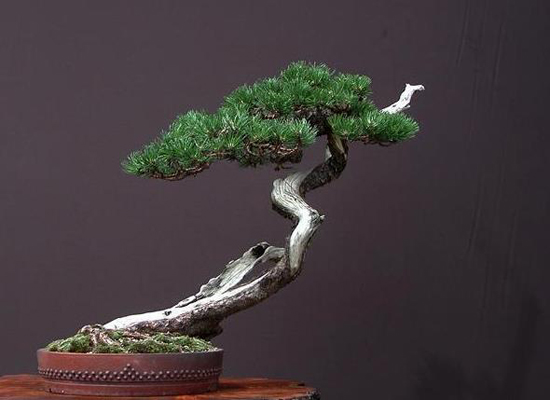
Here, the editor will mainly explain its production method through four steps, namely material selection, pot selection, soil use, and planting. Let us take a look at the specific methods together.
1. Material selection: For making a pine bonsai, Podocarpus macrophyllus (yew podocarpus) is generally the main choice. The material for a yew podocarpus bonsai is usually obtained through artificial propagation, and it can be propagated by sowing or cuttings. Wild yew podocarpus from the mountains and fields can also be chosen; those growing in stone crevices that are short in stature, with ancient and elegant branches, and beautiful form can be collected, first cultivated in the open field for 1 to 2 years, then transplanted into a pot and shaped.
2. Pot selection: The yew podocarpus bonsai has a vigorous, ancient, elegant and refined posture, and purple clay ceramic pots or glazed ceramic pots are commonly used. The pot shape depends on the tree shape: for the cliff-hanging style, use a tall, deep thousand-tube pot; for the slanting-trunk style and lying-trunk style, use a medium-deep rectangular or oval pot; for the raised-root style and stone-attached style, use a relatively shallow pot or basin.
3. Soil use: The potting soil should preferably be fertile, moist, loose in texture, well-drained, slightly acidic sandy loam. Place a layer of coarse sandy soil at the bottom of the pot to facilitate drainage.
4. Planting: Transplanting into a pot is best done before sprouting in spring. Large seedlings should retain some of their original soil, and dead roots and overly long roots should be cut off so that the fibrous roots spread out in the potting soil; press the soil firm so it closely contacts the root system, which is beneficial for growth and survival.
From the editor's introduction above, it can be seen that making a pine bonsai is actually not complicated. The main things are that the material must be chosen well, the tree must be chosen well, and the soil must also be chosen well. Since it is called a bonsai, of course attention must be paid to aesthetics, and whether its soil is chosen well also ensures its durability.