What to Do If Your Clivia Has Root Rot? A Few Effective Solutions
Potted plants are little helpers in home decor, bringing life and vitality to our rooms, and Clivia (Clivia miniata) is one of the most beloved among them. But root rot is very likely to occur when growing potted plants. So what should you do if your Clivia has root rot? What solutions are there?
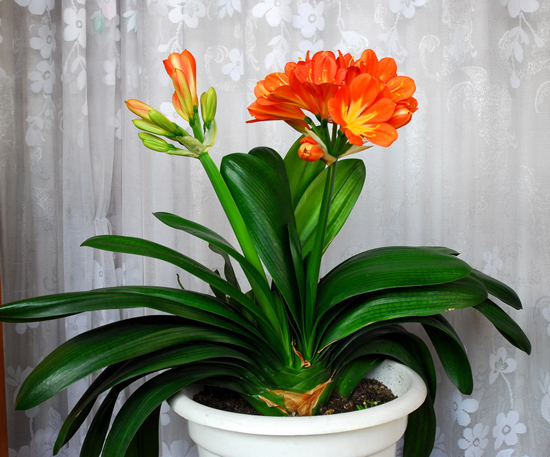
Root rot is a very common problem during plant cultivation, and it may be caused by improper planting or a poor environment. The roots of Clivia are clustered, thick, and fleshy, with a high water content, and they are crisp and tender and easily broken. With even slight mismanagement, root rot easily occurs. It generally shows up in the seedling stage as rotting from below the leaf base. In mature plants, it mostly rots from the middle of the root downward. After root rot occurs, new leaves grow slowly or stop growing, the leaves turn yellow and become weak, and the old leaves gradually scorch and die. When root rot is severe, the whole plant dies.
What solutions are there:
1. Prepare a good growing mix. The general requirements for Clivia growing mix are that it be fertile, loose, airy, rich in organic matter, slightly acidic (pH 5.5-6.5), and free of pests and diseases. The growing mix can be made by combining different substrates such as pond mud, leaf mold, vegetable garden soil, compost soil, plant ash, and river sand in certain proportions. The prepared growing mix should be sterilized by stir-frying, sun-drying, or steaming, or with chemicals such as formalin, carbon disulfide, or potassium permanganate before use. Every time you repot, use a new growing mix that has been sterilized.
2. Prevent root damage. When transplanting Clivia seedlings into pots or repotting old plants, transplant with the soil ball as much as possible to prevent root damage, so that wounds do not become infected by pathogens.
3. Water and fertilize reasonably. Fertilizer and water management for Clivia must be done very carefully. Improper watering and fertilizing is one of the important causes of root rot. Water timely and in the right amount, following the principle of keeping the potting soil moist, and strictly prevent waterlogging in the pot. For fertilizing: organic fertilizer must be fully fermented and decomposed; apply light fertilizer frequently, do not apply concentrated fertilizer, apply it together with drought-relief water, and do not fertilize when the soil is dry, so as to prevent root rot from water damage and fertilizer damage.
4. Prevent and control diseases. The main causes of Clivia root rot are root rot disease and scab disease. On the basis of strengthening fertilizer and water management, strictly disinfecting the growing mix, protecting the root system, and enhancing disease resistance, use diluted solutions of pesticides such as thiophanate, carbendazim, Tuzet, and lime sulfur to water the roots or spray at the early stage of the disease to control the damage and root rot.
5. Rescuing plants after root rot. For a diseased Clivia plant found to have root rot, remove it from the pot together with the soil, gently knock off the soil, rinse it clean with water, cut off the rotten root pieces, soak in 0.1% potassium permanganate for 5 minutes to disinfect, then dip the wounds in sulfur powder or plant ash, or 200-times-diluted copper sulfate solution, place it in a cool, ventilated place to let the wounds dry for 2 to 3 days, and then repot it in new soil. For plants with severe root rot, after root trimming and disinfection, first cultivate them in sand, and once new roots have grown, repot them again.
Although Clivia root rot may be caused by environmental reasons, it is also often caused by people, such as overwatering or improper management, so we should also know some cultivation techniques. Only in this way can we avoid problems, and if they occur, we should also know how to solve them.