A Detailed Guide to Growing Peace Lilies: Methods and Precautions
The peace lily, also known as Spathiphyllum, bract-leaf taro, "smooth sailing," and peace taro. Because its leaves resemble those of the arrowroot and its flowers resemble a crane holding its head high, graceful and pure white, it gives people a sense of "purity, calm, peace and tranquility," and is regarded as the "flower of innocence." The peace lily is a perennial evergreen herbaceous foliage plant. How should you grow a peace lily at home?
First, we need to understand the living environment of the peace lily, and then make a judgment about the home style it suits.
Light conditions: a shade-loving plant, suited to a warm, damp and shaded environment
Care required: keep the potting soil moist and fertilize regularly; the leaves need frequent misting.
Can remove: ammonia, acetone, benzene, trichloroethylene, formaldehyde
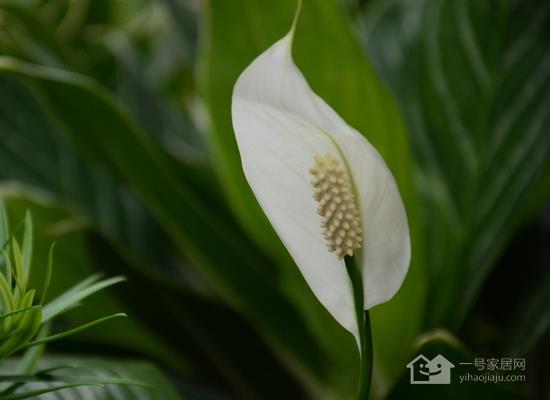
Cultivation and management
The peace lily is fairly shade-tolerant; as long as there is about 60% scattered light it can meet its growth needs, so it can be grown year-round indoors in a spot with bright scattered light. In summer, 60%-70% of sunlight can be blocked out; direct strong light should be avoided, otherwise the leaves will turn yellow, and in severe cases sunscald will occur. In greenhouses in the north in winter, no shading or little shading is needed. If the light is too dim for a long time, it will be difficult for it to bloom. The peace lily is a high-temperature-loving species and should be cultivated in a high-temperature greenhouse. The minimum nighttime temperature in winter should be 14-16°C, and the daytime temperature should be around 25°C. Prolonged low temperatures easily cause leaf drop or a scorched-yellow appearance.
Key care points
Substrate selection: the peace lily needs loose potting soil with good drainage and air permeability. Before obtaining high-quality seedlings, the cultivation substrate must be prepared. The substrate can be ordinary Northeast peat or imported German peat, but either must have 15%-20% perlite added and be stirred evenly; choose large-grained perlite, and at the same time be careful not to crush the perlite. The prepared substrate should have an EC value of around 0.7 mS/cm and a pH value maintained at around 5.5.
Temperature control: the peace lily is a high-temperature-loving species and should be cultivated in a high-temperature greenhouse. The most suitable daytime and nighttime temperature for the peace lily is 20°C-21°C, and it should not exceed 24°C at most. If the daytime temperature is relatively high, as compensation, the nighttime temperature can be appropriately lowered. For example, if the daytime temperature is 27°C for 6 hours, then at night the temperature should be kept at 9°C for 6 hours. Other situations can be deduced by analogy. Pay special attention: if the peace lily is kept at a low temperature for a long time, it is prone to leaf drop or a scorched-yellow appearance.