How to grow Murraya paniculata (orange jasmine)? Keep these precautions in mind
As a plant, Murraya paniculata (orange jasmine) is now often placed indoors and can produce a very good ornamental effect, but most people do not understand how the Murraya paniculata plant grows. Below is an introduction to how to grow Murraya paniculata and what precautions to take.
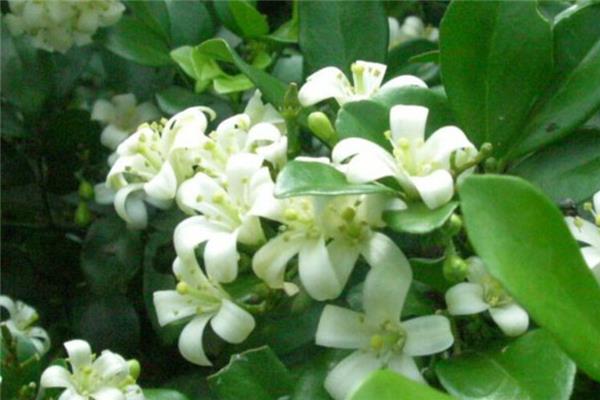
First, during the growing period of Murraya paniculata, loosen the soil and remove weeds in time, and apply diluted human urine and manure 1-2 times as appropriate. For those harvesting leaves, nitrogen fertilizer should be the main application; for those harvesting flowers, add superphosphate. In the later stage of Murraya paniculata growth, pay attention to pruning, cutting off overly dense branches or leggy branches to facilitate ventilation and light penetration. In the north, it overwinters indoors in winter, and the lowest temperature should not be lower than 5°C. The winter temperature should also not be too high, otherwise it easily consumes nutrients and affects flowering the following year.
Second, Murraya paniculata is not suitable for being placed indoors; it is better placed in semi-shade, and in summer attention must be paid to preventing exposure to the sun; in winter it needs to be put in a greenhouse, and the temperature must not be lower than 5°C. The placement location should be sprayed with water frequently to maintain air humidity. Regarding watering, Murraya paniculata likes moisture, but because Murraya paniculata grown in pots has limited potting soil, it dries out very easily. If it is not watered in time, it will die from lack of water. Murraya paniculata certainly needs continuous watering, but not too much; excessive moisture will cause leggy growth, and long-term overly wet potting soil will cause poor root respiration, easily leading to root rot and death.
Then, Murraya paniculata can be repotted once every 2-3 years. The best period is October-November in autumn, and late spring April-May is also fine. Winter is generally not suitable for repotting. For repotting, you can use the original pot or change to a pot one size larger, decided according to the size of the Murraya paniculata. When repotting, you can combine root pruning and soil replacement. Roots that are too dense or too long should be pruned. When removing the plant from the pot, remove 50-70% of the old potting soil around the soil ball, cut off rotten roots and some old roots, and then process it according to the potting procedure. If more of the original soil is retained, repotting can be done at any time without seasonal restrictions. If most or all of the old soil needs to be replaced, the appropriate repotting period must be strictly selected. Therefore, watering should follow the principle of "do not water if not dry, water thoroughly when watering." Generally, in the high-temperature period of summer, water once in the morning and once in the evening; in spring and autumn, water once a day or every other day; in winter, water once every few days; during the plum rain season or on rainy days, watering may be omitted.
Finally, watering can be combined with fertilizing, and after applying topdressing, water in time. Tap water should be stored in a water vat for one day before use. The watering tool is best a watering can with a shower head. Fertilizing: the nutrients in the potting soil are limited. In order to supply the necessary nutrients for the growth of bonsai trees, attention should be paid to supplementing appropriate fertilizer. However, Murraya paniculata grows slowly, so too much fertilizer should not be applied, which would cause leggy growth and affect its beauty.
The above is a brief introduction to the cultivation methods and precautions for Murraya paniculata. If you are interested, you can continue to pay attention to Murraya paniculata.