What are the care methods and precautions for potted water lilies?
Seeing water lilies in full bloom in the park lake in summer lifts your spirits. The beautiful petals of the water lily bloom lightly in the lake, and against the green leaves they are like holy flower fairies; that beauty always leaves people enchanted and amazed. If only water lilies could be transplanted into pots, so we could admire them at home anytime. However, potted water lilies are not that easy to keep alive. So how do you grow potted water lilies? What precautions should you take in their care? Below, the editor will explain the planting method for potted water lilies in detail.
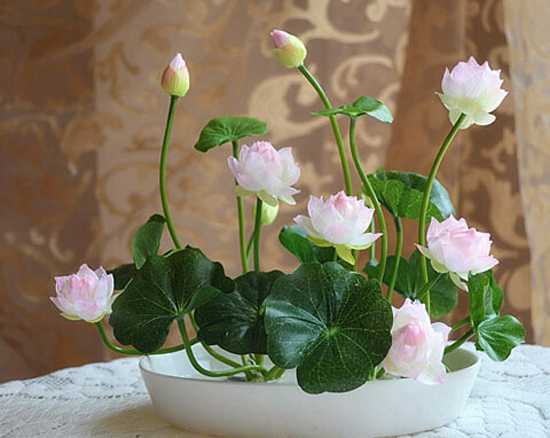
Keeping a few pots of water lilies at home not only purifies the air but also adds a touch of beauty to your home environment. So how do you grow potted water lilies? Let us learn together below how to grow potted water lilies.
Potted water lilies should be divided and repotted once every spring. When repotting, it is best to choose a flower pot with an inner diameter of more than 30 cm, so the plant can fully stretch out and grow and develop normally, producing large leaves and large flowers. Use pond mud or vegetable garden soil for the potting soil, and first place a little hoof pieces or crushed bone pieces at the bottom of the pot as a base fertilizer. After planting the rhizome, cover it with a layer of surface soil such as river sand or field mud, water it thoroughly, and after it sprouts, submerge the pot soil in water with the water surface slightly higher than the soil surface. Place it in a well-ventilated, sunny spot for care, and keep the water clean.
The above is an introduction to how to grow potted water lilies. After reading the planting method above, I believe you now basically have a clear idea of how to grow potted water lilies. What should you pay attention to in the daily care of potted water lilies after planting? Below we will discuss daily care matters for potted water lilies.
In hot seasons, be careful to keep the pot water clean. After flowering, promptly cut off dead leaves, leaf stalks and flower stems to prevent nutrient consumption and keep the plant attractive. But if the flowers sink into the water after fading, they absolutely must not be cut off, so that they can complete the seed-setting stage. During the growing period, if growth is not vigorous and the leaves are small and thin, you can bury a little cake fertilizer or urea beside the rhizome. Water lilies are sun-loving plants and require ample sunlight during the growing period. If placed in a shaded spot for care, moss is likely to grow on the water surface, and the plant will grow weakly, producing only leaves and no flowers. Potted water lilies generally bloom once a year. After flowering, wait until the leaves wither, then take the rhizome out of the mud and store it in a greenhouse or in water-containing sandy soil. Alternatively, around the Cold Dew solar term, pour out the pot water and cut off the dead branches and rotten leaves. For summer management, the main thing is to steadily control the water depth, keep the water clean, and change the water at appropriate times. The best time to change the water is in the early morning, to prevent too great a temperature difference between the old and new pool water from affecting the normal growth of flowers and leaves. At the same time, while washing the water pool, remove rotten leaves and leftover petals, but do not remove the flower receptacle, so that seeds can form. Before freezing, move the potted plants indoors where it does not freeze for overwintering. Store them in the original pots, keep the potting soil moist, and move them outdoors again the following spring.
These are all the care methods and care precautions for potted water lilies. I hope this article by the editor is helpful to you, and I also hope you can soon cultivate beautiful potted water lilies.