A Detailed Guide to Autumn and Winter Care and Management of Strelitzia
This article mainly introduces the cultivation methods of Strelitzia (bird of paradise), and the autumn and winter care and management of Strelitzia (bird of paradise). Strelitzia is also called bird of paradise flower or crane flower, and is a perennial herbaceous plant of the genus Strelitzia in the family Strelitziaceae. Strelitzia is native to South Africa. It likes a warm, humid environment, likes light, and also tolerates partial shade; it is highly drought-tolerant, does not tolerate waterlogging, and is not cold-tolerant. It prefers soil rich in organic matter, well-drained, and slightly clayey. Strelitzia is a typical bird-pollinated plant; apart from its place of origin, it is difficult for it to set fruit when cultivated elsewhere.
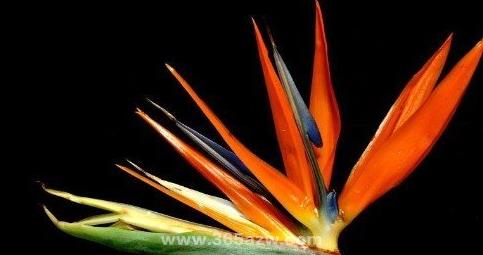
Strelitzia has thick, fleshy roots. Its leaves are large, thick, leathery, and evergreen. The flower stalk is terminal or grows from the leaf axil; the spathe is green with a reddish tinge along the edges, bearing 6-8 flowers that open in succession. The outer tepals are orange and the inner tepals are sky blue. The flower shape is peculiar, like a group of cranes raising their heads and gazing into the distance, hence the name. Strelitzia has graceful flower posture, a peculiar flower shape, and a long flowering period. It is an extremely beautiful flower, suitable for decorating indoor studies and halls, and is also a precious cut flower and cut foliage; kept in water in a vase, it has a unique style and endless charm, and is deeply loved by people.
Strelitzia has strong adaptability and is easy to cultivate. For pot cultivation, choose a relatively deep and large pot. The potting soil can be made from 8 parts leaf mold or peat soil, and 1 part each river sand and compost soil. When planting, set it slightly deeper than in the original pot. After planting, do not keep the potting soil too wet; after the first thorough watering, wait until it dries before watering again.
Strelitzia likes light but avoids direct strong light. Except in summer, give it sufficient light; insufficient light will make the plant grow thin and weak, with poor flowering or no flowering. In summer, pay attention to shading or place it in a well-ventilated semi-shaded spot. During high summer temperatures, frequently sprinkle water on the ground around the plant or on the leaves to lower the temperature, so the leaves are not scorched and turned yellow.
Strelitzia is afraid of drought and averse to waterlogging. In water management, you must grasp the right amount; the amount of watering should depend on the season, the plant's growth condition, and the actual degree of soil dryness and moisture. Generally speaking, water normally by the principle of watering when dry and stopping when wet; in summer, watering should be sufficient; after late autumn, reduce the amount of watering; in winter, control watering, and it is better to keep the potting soil somewhat dry.
Strelitzia relatively likes fertilizer. During the growing period, apply a dilute cake fertilizer solution about once every half month. When the flower stalk has formed and up to the full flowering period, you can add 0.5% superphosphate to the fertilizer solution, which will make the flowers bloom more brilliantly. In areas where the water is somewhat alkaline, add a 0.2% ferrous sulfate solution along with watering and fertilizing, applying it once a month, to prevent soil alkalization. Stop fertilizing after mid-October.
Strelitzia is not cold-tolerant. In northern regions, move it indoors in mid-October and place it in a sunny spot; keeping the room temperature above 10°C is enough for it to overwinter safely.
Strelitzia is mostly propagated by division, usually carried out in April-May. Separate the clumps with a knife, coat the cuts with charcoal powder or plant ash to prevent rot, and be careful not to damage the root system, so as not to weaken the plant's growth vigor and make it hard to recover. Because it generally does not set seeds; although artificial pollination can produce seeds, seedlings need 3 years before they can bloom. For large-scale propagation, tissue culture can also be used.
For plants that have bloomed, after the flowers fade, promptly cut off the spent flower stalks to reduce nutrient consumption. For mature plants that have bloomed, repot once every other year.