How many kinds of pothos are there? Let us introduce you to the common types of pothos
Pothos is a plant that stays evergreen all year round and has excellent ornamental value and air-purifying effects. Pothos is very easy to grow: you can plant it in soil, or find a pretty glass and pour in clean water and it will survive. So pothos is basically the easiest of all plants to grow, making it ideal for lazy gardeners. So how many types of pothos are there?
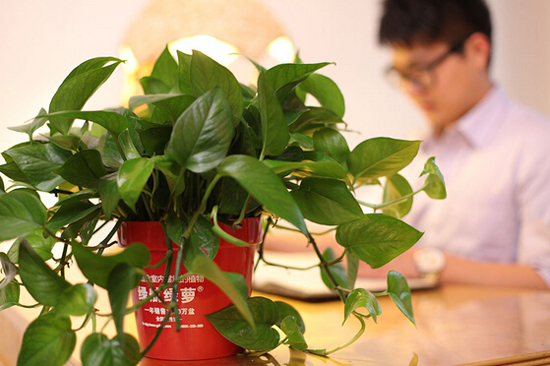
There are many types of pothos. If you want to grow pothos, you can learn about the types of pothos in advance, so that you can choose the type you like to grow. Let us take a look together at how many types of pothos there are.
Green-leaf pothos: the leaves are entirely green, with no patterns or other colors;
Yellow-leaf pothos (golden pothos): the leaves are light golden yellow, and the leaf blades are relatively thin;
Variegated pothos: variegated pothos refers to pothos whose leaves have stripes of various colors. Based on the color and characteristics of the patterns, 3 variants have been identified;
Marble Queen (E.a.'MarbleQueen'): the leaves have creamy white patterns, and it is more robust than the original variety;
Golden Pothos (E.a.'GoldenPothos'): the leaves have irregular yellow stripes;
Tricolor (E.a.'Tricolor'): the leaf surface has green and yellow-creamy white patterns;
Star-point vine: the leaf surface is velvety green, covered with silver-green patches or spots.
The above are the types of pothos. You can choose to grow the ones you like. Below, the editor will add some more methods for propagating green vines.
Cutting method
Pothos is usually propagated by cuttings. In late spring and early summer, select a robust pothos vine, cut a 15 cm to 30 cm stem section, remove the leaves from the basal 1 to 2 nodes, being careful not to damage the aerial roots, then insert it into plain sand or coal cinders to a depth of 1/3 of the cutting. Water thoroughly and place it in a shaded spot. Spray water on the leaves every day or cover with plastic film to retain moisture. As long as the environment is kept no lower than 20°C, the survival rate is above 90%.
The specific steps of the cutting method are as follows:
1. Selection and treatment of cuttings
For cuttings, choose healthy, pest-free, semi-lignified branches, cut them into 10-13 cm lengths, cut the lower end into a slanted cut, keep 2-3 leaves at the upper end, and cut the leaves in half to reduce water evaporation and help the cuttings survive.
2. Cutting substrate
The cutting substrate should be loose, breathable, well-drained loam or sandy soil rich in humus. Vermiculite is best, as it speeds rooting and gives a high survival rate. Before inserting the cuttings, disinfect the soil with 2% formalin or 5% potassium permanganate.
3. Cutting method
Quickly dip the lower end of the prepared cuttings in ABT rooting powder or indolebutyric acid, then insert them into the previously prepared substrate, burying 1/2 of the cutting. Water thoroughly so that the cuttings are in close contact with the substrate, then cover with plastic film.
4. Management after insertion
(1) After insertion, take care to keep the soil moist and the air temperature relatively high. Soil moisture of about 50% is appropriate, while air humidity of 80%-90% is best.
(2) In the early stage of cutting, keep the shade density of the shade shed at about 80%. This prevents direct strong sunlight while ensuring sufficient scattered light, so that leafy cuttings can carry out photosynthesis and root more easily.
(3) With the above treatment, roots generally form after 20 days. The film can then be removed and light increased. At the same time, on sunny summer days still pay attention to misting the leaves and shading, and in winter pay attention to cold protection. About 10 days after rooting, the plants can be moved into pots for normal management.
The above is an introduction to the types of pothos and how to grow them. After reading this, do you understand pothos better? If you like pothos, go ahead and plant a pot right away. Watching pothos grow every day will also put you in a better mood.