What varieties of spider plant are there? A complete guide to common spider plant varieties
When it comes to spider plants, I believe everyone is familiar with them. Spider plants are one of the best-selling indoor plants today. There are many varieties of spider plants and they have the ability to purify the air, so they are deeply loved by consumers. So what spider plant varieties are there? Below, the editor will introduce to you the 10 most common spider plant varieties.
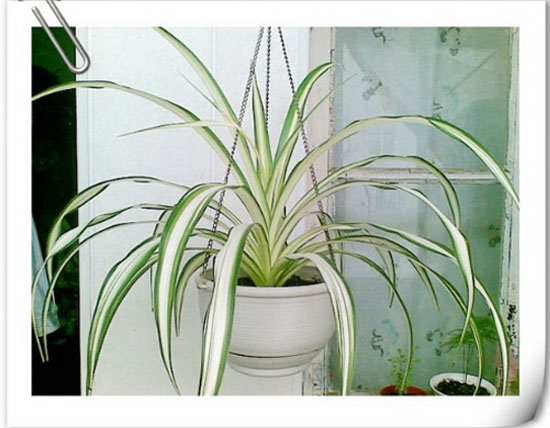
What spider plant varieties are there?
1. Aptenia cordifolia (heartleaf ice plant)
Aptenia cordifolia is actually not a spider plant. Because its stems and tendrils are relatively soft, and after extending they become semi-procumbent, with the branches drooping, it looks very much like a spider plant, so people have always cared for it as a spider plant. Its leaves are thick and fleshy, and the leaf color is emerald green; the flowers bloom at the tips of the branches, and the flower color is rose red; the flowering period lasts from spring to autumn. It can be enjoyed both for its flowers and its leaves, and is one of the excellent potted flowers for decorating living rooms and windowsills.
2. Variegated spider plant (Chlorophytum comosum 'Variegatum')
A perennial evergreen herbaceous plant. The leaves are broadly linear, tender green, borne on short stems, and it has thick, cylindrical fleshy roots. The raceme is 30-60 cm long, curved and drooping, with small white flowers; several clusters of rooted small plantlets formed from plantlets often grow on the flower stems, which is very interesting. It grows quickly and is easy to cultivate, and can be grown and enjoyed year-round in a relatively bright room. It is one of the most suitable types for hanging or placing on top of cabinets or on flower stands.
3. String of pearls (Senecio rowleyanus)
It is a very common succulent plant, but it needs to be distinguished from the very similar Senecio radicans. The leaves of string of pearls are round and plump like Buddhist prayer beads, with one stripe on them, while Senecio radicans has pointed tips and multiple stripes. Because names differ from place to place, the common names are mainly "string of pearls, Buddhist beads, and lover's tears." String of pearls is also named jade beads, lover's tears, Buddhist bead spider plant, jade beads, green beads, and green bell because it is composed of strings of plump, emerald-green oval small leaves. Like plants such as spider plants, its branches all grow downward, forming many trailing vines, like beads.
4. Golden-centered spider plant (Chlorophytum comosum 'Picturatum')
An evergreen perennial herb, with rhizomes underground, fleshy and short, creeping horizontally or growing obliquely. The leaves are slender, linear-lanceolate, with yellow-white longitudinal stripes in the center, clasping the stem at the base, bright green. Stolons emerge from the leaf axils, extend out of the plant clump, curve outward, and bear small plantlets with aerial roots at the tips. The flowers are white, with 6 petals, and the flowering period is spring and summer.
5. Rainbow spider plant (Chlorophytum comosum 'Vittatum')
A perennial evergreen herb. The stems are slender and weak, green, drooping, much branched, and root at the nodes. The leaves are oblong, with green leaf surfaces mixed with silver-white stripes or purple stripes, and some have purplish-red leaf undersides. Small white flowers are axillary. A perennial creeping herb. The stems are slightly fleshy, much branched, creeping, and easily root at the nodes. The leaves are semi-fleshy, without petioles, elliptical-ovate, with short pointed tips, entire margins, purple-green surfaces mixed with silver-white stripes, purplish-red leaf undersides, and leaf sheaths sparsely hairy. Several flowers are clustered at the tips of branchlets.
6. Silver-edged spider plant (Chlorophytum comosum 'Marginatum')
It is an evergreen herb, with rhizomes and fleshy roots. It prefers a warm, humid, semi-shaded environment. Its cold resistance is relatively poor, and it is suitable for growing in well-drained, fertile sandy soil. Broadly linear, 1-2 cm wide, about 30 cm long, green. The leaf margins of the silver-edged spider plant are white; it mainly needs to keep the soil moist, and applying a dilute liquid fertilizer once every half month will make it grow luxuriantly. In summer it should be placed under a shade shed for cultivation, and in winter it should be cultivated in a windproof greenhouse. Dead leaves should be removed regularly, and the pot should be changed once a year in combination with division.
7. Goldfish plant (Nematanthus gregarius)
The goldfish plant, also known as goldfish flower, kangaroo spider plant, kangaroo flower, hanging goldfish, etc. It is a perennial herbaceous plant of the genus Nematanthus in the family Gesneriaceae, with a semi-woody base. The stems ascend obliquely, 20-40 cm long, with 5 sepals. The corolla is labiate, enlarged below, with 5 small lobes at the apex, orange-red, with yellow lobes and red between the lobes; the stamens are borne on the petals, and the anthers are coherent; there is one pistil. The capsule is similar to plants in the Scrophulariaceae.
8. Silver-centered spider plant (Chlorophytum comosum 'Silver Center')
The reason it is named silver-centered spider plant is that, unlike other spider plants, the silver-centered spider plant has its own distinctive feature: the middle part of every green leaf has a silver-white stripe about 1 cm wide. As an expert at purifying air, the silver-centered spider plant has entered the lives of more and more people as a potted plant. Offices, shopping malls, banks, and homes all use silver-centered spider plants as potted plants to purify indoor air and beautify the living environment. Its fleshy roots can store a large amount of water, so it has strong drought resistance and will not die of dryness even if it is not watered for several days.
9. Broadleaf spider plant (Chlorophytum comosum)
Also known as large-leaf spider plant, native to southern Africa. The leaves are broadly linear, with entire margins or slightly wavy. The scape is drawn out from the leaf cluster, and after flowering it forms creeping stolons that can take root, sprout, and grow into new plants. The flowering period is spring and summer. Its capsule is a three-angled flattened sphere. The leaf color is fresh green, and the flower stems are unusual. It is the most common indoor potted foliage plant. If planted in rows along the roadside of an exhibition room or in flower troughs, it has a distinctive style.
10. Lipstick plant (Aeschynanthus pulcher)
Also known as flower vine grass and lipstick flower, it is a perennial evergreen trailing herbaceous flowering plant of the genus Aeschynanthus in the family Gesneriaceae. The branches are about 20 cm long, with angular stems, and after extending they become semi-procumbent, lying flat, and much branched. The leaves are ovate and opposite, slightly fleshy. The inflorescences are mostly axillary or terminal, and their shape closely resembles lipstick. The calyx is tubular, very much like the tubular outer shell of lipstick, hence the name "lipstick plant." Its deep green leaves coupled with bright red, unusual corollas make it very popular, and it is an excellent choice among hanging flowering plants for family rooms.
Besides being beautiful in appearance, spider plants are also the king of formaldehyde removal among plants. Therefore, many owners of newly renovated homes like to buy a spider plant they like for their new house. The editor has introduced so many spider plant varieties above. Is there one you like?