How to care for pothos in winter? Protect it from the cold so it can get through winter safely
In winter it is very cold outside, and people have to put on extra clothes to fight the cold. At this time some people worry about the pothos at home. So how do you care for pothos in winter? Are there any methods to pay attention to when growing pothos in the dead of winter? If you want to know, you can take a look at the detailed introduction below.
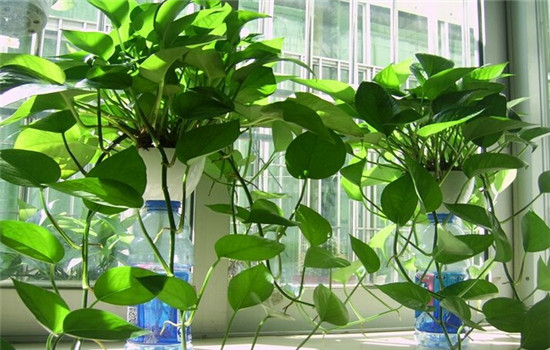
How to care for pothos in winter:
Temperature
In the north, with a room temperature above 10°C, pothos can get through winter safely, and with a room temperature above 20°C, pothos can grow normally. Generally, households have no problem reaching this temperature. What needs attention is avoiding too great a temperature difference, and also making sure the leaves do not get close to heating equipment.
Light
The original growing conditions of pothos are in forests shaded by towering trees, so its tendency to seek light is not strong. Although pothos is fairly shade-tolerant, in winter it is still best to place it somewhere indoors with good light, or move it to a sealed balcony at noon to bask in the sun. At the same time, when the temperature is low, open the windows as little as possible, because in a very short time the leaves may be frostbitten.
Humidity
Under the condition of ensuring normal temperature, increasing humidity is extremely beneficial to the growth of the plant. To increase humidity, the following methods can be used. Place the plant near a humidifier, with the humidifier running for more than 5 hours a day, so the plant can enjoy the mist sprayed out by the humidifier; use a sprayer adjusted to the mist setting to spray water on the leaves, stems and aerial roots of the plant, several times a day.
Or keep an appropriate amount of water in the saucer of the flower pot, and increase the local temperature of the plant through its evaporation; use a cold wet towel or toilet paper to lightly wipe the leaf surface, or lightly apply it to the leaf surface for a short time (1-2 hours per day); cover the plant with a transparent plastic film to create a small greenhouse effect, supplementing the plant's moisture through the evaporation of water vapor in the soil, for no more than 2 hours a day, as too long a time will affect the plant's ventilation and photosynthesis.
Water
The amount of watering in autumn and winter should be strictly controlled according to room temperature. Before heating starts, the temperature is lower, the soil of the plant evaporates more slowly, so watering should be reduced, and the amount of water should be controlled between 1/4 and 1/2 of the original. Even after heating starts, watering should not be too frequent; when watering, pour less into the pot, and water should seep through the coir.
In addition, water should also be sprayed where the aerial roots grow on the coir pole, to reduce insufficient water absorption by the roots caused by excessively fast evaporation. Water used for watering in winter is best left to sit for a day first; water that is too cold easily damages the roots.
Fertilizing
In the autumn and winter seasons in the north, plants mostly grow slowly or even stop growing, so fertilizing should be reduced. Before winter begins, mainly apply liquid inorganic fertilizer by watering or spraying, about once every 15 days. After winter begins, fertilizing is mainly done by foliar spraying, mainly sprayed through the stomata on the leaf surface, absorbing fertilizer through the stomata on the leaf surface, so the fertilizer effect can act directly on the leaf surface. Special fertilizer must be used for foliar fertilizer; ordinary inorganic fertilizer is not easily absorbed by the leaf surface.
Get the temperature right, and water and fertilize regularly, and pothos will also grow very well in winter. Even when facing severe cold and harsh weather, there is no need to worry that it will grow poorly, and pothos can still grow even more beautifully.