What are the cultivation methods and benefits of spider plants?
The spider plant (Chlorophytum comosum) is one of the most common green plants in the home. Because spider plants can purify indoor air, many people grow them. So, how do you grow a spider plant? What benefits do spider plants have? Below, the editors at Yihao Home Network introduce this, hoping it can help everyone.
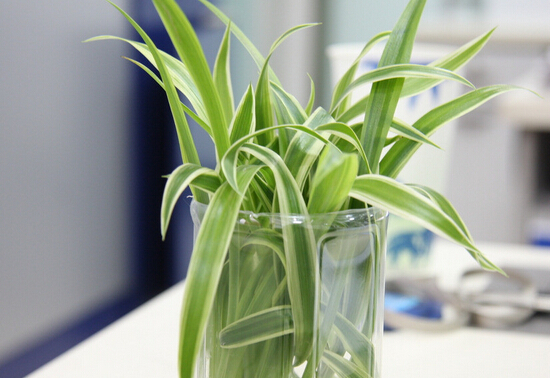
How do you grow a spider plant?
1. Growing medium
Spider plants adapt strongly to various soils and are easy to cultivate. A small amount of base fertilizer can be added to prepare fertile sandy loam, humus soil, peat soil or fine sandy soil.
2. Propagation
Spider plants have strong adaptability and a high survival rate, and are often propagated by division, cuttings, sowing and other methods. Cutting and division propagation can be carried out at any time from spring to autumn.
3. Watering
Spider plants like a moist environment, and the potting soil should be kept constantly moist. Because their fleshy roots can store a large amount of water, they have strong drought resistance and do not need frequent watering. When the temperature drops below 5°C in winter, water less, and the potting soil should not be too wet, otherwise the leaves tend to turn yellow.
4. Fertilizing
During the growing season, apply liquid fertilizer once every 2-3 weeks. Apply less nitrogen fertilizer, and stop fertilizing when the ambient temperature is below 10°C.
5. Light
Spider plants like a semi-shaded environment and can be grown indoors in bright conditions all year round. Avoid direct strong sunlight; it is best to find a spot with diffused sunlight, or use a gauze curtain to block 50%-70% of the sunlight, so that they grow lushly and their leaves look beautiful.
6. Temperature
Spider plants tolerate high temperatures. The suitable growing temperature is between 15-30°C, and in winter it is best to keep the temperature above 10°C.
7. Humidity
Spider plants like a moist environment. To keep them fresh and green, you can frequently spray water on the leaves to wash them.
8. Pruning
As the plant grows, to maintain a good plant shape, yellow leaves at the base and leaf tips should be pruned frequently, and attention should be paid to pruning some old roots and rotted roots.
9. Pest control
Because spider plants grow in dense clumps with poor ventilation, they are susceptible to scale insects, so prevention should be the priority.
What benefits do spider plants have?
When it comes to the benefits of spider plants, they are truly great. Spider plants can absorb more than 80% of harmful gases indoors, absorb 86% of formaldehyde, and can also absorb almost all the carbon monoxide and nitrogen peroxide given off by stoves, electrical appliances and plastic products. For those of us living in modern cities, we often face radiation emitted by all kinds of digital products. Placing 1-2 pots of spider plants nearby absorbs all the toxic gases in the air. It is equivalent to an air purifier, so the spider plant also has the reputation of being a "green purifier."
After reading the spider plant cultivation methods introduced by the editor, everyone has learned them, right? Spider plants are a great help for purifying our indoor air, so the editor hopes everyone can grow spider plants well. After all, spider plants are good for us, so we should also take good care of them.