How to Grow String of Pearls: A Detailed Guide to Its Care
String of Pearls (Senecio rowleyanus) is a type of hanging plant, named for its oval, spherical, fleshy leaves. With its rather unusual appearance, String of Pearls has won many fans, so it is quite common to grow String of Pearls at home. So what is the care method for String of Pearls? This article aims to introduce the care method for String of Pearls for everyone's reference.
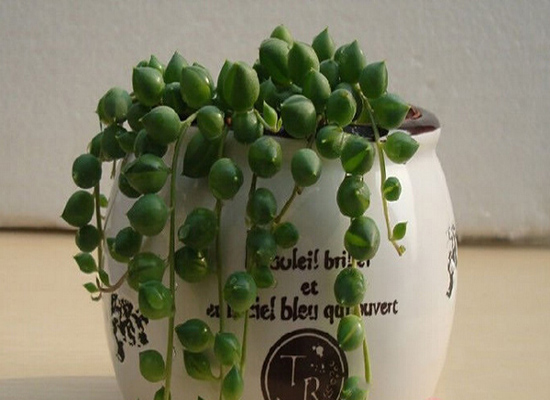
String of Pearls, whose scientific name is Senecio rowleyanus, also has a rather romantic name: lover's tears. Its green fleshy spheres hang in strings over the edge of the pot, remaining lushly green all year round and looking quite lovely. So how can you grow a healthy String of Pearls?
1. Propagation method
String of Pearls is mostly propagated by cuttings. You can trim the stems and leaves into segments of 8-10 cm each, then insert them into the potting soil, half buried, with humidity kept between 50% and 60%. They will take root in 10 days to half a month, and only with careful attention will they survive. At this time, strictly control the amount of watering and keep the potting soil in a state between dry and moist, which is most beneficial to the plant's growth.
2. Cultivation and management
"Better dry than wet" is a key point in growing String of Pearls. In addition, "light fertilizer applied frequently" is also an extremely important point. The saying "better dry than wet" comes from the fact that String of Pearls, which originates from southern Africa, likes a warm environment and is fairly drought-tolerant, but cannot tolerate waterlogging. "Light fertilizer applied frequently" means that fertilizer should be applied often, but each time as a diluted fertilizer; you must not apply too much at once, which would cause problems in its growth.
3. Pest prevention
String of Pearls actually rarely suffers from pests, but such cases still occur. Generally speaking, the most common disease of String of Pearls is aphids, which occur in spring. When this happens, use omethoate at 500 times dilution to kill them. In summer, mites appear, and dicofol at 1000 times dilution can be used to kill them.
There are the following points to note when growing String of Pearls:
1. Because the leaves are fleshy and juicy, it is drought-tolerant. When growing it, watering should be "better dry than wet," which is one of the keys to success. When the weather is dry, you can spray more water on the leaves and stems to make up for the lack of moisture and keep the pearl-like spheres green and plump.
2. The plant's root system is very shallow, so it can be planted in a shallow pot. Generally, use a tile to cover the bottom hole, and spread a layer of coal cinder or coarse sand to increase air permeability and drainage. The soil is best if it is leaf mold.
3. It likes warmth and humidity, is relatively cold-tolerant, and tolerates high temperatures. The optimum temperature is around 20°C~28°C. In a high-temperature environment above 30°C, it almost goes dormant, so watering and fertilizing should be reduced, otherwise the roots will easily rot. This is also one of the keys to successful cultivation.
4. In spring and autumn, when growth is vigorous, "light fertilizer applied frequently" should be used, often spraying 1-3‰ nitrogen fertilizer and potassium dihydrogen phosphate on the leaf surface, which helps the pearl-like spheres become greener and plumper and improves their ornamental value.
Most spider plants like warm, humid environments. But String of Pearls, which comes from southern Africa, prefers "better dry than wet," and this is perhaps something growers of String of Pearls should pay special attention to.