How to Grow Potted Carnations and Points to Note
The carnation flower symbolizes great maternal love. Every Mother's Day, many people buy them to give to their mothers as a way of expressing gratitude for the care they have received. In fact, there is no need to wait for Mother's Day to give your mother carnations; would it not be even better to keep a potted carnation at home in everyday life? So how do you grow potted carnations? And what should you watch out for?
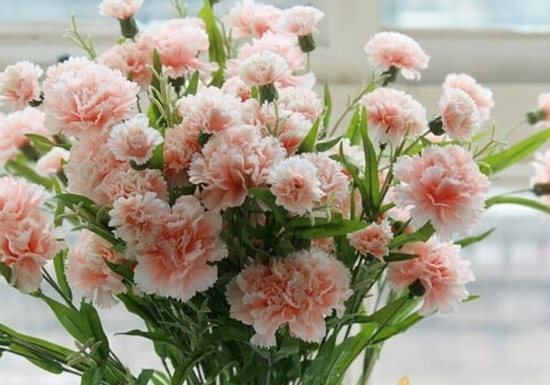
Growing a pot of carnations is not an easy task. Those pots of blooming carnations in the flower market look so beautiful, but if you try to grow them yourself, they may well die within a few days. If you really want to grow carnations, then follow the editor of No.1 Home Network to learn how to grow potted carnations.
An Introduction to Potted Carnation Growing Methods:
1. Repotting and Changing the Soil
The potting soil used in commercial production is mostly materials such as peat and perlite that contain no nutrients. After buying a potted plant, it is best to repot it immediately into a slightly larger container and use garden soil. When repotting, bury the entire root ball directly into the new soil without disturbing it, and do not shake off the old soil. Do not bury the leaves, otherwise the plant is prone to disease.
2. Light
After repotting, keep the plant indoors for a week and do not expose it to strong light. After that, it can be exposed to strong light.
3. Fertilizing
During the flowering period, potassium fertilizer and phosphorus fertilizer should be the main nutrients; there is no need to apply nitrogen fertilizer specifically. If conditions permit, boron fertilizer can be sprayed on the leaves.
4. Removing Withered Flowers and Branches
Remove spent flower buds promptly once the flowers have faded. Break off dead branches promptly.
5. Care
If all the flowers have faded, you can remove all the flowering branches and continue caring for the plant, waiting for the next bloom.
6. Thinning Branches
If there are too many flowering branches at the base, and the lowest stems are also kept in high humidity and out of the light for a long time, the plant is prone to disease, yellowing leaves and weak flowering branches. You need to actively remove some thin, weak flowering branches to improve ventilation at the lower part.
The above is an introduction to how to grow potted carnations. Below, the editor will add some points to note in the care of potted carnations.
1. During the vigorous growing seasons of spring and autumn, the soil should be kept moist to meet the needs of growth and development. In the high-temperature period of summer, growth is inhibited; at this time, watering should be restrained and ventilation strengthened, so it is appropriate to keep the potting soil slightly dry.
2. Generally, move the plants into the greenhouse around "Frost's Descent," and the most suitable temperature is 10-20°C. To force or delay the flowering period, the temperature can be appropriately raised or lowered. Measures should be taken to reduce the humidity in the greenhouse so as to reduce the occurrence of disease.
3. Topdressing should follow the principle of applying thin fertilizer frequently. For potted plants, apply diluted, well-rotted liquid fertilizer once every 7-10 days.
4. In winter, move the plants indoors and grow them in a place with plenty of sunlight and good ventilation. If the temperature is suitable, the flowering period can be extended to March of the following year.
5. During the seedling stage, pinch out the growing tips 1-2 times to promote branching, so that each plant has about 10 side branches. After pinching, the plant shape is attractive and flowering is abundant. As the branches grow, supports should also be set up to prevent lodging. During the growth period, promptly remove the side buds and small flower buds produced on each branch, keeping only one flower bud at the top of each branch, so that nutrients are concentrated to supply the terminal bud.
That is all for the introduction on how to grow potted carnations and what to watch out for. In fact, it is not difficult to grow potted carnations well, but the process of growing flowers requires you to constantly devote care to them. The process of caring for them is more like caring for a baby. As long as you tend them attentively, believe that before long they will bloom into beautiful flowers.