What are the cultivation methods and precautions for ball cacti
The ball cactus is the most common flowering plant in modern homes. It is low in price, has ornamental and medicinal value, and is strongly effective at shielding against radiation. It can be said to be a plant of good quality at a low price. Many people think that because the ball cactus is cheap and easy to keep alive, it can be grown without careful tending and care. In fact, this is a mistaken belief. Like other plants, the ball cactus needs proper care to grow healthily. Today let us take a look together at what the cultivation methods for ball cacti are and what should be noted.
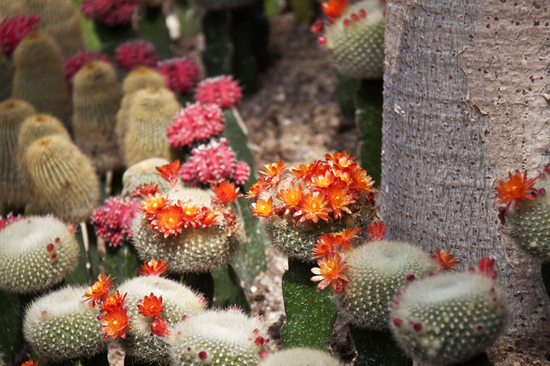
To grow ball cacti well, you must master the correct cultivation methods. Let us first look at how to cultivate ball cacti correctly.
Preparation of growing soil. The ball cactus is a desert plant and is relatively suited to acidic and weakly acidic soil environments. Because the root system of the ball cactus is not well developed, the soil must be rich in organic matter and loose and breathable. Generally, the growing soil is made by using humus soil that has been sun-dried for 2 to 3 days plus phosphorus and potassium fertilizer. Usually, for every 50 kg of potting soil, 1 kg of superphosphate and 0.5 kg of potassium phosphate are mixed in as base fertilizer.
Reasonable water management. The principle for watering is "do not water if not dry, better dry than wet." When watering, do not pour water into the center of the ball cactus. Generally, in spring water once every half month, in summer water once a week, while in autumn and winter growth slows down, so watering once every 20-plus days is enough. It should be noted that it is best to water flowers with rainwater. If it is tap water, it is best to expose it to the sun for two days before use.
Potted ball cacti require soil with good drainage and air permeability and containing calcareous sandy soil (or sandy loam). It can be prepared by mixing 2 parts loam and 2 parts leaf mold, 3 parts coarse sand, plus 1 part limestone gravel or old lime wall debris discarded when old buildings are demolished. It can also be prepared by mixing 2 parts loam and 2 parts coarse sand, with 1 part each of broken bricks, leaf mold and old lime wall debris. When planting, a small amount of broken bricks and tiles should be placed at the bottom of the pot to make drainage smooth.
Planting and potting up is best done in early spring. The flower pot should not be too large; it is best if it can hold the globe with a little gap. If the flower pot is too large, after watering thoroughly the water cannot be absorbed, the air in the pot does not circulate, and the root system is easily rotted. A few taproot types and species such as Lophophora williamsii and giant barrel cactus require deeper cylindrical pots. For species with shallower root systems such as silver-haired ball cactus and crown cactus, shallower ordinary flower pots can be used.
When repotting, part of the old roots should be cut off. After drying in the air for 4-5 days, plant it in the pot. It should not be planted too deep; it is best if the root neck of the globe is level with the soil surface. To avoid causing root rot, newly planted ball cacti should not be watered. It is only necessary to spray 2-3 times a day. After half a month, a small amount of water can be given. Only after one month, when new roots have grown, can watering be gradually increased.
Preventing pests and diseases. The main pests and diseases of ball cacti are anthracnose, ulcer disease, scale insects and whiteflies. The main measures are controlling moisture, ventilating in time, and giving priority to prevention. Carbendazim has a certain effect on anthracnose, and streptomycin is relatively effective against ulcer disease, but the main approach is still prevention first.
So what should be noted during this process?
The ball cactus is a thorny flowering plant. When repotting and transplanting, wear gloves to avoid puncture wounds.
When choosing and buying ball cacti, pay attention to selecting varieties with robust plants and strong resistance, and make sure the surface has no wounds.
After reading the editor's sharing, everyone should have a clear understanding of how to correctly cultivate ball cacti, right? The cultivation of ball cacti requires attention to light, water, soil and many other aspects. It is not a simple matter, so the editor suggests that everyone should still take it seriously in daily life.