How to Grow Cilantro: A Guide to Teaching You How to Grow Cilantro
Cilantro, also known as coriander, is a fairly common ingredient, and it also has the effect of strengthening the stomach and aiding digestion. It can be used as medicine, and it is quite delicious to eat. It is easy to grow; on a home balcony, you can grow it with just a flower pot. So, do you know how to grow cilantro? Below, follow in the editor's footsteps and learn how to grow cilantro.
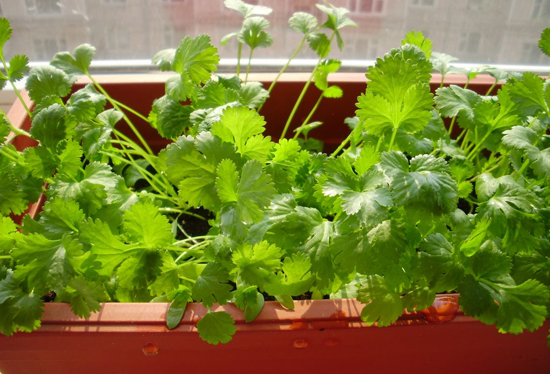
Cilantro has extremely strong cold resistance, with 12°C-26°C being the most suitable, and it is suited to being grown in cool seasons. Its leaves are thin and tender, rich in nutrients, fragrant and tasty when eaten raw, and its growing period is short, generally producing about 1500 kg per 0.1 hectare. It generally does not suffer from pests or diseases, and no pesticides are needed to control pests and diseases, so it can be said to be a pollution-free vegetable. It can be planted in spring, summer, and autumn, but it is not tolerant of high temperatures and prefers warm-cool conditions. When cultivated in the high-temperature season, it tends to bolt, and both yield and quality are affected, so autumn planting should be the main focus. It can be grown in open fields and garden plots, and can also be grown in front of and behind houses.
1. Land selection, fertilizer application, and land preparation
Cilantro has a relatively short growth period, a thick main root, and is a shallow-rooted vegetable, with soft sprouts and poor soil-breaking ability, but strong fertilizer-absorbing ability. Choose loamy soil that is relatively fertile, has good water and fertilizer retention, can be irrigated in drought and drained in waterlogging, is well aerated, fertile and loose, and where cilantro has not been grown for more than five years. It must never be planted on the same land year after year. Early tomatoes, cucumbers, green beans, etc. can be used as the previous crop. After the previous crop is harvested, promptly remove crop residues to reduce the occurrence of pests and diseases. Deeply plow, harrow finely, and level the land, apply 3000-5000 kg of decomposed farmyard manure per 0.1 hectare, and make beds. Generally, the beds are 1 m wide, and the bed length depends on the terrain, water source, and water volume. It should be conducive to planting and management, thereby promoting root absorption and robust plant growth.
2. Sowing
Cilantro varieties are divided into large-leaf types and small-leaf types. The small-leaf type has strong cold resistance and a strong aroma, and can be eaten raw, used for seasoning, or pickled, and is suitable for autumn planting. The seed is hemispherical and covered with a layer of fruit peel. Before sowing, first rub the seeds apart to prevent slow germination and double seedlings, which affect the growth of individual plants. The suitable sowing period is mid-August, and no later than the end of August. For drilling, the row spacing is 10-15 cm, and the furrow depth is 5 cm; for broadcasting, the furrow depth is 4 cm. For both drilling and broadcasting, cover with 2-3 cm of soil. The seeding rate is 6-6.5 kg per 0.1 hectare. After sowing, tread once with your feet, then water to keep the soil moist to facilitate emergence. At the same time, attention should also be paid to the phenomenon that seedlings cannot emerge because the soil crusts before cilantro emerges. Check for seedlings promptly after sowing. If soil crusting is found when seedlings are emerging, be sure to promptly spray water and loosen the soil to help the seedlings emerge and promote rapid growth.
3. Strengthen field management
In order to create a soft and comfortable growing environment for cilantro and favorable living conditions for growth and development, and to achieve management with suitable temperature and moisture, repeated and careful intertillage, soil loosening, and weeding are key.
1. Thin seedlings early and finalize seedlings at the right time
When the seedlings grow to about 3 cm, thin and finalize them. Generally, during the entire growth period, cultivation, soil loosening, and weeding are done 2-3 times. The first time is mostly when the seedlings are emerging, using a light hand hoe or small rake to lightly break the soil surface and loosen the soil, eliminating the crusted layer. At the same time, pull out weeds that emerge early to help the seedlings emerge and grow robustly. The second time is carried out when the seedlings are 2-3 cm tall, and for drilling, a small flat hoe can be used to loosen the soil appropriately deeper, combined with pulling out weeds. The third time is carried out when the seedlings are 5-7 cm tall. In this way, early intertillage, soil loosening, and weeding can promote vigorous seedling growth. After the leaves completely cover the ground, whether drilling or broadcasting was used, no more intertillage or soil loosening is needed; it is enough to carry out targeted weeding several times.
2. Topdressing and watering
Generally, do not water before finalizing the seedlings, so as to control top growth and promote root growth, and to strengthen the roots by holding back seedling growth. After finalizing the seedlings, promptly water once to stabilize the seedlings, in an amount that does not submerge the seedlings. As the seedlings grow vigorously, water demand gradually increases, and the watering interval gradually shortens. Basically, light watering is done 5-7 times throughout the entire growth period. For the first three waterings, water once about every 10 days, and from the fourth watering onward, every 6-7 days. Keep the soil moist regularly, and control light watering before harvest.
Combined with watering, topdressing should be carried out in stages. For the first watering, lightly apply a seedling-promoting fertilizer, applying about 10 kg of urea per mu. After that, apply urea once every 2-3 waterings, 10-12.5 kg is enough.
4. Harvesting and storage
At high temperatures, cilantro can be harvested 30 days after sowing, while at low temperatures, 40-60 days after sowing. Harvesting can be done by thinning, or all at once. In autumn cultivation, besides being eaten soon, it can also be stored for eating in winter and spring. Storage mostly uses the method of burying in soil and freezing. Before eating, take it out and place it at 0°C-10°C to slowly thaw, and it can still remain fresh and tender, with no loss of color or flavor.
The above are the methods for growing cilantro. Growing cilantro is not difficult; as long as you fertilize and water on time, you can harvest the fruits of your labor. If you also live in the city and want to try the taste of eating vegetables you grew yourself, quickly follow the editor's method and give it a try.