What are the effects and functions of the silk tree flower? Revealing the secrets you never knew
The silk tree, the silk tree, with green leaves that seem to shy away, flowers like clustered brocade, and a fragrance that refreshes the heart and mind, so that all worries vanish at the sight of it. Such a silk tree flower is deeply loved by many friends. So, what are the effects and functions of the silk tree flower? Today, the editor will reveal to you the secrets of the silk tree flower that you never knew.
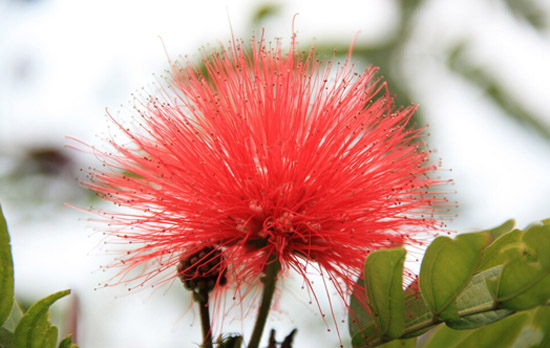
The silk tree (Albizia julibrissin) is a deciduous tree that can reach a height of 16 m. The trunk is grayish-black; the young branches, inflorescences, and leaf rachises are covered with tomentum or short soft hairs. The stipules are linear-lanceolate, smaller than the leaflets, and fall early; the bipinnate compound leaves are alternate; the common petiole is 3-5 cm long, and there is one gland near the base of the common petiole and at the point where the topmost pair of pinnae is attached; the pinnae are in 4-12 pairs, sometimes up to 20 pairs in cultivated plants; the leaflets are in 10-30 pairs, linear to oblong, 6-12 mm long and 1-4 mm wide, slanting upward, with a small pointed tip at the apex, with marginal hairs, sometimes with short soft hairs beneath or only on the midvein; the midvein is close to the upper margin. The capitula are arranged in a large panicle at the branch tips; the flowers are pink; the calyx is tubular, 3 mm long; the corolla is 8 mm long, with triangular lobes 1.5 mm long, and both the calyx and corolla are covered with short soft hairs outside; the stamens are numerous, connate at the base, with slender filaments; the ovary is superior, the style is almost as long as the filaments, and the stigma is cylindrical. The pod is strap-shaped, 9-15 cm long and 1.5-2.5 cm wide, with soft hairs on young pods and hairless on old pods. The flowering period is June-July; the fruiting period is August-October. Because it is sensitive to both light and heat, whenever the sun sets in the west, pairs of bipinnate compound leaves slowly draw together, and only gradually separate again the next morning. On hot summer afternoons, this phenomenon also occurs, but not as tightly pressed together as at night, hence it is also called yehe (night-closing).
So, the effects of the silk tree flower: the silk tree flower contains albizzin and tannins, and can relieve depression and calm the spirit, nourish yin and tonify yang, regulate qi and stimulate the appetite, activate the collaterals and relieve pain. It is used for restlessness of the mind and spirit, depression, and insomnia. It treats chest tightness due to depression, insomnia, forgetfulness, and wind-fire eye disorders. It can calm the five zang organs, harmonize the mind, and improve complexion. It has relatively good effects in strengthening the body, sedating, calming the spirit, and beautifying the appearance, and is also an excellent remedy for treating neurasthenia. It also has the effects of clearing heat and relieving summer heat, nourishing the face, removing spots, and sobering up from alcohol.
Furthermore, the functions of the silk tree flower: the silk tree flower has a spirit-calming effect, mainly treating chest tightness due to depression, insomnia and forgetfulness, nourishing yin and tonifying yang, eye diseases, neurasthenia, and other conditions. As an ornamental, in the past there were only small-flowered types, but now there are large and beautiful varieties. In the seventh month, the heat blazes. A tree of green leaves and red flowers sways in emerald green, bringing a bit of coolness. When you approach it, it joyfully blushes a stretch of crimson, like the red lips of a shy maiden opening, and also like the blush of a bashful girl's shyness, truly delighting the eyes and stirring the heart, making irritation and anger vanish at once. People of the time praised it saying: the leaves resemble those of the sensitive plant, the flowers are like a brocade cluster. At the sight of it, worries disappear; at the scent of it, the heart and spleen are refreshed. They also praised it saying: at the tips of the night-closing branches there is another spring, sitting with wind and dew into the early morning; let the bright moon shine as it will, it gathers all its fragrant heart and does not turn toward people. The silk tree flower is sweet, neutral, and non-toxic, and has the effects of relieving depression and calming the spirit, and nourishing yin and tonifying yang. It is used for restlessness of the mind and spirit, depression, insomnia, and other conditions. From a medical perspective, the silk tree bark - the tree bark - is suitable for people with mild insomnia, but it should not be taken over the long term. Long-term use causes relatively great harm to the body.
With the above introduction to the effects and functions of the silk tree flower, as well as the little secrets of the silk tree flower that you did not know, do you like the silk tree flower even more? And after knowing about the side effects of the silk tree flower, will you be more careful when using it in the future?