What plants remove formaldehyde in a new home? Counting down six major plants one by one
The role of plants in removing formaldehyde is now widely recognized, but not all plants have this ability, and each plant that can remove formaldehyde differs in how effective it is. So, what plants remove formaldehyde in a new home? Below, we count down the six major formaldehyde-removing plants one by one.
Plants can remove formaldehyde, but not all plants have this effect. The plants below are said to rank in the top six of the top ten formaldehyde-removing plants.
1. Ivy (English ivy)
Characteristics: It is the most ideal indoor and outdoor vertical greening variety, an evergreen vine with slender, soft stems and aerial roots that can climb onto other objects. It is a typical shade plant that can grow in full-light conditions and grows well in warm, humid climates, but is not cold-tolerant.
Effect: It can break down two harmful substances, namely formaldehyde found in carpets, insulation materials and plywood, and xylene, which hides in wallpaper and is harmful to the kidneys.
2. Begonia
Characteristics: A perennial evergreen herbaceous flowering plant. Its flowers are brightly colored with varied shapes, and its leaves are delicate, soft and lushly green. It likes warm, humid and shaded environments, fears direct strong light, and requires well-drained sandy soil.
Effect: It is not only good at absorbing formaldehyde, but its flowers, leaves, stems and roots can all be used as medicine.
3. Spider plant
Characteristics: Easy to grow and highly adaptable, it is one of the most traditional hanging plants for the home. Its leaves are slender and soft, and small plantlets grow out from the leaf axils, hanging down from the edge of the pot, spreading and trailing like flowers, evergreen all year round.
Effect: It can absorb more than 80% of harmful gases indoors, and its ability to absorb formaldehyde is extremely strong. Generally, keeping 1 to 2 pots of spider plant in a room can absorb almost all the toxic gases in the air, so the spider plant is also known as the "green purifier."
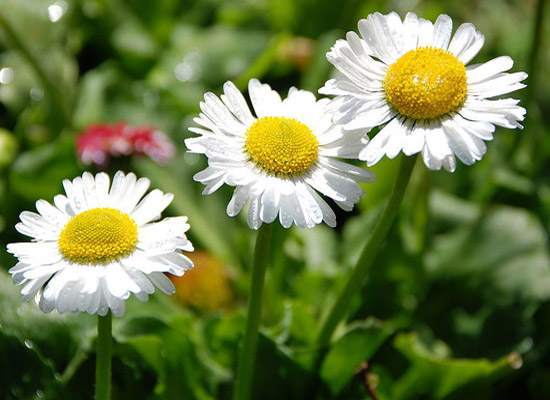
4. Chrysanthemum
Characteristics: A perennial herbaceous flowering plant with a dormant root system, with upright or semi-trailing stems covered in soft hairs and many branches. The single leaves are alternate with serrated edges, and the flowers are capitula borne at the top of the stems, with rich flower forms and diverse colors.
Effect: Chrysanthemum can break down two harmful substances, namely formaldehyde found in carpets, insulation materials and plywood, and xylene, which hides in wallpaper and is harmful to the kidneys.
5. Aloe
Characteristics: A perennial evergreen succulent plant with short stem nodes, upright growth, and thick, juicy, lance-shaped leaves. It likes warm, dry climates, is not very cold-tolerant, and is not shade-tolerant.
Effect: It is not only good at absorbing formaldehyde, but also has strong medicinal value, such as antibacterial and beauty benefits.
6. Golden pothos
Characteristics: A plant of the genus Philodendron in the family Araceae, it is a climbing vine foliage plant. It likes warm, humid environments, its vines can reach several meters long, it has aerial roots at the nodes, its leaves grow larger and larger, and the leaves are alternate and evergreen.
Effect: It is very good at absorbing formaldehyde and purifying the air.
Plants can remove formaldehyde, but relevant experiments have shown that the precondition is photosynthesis; if there is no light or insufficient light, their effect will be greatly reduced. Therefore, formaldehyde removal cannot rely on plants alone; a multi-pronged approach is more effective.