Is Ivy Easy to Grow? A Detailed Guide to Planting Techniques
Ivy, as its name suggests, is an evergreen plant, so many people keep it as an indoor ornamental plant to add fresh greenery to their homes. But is ivy easy to grow and care for? What planting techniques are there? This article offers a brief introduction so that friends who love ivy can enjoy its verdant foliage all year round.
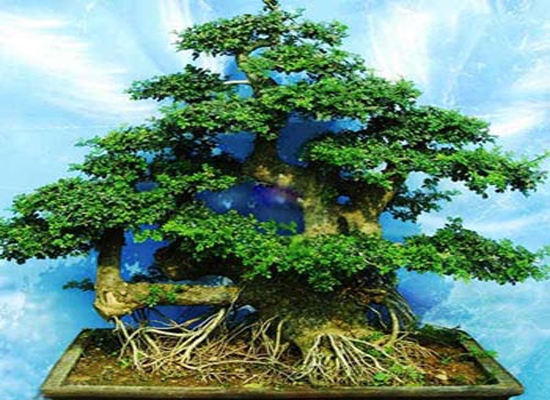
Ivy (Hedera) is a perennial evergreen climbing shrub of the genus Hedera in the family Araliaceae. Its stems are grayish brown or blackish brown and smooth, with simple leaves arranged alternately; the petioles have no stipules but bear scales. Ivy has beautiful leaf shapes and stays green through all four seasons, and it is often used for vertical greening in various places in the south. It is mostly planted beside rockeries and at the base of walls, letting it attach naturally and grow vertically or as ground cover, achieving a decorative effect that beautifies the environment. When grown in pots, it is mainly planted in small to medium pots and can be trained into many shapes for indoor display. It can also be used to cover the walls of an indoor garden, making the indoor garden landscape more natural and beautiful.
Ivy is simple and easy to cultivate and manage, but to keep ivy evergreen through all four seasons, we still need to master the relevant planting techniques:
1. The temperature must be suitable
Ivy prefers warmth, with an optimal growing temperature of 20°C-25°C. It fears heat and is not cold-tolerant. Therefore, when keeping it indoors, pay attention to ventilation and cooling in summer; in winter, the room temperature is best kept above 10°C, and must not fall below 5°C.
2. Light must be moderate
Ivy likes light but is also fairly shade-tolerant. Grown under semi-light conditions, its internodes are shorter, its leaf shape is uniform, and its leaf color is vivid, so it is best placed in a bright spot indoors. If in spring and autumn you can each choose a period to place it outdoors in a shaded spot so that it gets more morning and evening sunlight, it will grow vigorously with bright green leaves. But be careful to prevent direct strong light, otherwise it is prone to sunscald.
3. Watering must be moderate
During the growing season, water according to the principle of "dry before wet," and do not let the potting soil become overly moist, otherwise it easily causes root rot and leaf drop. In winter, when room temperature is low, watering must especially be controlled, keeping the potting soil only slightly moist. In the dry winter climate of the north, it is best to spray-rinse the plant once a week with clean water at a temperature close to room temperature to maintain air humidity, so the plant looks lively and the leaves are tender green and glossy.
4. Fertilizing must be reasonable
For home cultivation of ivy, the potting soil should be a culture soil made by mixing leaf mold or peat soil with 1/4 river sand and a small amount of bone meal. During the growing season, apply a dilute cake fertilizer solution once every 2-3 weeks. Generally, do not fertilize in summer and winter. When fertilizing, never apply nitrogen fertilizer alone, otherwise the patterns and patches on the leaves of variegated varieties will fade to green. The ratio of nitrogen, phosphorus, and potassium is best at 1:1:1. In the peak growing season, you can also spray the leaves 1-2 times with a 0.2% potassium dihydrogen phosphate solution, which will make the leaf color even more beautiful. But note that when applying liquid fertilizer, avoid staining the leaves, so as not to cause the leaves to scorch.
Plants also have a human-like nature: as long as we care for them attentively, plants will repay us with their best form. So friends who love ivy may as well learn more about ivy's habits and planting techniques, and keep their ivy evergreen.