How to Sow and Grow Beetroot: A Detailed Guide to Soil Selection and Harvesting Methods
Beetroot is a great crop - resilient to soil types, undemanding and unfussy. What's more, you can harvest two different delicious crops from the same plant, making it a vegetable well worth freeing up space for in your garden.
This is our first time offering a simple five-step guide to growing beetroot. You won't be able to resist growing it again and again!
1. Prepare the soil for beetroot
Beetroot grows well in most soil types, but they don't like overly alkaline or acidic soil (simple DIY soil pH test kits are available at good garden centers). Fertile soil is a must, so dig in or top-dress with rotted compost before sowing.
Loose, light soil will allow the roots to swell easily. If your soil is very compacted, you'll need to stir up the top few inches with a garden fork and rake it well to break up the clods.
Growing in raised beds and containers is also an option, but make sure they don't dry out.
2. Sow beetroot seeds
What looks like a single pointy beetroot seed is actually a protective capsule enclosing two or three true seeds. This means that for each seed capsule you plant, you'll need to snip off at least one seedling with scissors or a sharp knife to give the remaining seedlings room to grow.
Some beetroot varieties are available that produce only one seed per capsule, avoiding the need for thinning. These are called “monogerm” varieties and are usually marked as “monogerm” on the seed packet.
Sow beetroot seeds in rows 10 cm (4 inches) apart, with 20 cm (8 inches) between rows, or 15 cm (6 inches) apart individually. Use a dibber or your finger to make a hole about 2 cm (1 inch) deep, then drop the seed capsules in. Be patient: beetroot can take a while to germinate, especially the earliest sowings. Germination may be uneven, so if there are any gaps after germination, simply pop in new seed capsules.
Warming the soil with a cold frame or row cover will help your earliest sowings get off to a good start, but don't start beetroot seeds too early, as this often causes the plants to 'bolt' (flower), which means the vegetable is past its prime. Our Garden Planner can give you advice on when to sow beetroot (and many other crops) in your area based on climate data from your nearest weather station, for maximum accuracy.
For a continuous supply of beetroot, sow short rows or small patches of beetroot at intervals through the summer.
3. Growing beetroot
Throughout the growing season, sprinkle a thin layer of grass clippings around the beetroot each time you mow (assuming you haven't used any herbicide on your lawn). The clippings will add a small amount of extra nitrogen to the soil, which your beetroot will love, while also helping to retain moisture and keep weeds down.
Beetroot doesn't need any extra watering unless the soil looks completely dried out. In hot climates, you may find shade cloth is necessary to prevent summer bolting.
4. Harvesting beetroot
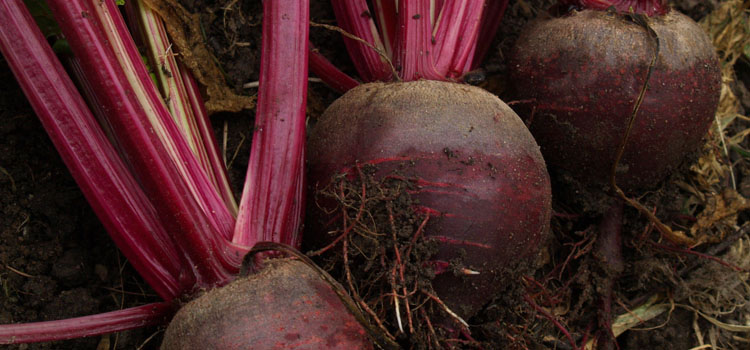
Beetroot can be harvested in two ways: for its leaves and for its roots. Twist off young leaves when you need them for salads and sandwiches, but only take a few from each plant, otherwise the root won't fatten up.
Harvest roots at whatever size suits you, from “baby” beets to chunky tennis-ball size. Don't leave them in the ground too long, as they will become hard and woody.
Harvest the roots by gathering all the leaf stems together with one hand and pulling gently upwards. The roots should come away from the soil easily, but if needed, use a hand fork for extra leverage, especially for cylindrical varieties. Twist off the leaves, leaving a small stub on the beetroot. Don't cut off the leaves or trim the roots, otherwise they will “bleed” and make a terrible mess!