What are the health benefits and effects of dragon fruit on the human body?
More and more people are growing the Radermachera sinica (China doll tree) in their offices or homes, because it not only carries an auspicious meaning, but also, as a large foliage-type potted plant, helps purify indoor air and protect the eyes. However, to grow it well, we first need to understand some relevant knowledge. Today, let's talk about the cultivation methods for the Radermachera sinica and what the precautions are.
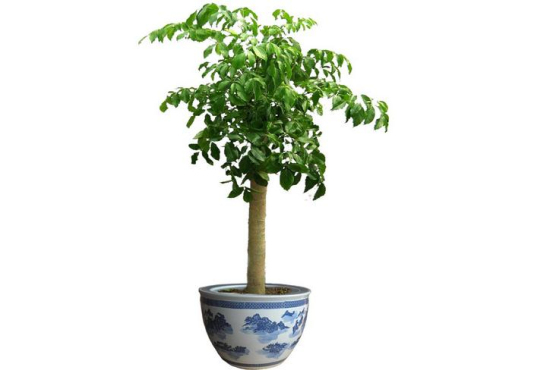
Cultivation methods and precautions for the Radermachera sinica:
1. Temperature: The Radermachera sinica likes a warm, humid environment. Keeping the temperature between 18°C and 21°C during the day and at night is its most suitable growing temperature.
2. Humidity: Both the soil environment and the indoor environment prefer humidity. Indoor humidity should be kept between 70 and 80%.
3. Light: The Radermachera sinica is a plant that likes sunlight but is also shade-tolerant. In the north, we generally grow it indoors, so there is no problem with direct sunlight. What it does fear is being placed in a dark place for a long time, where neither direct light nor scattered light can reach it - that would be bad.
4. Watering: In summer, a potted Radermachera sinica should be watered once every 3-4 days, but this also depends on the individual situation. In winter indoors in the north, the Radermachera sinica almost stops growing, so watering should be controlled so that the potting soil is simply not dry. When you water, water it thoroughly; if you do not water, you cannot pour even a single drop of water into the pot. This is the principle.
5. Pruning: The purpose of growing the Radermachera sinica is for ornament and to complement the indoor environment. If the tree shape does not look decent, then it is meaningless, so it needs pruning, generally into a mushroom shape or a rounded mound shape. Also cut off some old leaves and yellow leaves.
6. Pest and disease prevention: Pests generally include scale insects, mites, and aphids. Use Jie Bi Si, methidathion, Man Jing, pyridaben, phoxim, omethoate, and Decis to eliminate pests. As long as you ventilate and exchange the air frequently, pests generally will not appear. The Radermachera sinica's disease resistance is still quite strong. If the pest problem is not severe, you can remove them by hand.
In addition, when growing the Radermachera sinica, note: the Radermachera sinica likes warm, hot environments, and its suitable growing temperature is 20°C to 30°C. During the hottest part of midsummer, when the ambient temperature reaches above 30°C, appropriately provide shade with a canopy, increase water spraying on the environment and leaf surfaces, or move it to a ventilated, cool place with light shade to spend the summer. When late autumn arrives, when the ambient temperature drops to around 10°C, it should be moved into a shed or indoors in time. During overwintering, it is best to maintain a shed or indoor temperature of no less than 8°C, and at the lowest it must not be below 5°C, so as to avoid cold damage to the leaves or leaf drop. For household potted plants, it can be moved indoors to a room with air conditioning or an electric heater, ensuring the room temperature is not below 8°C, so that it can pass the winter safely.
The above is an introduction to the cultivation methods and precautions for the Radermachera sinica, which can serve as a certain reference. Of course, some specific details still need to be discovered by you during the growing process and then solved.