Is Mimosa pudica toxic, and can it be kept indoors?
Mimosa pudica is a very special plant. Once touched, it curls up shyly like a little girl. Some people put this special plant indoors, and some say Mimosa pudica is toxic! So, is Mimosa pudica toxic? Can it be placed indoors? In the spirit of seeking the truth, let's take a look together!
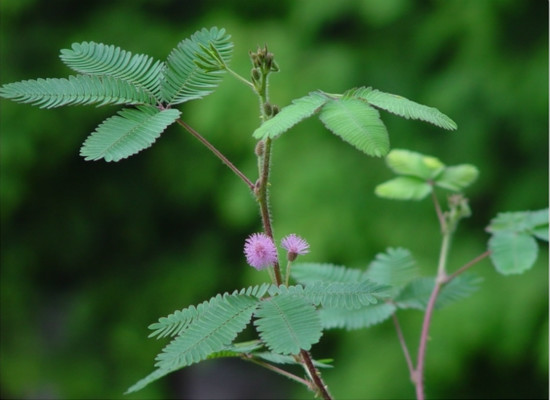
Is Mimosa pudica toxic?
The whole Mimosa pudica plant is mildly toxic. Mimosa pudica contains a substance called mimosine, and if you come into frequent contact with Mimosa pudica, it can cause hair to turn yellow and even fall out. Mimosa pudica does not harm the human body during the day, but at night, when Mimosa pudica cannot carry out photosynthesis, it releases toxic substances. Therefore, the editor suggests that Mimosa pudica is best not placed indoors; it can be placed on a balcony to avoid harm to the body.
For Mimosa pudica, an indoor environment is not conducive to its growth. Mimosa pudica needs strong light, and indoor lighting conditions cannot meet what Mimosa pudica needs to grow. Frequently touching Mimosa pudica is not only harmful to the human body, but also easily causes Mimosa pudica to drop its leaves. So, for the health of yourself and your family, and for the healthy growth of Mimosa pudica, it is still most suitable to grow Mimosa pudica outdoors.
Can Mimosa pudica be grown at home if there is a pregnant woman?
Households with a pregnant woman had best not grow Mimosa pudica. Although Mimosa pudica does not have a strong scent, it contains an alkaloid, and long-term contact can cause human hair to fall out. If Mimosa pudica is grown at home, it can cause pregnant women to lose hair, and in severe cases may lead to miscarriage. Growing some flowers and plants indoors is always somewhat unfavorable for pregnant women; not to mention pollen allergies, it will more or less have an effect on the fetus as well.
Can Mimosa pudica be grown at home if there are children?
Mimosa pudica is delicate, shy and cute, and it reacts with just a gentle touch. It is very lively and interesting, and we all love to touch it, let alone children. But Mimosa pudica contains toxic mimosine, and long-term contact can cause the hair follicles of skin cells to decline, thereby causing hair and eyebrows to turn yellow and even fall out. Therefore, households with children had best not grow Mimosa pudica.
Children's resistance is relatively weak, and the fragrance given off by the light purple flowers of Mimosa pudica may also cause discomfort in babies. Moreover, young children will put whatever they can see into their mouths to eat, and growing Mimosa pudica at home makes it very likely that a child will accidentally eat Mimosa pudica. Considering children's safety and health, the editor does not recommend growing Mimosa pudica indoors.
From this it can be seen that the claim that Mimosa pudica is toxic is indeed true. And households with pregnant women and children should be especially careful, and should try not to place Mimosa pudica indoors. That is the introduction on whether Mimosa pudica is toxic!