Detailed Explanation of Osmanthus Cultivation Methods and Growing Techniques
As the saying goes, in the bright spring month of March, peach and plum blossoms are gorgeous, and in the golden autumn of August, osmanthus is fragrant. If someone next door has planted an osmanthus, then when it blooms, you can smell its fragrance from far away. So, what are the cultivation methods for osmanthus? Here is a detailed guide to osmanthus growing techniques.
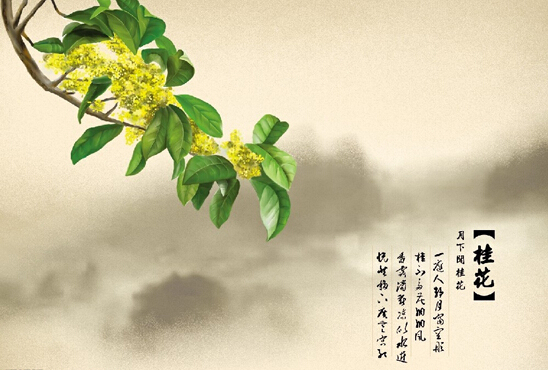
Osmanthus blooms with a rich fragrance that fills the air. Planting it in residential communities or by windows lets people enjoy the effect of "fragrance carried by the golden breeze." Osmanthus can be processed into foods such as osmanthus cake and osmanthus wine. Osmanthus belongs to the Oleaceae family and is an evergreen small tree. Its crown is oval-shaped, with luxuriant branches and leaves; the leaves are opposite, leathery, and glossy. The flowers come in yellow, white, orange, orange-red and other colors, with a strong fragrance. The seeds are black; the flowering period is September-October, and it bears fruit in April-May of the following year.
Because of the rich fragrance of osmanthus, many people are attracted to grow it. However, osmanthus is not especially easy to grow, and it also requires mastering professional growing techniques and methods. Below, the editor will introduce how to grow osmanthus.
1. Variety selection: Different varieties of osmanthus bloom at different times. For example, Yueyue Gui, Siji Gui and others are early-flowering varieties with the characteristic of blooming several times a year. Some varieties require a long vegetative growth period from seedling to flowering, such as Jingui, Yingui, Dangui and others, which often need several years to bloom. Therefore, try to choose short, robust early-flowering plants.
2. Potting soil preparation: Osmanthus likes to grow in slightly acidic soil rich in humus (a pH value of 5.6-6 is suitable). Never use alkaline soil or heavy clay soil for planting. The growing medium can be made by mixing 4 parts humus soil, 3 parts sandy soil and 3 parts dried, rotted manure with a small amount of fish scales, bone meal, etc., or by mixing 5 parts mountain soil, 3 parts leaf mold and 2 parts sandy soil. To overcome the alkalinity of the soil and water, during the growing period, spray once about every half month with a 0.1%-0.2% ferrous sulfate solution, which makes the branches and leaves dark green and also benefits growth.
3. Likes light, fears smoke and dust: Osmanthus likes sunlight and warmth and tolerates high temperatures, but it is not cold-tolerant. During the growing period, it should be kept in a wind-sheltered, sunny place. June-August is the period when osmanthus flower buds differentiate and form. If it can receive about 10 hours of full sunlight and high temperatures of 30-35 degrees every day, this can promote bud formation and increase the flowering rate. But in summer, never shade it, so as to avoid affecting flower bud differentiation. During overwintering, if the temperature is below 4 degrees and there is insufficient light, it is prone to leaf drop in early spring, which affects the next year's flowering.
4. Water at the right time: The number of times to water osmanthus depends on the weather at the time and the plant's growth condition. Generally, water once every 2-3 days in spring; in summer, temperatures are high and evaporation is great, and it is exactly the stage of osmanthus development and flower bud differentiation, so water once a day; in early to mid-September, the potting soil needs to remain moist, otherwise it is not easy to bloom. However, during the flowering period, do not water heavily, to prevent flowers from dropping. On rainy days, drain promptly to prevent waterlogging and root rot. Usually, keeping the potting soil at about 50% water content is suitable. Before bringing it indoors in early winter, water it thoroughly once, and during maintenance, water once around every 10 days at noon on sunny days, but the water temperature should preferably be close to room temperature.
5. Apply supplementary fertilizer skillfully: Osmanthus likes fertilizer and needs enhanced supplementary fertilizing. From April to May, apply once about every half month; from June to July, apply once every 7-10 days. Apply the last time in early August. In this way, osmanthus will not only grow luxuriantly but also bloom more and be fragrant. You can use rotted cake fertilizer water, chicken, duck and pigeon manure, fish scale water, superphosphate, bone meal, etc. If fertilizer is insufficient, there will be fewer branches and fewer flowers, and they will not be fragrant.
6. Prune appropriately: Osmanthus has a well-developed root system and strong sprouting ability. An adult osmanthus tree sends out new shoots twice a year. Therefore, to make it bloom abundantly and grow lush leaves and maintain the physiological balance between reproductive growth and vegetative growth, appropriate shaping and pruning must be carried out. After Mid-Autumn Festival, cut off all the leggy shoots produced in summer and autumn, leaving the robust spring-grown branches. Before sprouting the next spring, cut off thin and weak branches, densely growing branches, diseased and pest-damaged branches, etc. In this way, it not only helps ventilation and light penetration, but also fully concentrates nutrients on the spring-grown branches and flower buds, creating good preconditions for autumn flowering, achieving the effect of "one move, multiple gains."
The above is a brief introduction to osmanthus cultivation methods. After reading the above, everyone can try growing osmanthus, and perhaps there will be unexpected results.