What are the cultivation methods for Echeveria?
Echeveria is easy to care for and prefers a warm, dry environment with plenty of sunlight. It is not cold-tolerant, tolerates partial shade, fears waterlogging, and should be kept out of scorching sun. A fertile, well-draining sandy loam soil is ideal. In winter, the temperature should not drop below 10°C.
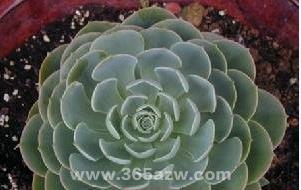
Repot Echeveria every year in early spring, removing shriveled dead leaves and excess offsets. Use a potting mix of well-draining peat soil or leaf mold plus coarse sand to aid drainage. Add some phosphorus fertilizer when repotting; no additional fertilizing is usually needed at other times. Echeveria prefers a dry environment during its growing season and does not need much watering. If the potting soil is too wet, the stems and leaves tend to grow leggy, which actually shortens the ornamental period. Especially in winter under low-temperature conditions, too much moisture causes the roots of Echeveria to rot easily, turning it into a rootless plant.
In the peak heat of midsummer, watering should also not be excessive; light misting is acceptable, but never let rain showers drench it. During the growing season, fertilize Echeveria once a month to keep the leaves fresh and green. However, over-fertilizing will also cause leggy stems and leaves. During the growing season, place the pot in a ventilated, well-lit spot; in winter, move it indoors for warmth, keep the room temperature around 10°C, and provide ample light. Echeveria that is 2-3 years old or more tends to age, so new seedlings should be cultivated for timely renewal.
Echeveria is often affected by rust disease, leaf spot disease, and root-knot nematodes. It can be controlled by spraying with a 75% chlorothalonil wettable powder solution diluted 800 times, and root-knot nematodes can be controlled with 3% carbofuran granules. Among insect pests, the black vine weevil is a threat and can be killed by spraying with a 25% carbaryl wettable powder solution diluted 500 times.