How to plant rain lilies? A step-by-step guide to planting methods
Rain lilies are actually very easy to grow, though beginner gardeners may not yet know much about how to plant them. This article starts from the very basics, covering rain lily sowing, bulb planting, and routine care, to explain how to plant rain lilies, aiming to help gardeners understand rain lilies in just one article.
Let's first talk about routine care for rain lilies, then bulb planting, and finally rain lily sowing.
1. Routine care for rain lilies
Rain lilies can simply be grown with minimal care, meaning you don't need to tend them too meticulously. Generally, covering the bulbs with 2-3 cm of soil is enough. For a 20-30 cm pot, plant about 5-6 bulbs. A medium-depth pot, neither shallow nor deep, will do. After planting, apart from watering and fertilizing, there is almost nothing else to do. Give them plenty of light in daily care (in summer, when the sun is particularly harsh on high floors, you can shade them appropriately). In gardeners' words, they fear neither cold nor heat, and can be planted anywhere.
2. Planting rain lily bulbs
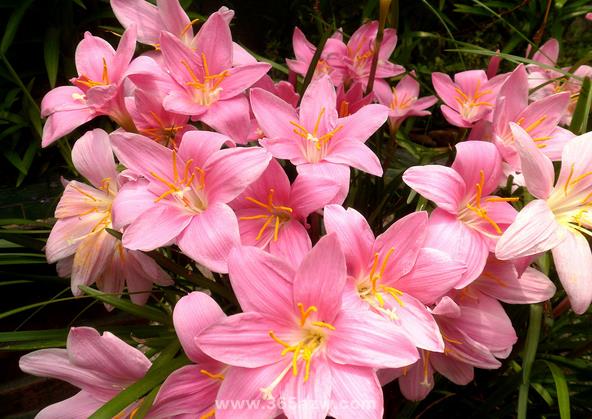
After reading about routine care, I believe gardeners basically have a good understanding. The soil covering depth and planting density have been explained, so I won't repeat them here. Here is a photo of a gardener's rain lily bulbs.
3. Sowing rain lilies
Sowing is also a common method among gardeners, with three approaches: soil sowing, water floating, and pre-sprouting. All three share a common trait: they won't germinate if the temperature is too low. For most color varieties of rain lily, the germination rate is basically zero below 20 degrees, so gardeners must consider the temperature issue when sowing.
Below is a summary of one gardener's experience, which gardeners can also refer to:
Sowing rain lilies or planting bulbs can be done year-round, but spring is best (there are also autumn-sowing varieties). Simply dig up the bulbs, plant 3-5 bulbs per spot, water to maintain appropriate moisture, and they will easily survive. When digging up the bulbs, be careful not to damage them. If there are too many leaves and flower stems, cut off the upper part, keeping the intact bulb and 6-8 cm of leaves for planting. If the bulb has already sprouted flower buds, after dividing and watering thoroughly, it can still bloom. The flowering period of rain lilies is from April to September.