How to grow freesias? Detailed guide to cultivation methods and precautions
When it comes to the cultivation methods and precautions for freesias, explaining them from a theoretical standpoint could take a very long article. This article shares the practical care experience of a flower enthusiast, covering not only cultivation knowledge but also everyday precautions for caring for freesias, making it highly valuable as a reference for beginner growers.
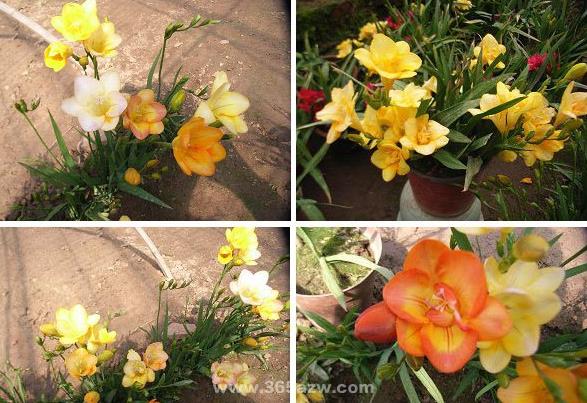
Freesias naturally prefer a sunny, warm and humid environment. They are not cold-hardy but can tolerate cool temperatures. They go dormant during hot, dry conditions. Dormant corms complete their dormancy after about three months in an environment above 28 degrees. At that point, providing a growing environment with a nighttime temperature below 15 degrees will trigger sprouting. So when some growers read related materials and become confused about the temperature requirements for cultivation, this brief explanation of the freesia's biological habits tells you: as long as the corms have gone through a period of high-temperature dormancy and are then given a period of low temperature, dormancy can be broken (mainly low nighttime temperature; as long as daytime temperatures do not stay above 30 degrees consistently, effective sprouting will occur).
Therefore, freesias can be grown in most regions. The growing medium does not need to be particularly demanding; choose according to personal preference. Based on descriptions of the soil in its native habitat, I use ordinary sandy loam for cultivation. Planting depth depends on the corm size; the standard depth is 1.5 to 2 times the corm's height. Too deep and the plant base is prone to rot when the medium stays wet; too shallow and the plant tends to fall over. After planting, simply water thoroughly and place in a spot with plenty of sunlight. If the ambient temperature is somewhat high, you may place it in a shaded spot as appropriate, then move it once seedlings emerge.
Here I want to focus on the leggy growth issue that everyone worries about. Plant leaves function not only in photosynthesis but also in cooling and transpiration; when surplus water is available, it promotes leaf growth. All things grow by relying on the sun, and at this point the plant's phototropism and instinct to compete for sunlight, combined with ample water, cause frantic growth in locations lacking light. Water, fertilizer and sunlight are the subjects; the growing medium and temperature are the ministers; daily management is the ruler. Once seedlings have emerged evenly, immediately control watering; as long as the plant is not slightly wilted, do not water no matter how dry the medium is (this method is best suited to environments with less-than-ideal light). Only this way can height be effectively controlled. When seedlings reach 10 cm tall, begin fertilizing in conjunction with watering. Fertilize when the medium is dry, then water again the next day; then water again when the medium dries, repeating the cycle.
You can adjust the fertilizing frequency yourself. For growers using peat-based medium, it is recommended to reduce watering frequency and increase fertilizing frequency. Temperature is not the main cause of leggy growth; the key lies in water, fertilizer and light. When the plant has five true leaves, flower bud differentiation begins; at seven leaves, flower stalks begin to branch. When flower buds appear, gradually increase watering as appropriate. As long as the above requirements are met, leggy growth can be effectively controlled, yielding a standard potted freesia that is compact, sturdy and upright.