Croton Growing Methods and Picture Appreciation
Croton, perhaps some friends are not very familiar with it. This is a very magical plant, whose leaf colors are extremely rich, and its most distinctive feature is the colorful and changeable leaf shapes and colors. Therefore, this plant has high ornamental value, and it is planted in some garden areas in our daily lives. So friends attracted by croton are very curious about the growing methods of croton. So how do you grow croton? Below let us take a look at croton pictures and learn about croton and its growing methods.
More home plant growing: Photinia fraseri growing methods, String of Pearls growing methods, grass head doll growing methods
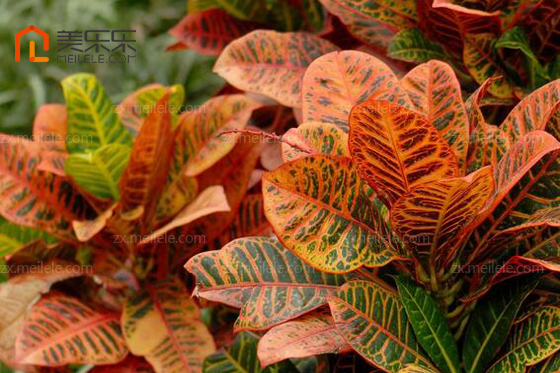
What croton is
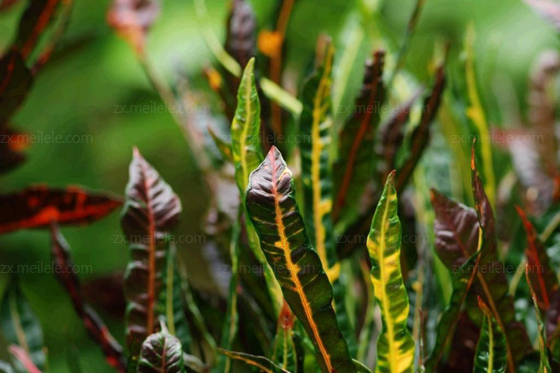
Croton, also called variegated laurel or garden croton, is actually a shrub or small tree plant in the Euphorbiaceae family. It is native to Malaysia and the Pacific region. The plant is about 6 m tall, with leathery leaves and very rich and bright colors. Croton has various forms, and different varieties show different forms. Some appear long linear, while others are lanceolate or ovate and deeply lobed, etc. Moreover, croton is a typical tropical and subtropical plant, and its leaf shape and color are world-famous, with truly high ornamental value.
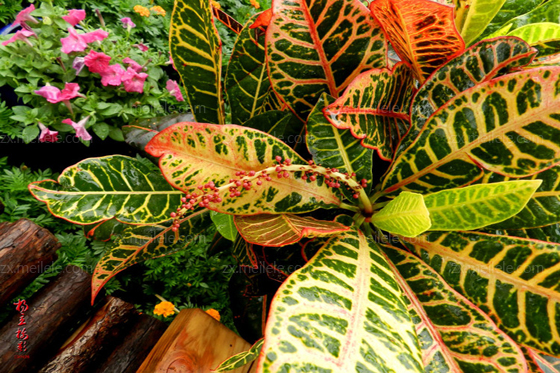
Croton growing methods
1. Temperature: Croton generally appears in tropical regions, so its temperature requirements are quite high. Its suitable growing temperature is about 20 to 30 degrees. The plant has poor cold tolerance, and the temperature in winter should not be lower than 13 degrees. If the temperature is lower than 10 degrees for a long time, the plant's leaf color will gradually become dull and lack luster. Even worse, if the temperature is about 4 to 5 degrees, the plant will die from cold damage.
2. Light: Croton is a light-loving plant and needs sufficient light during the growing period to grow normally. If the light is insufficient, the leaf color will be dull, and spots and markings will appear on the leaf surface.
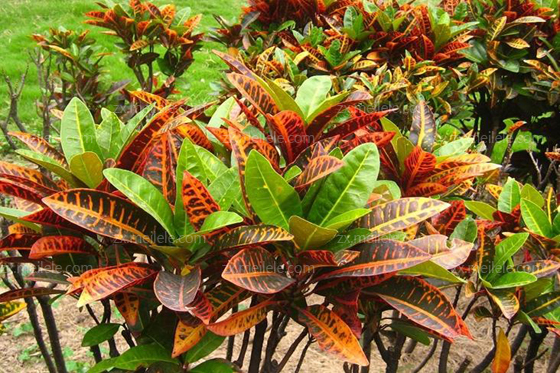
3. Watering: Croton likes moisture and fears dryness, and needs a sufficient water supply to grow normally. Especially during the growing period, the plant grows rapidly, so while watering more, it is also necessary to spray water on the leaf surface every day. In winter, when the temperature is low, watering can be appropriately reduced.
4. Soil: Croton does not have very high soil requirements. It is very good to grow it in fertile clay loam with strong water retention.
5. Fertilizing: Croton is a plant that quite likes fertilizer. Under normal circumstances, it needs to be fertilized once every 1 to 2 weeks, but fertilizing should not be excessive, and an appropriate amount is enough. Also, in winter the plant grows slowly, so fertilizing should be reduced.
Croton picture appreciation
1. Croton picture one
For modern and contemporary people, croton is more of a very good-looking decorative tree species on the market. Its outstanding appearance is the deepest impression the plant leaves on people. There is no way around it, because croton is really too gorgeous. Compared with ordinary plants and flowers, croton is not weak at all. Therefore, compared with the emerald green tree species in our impression, the rich colors of croton seem especially magical. Looking at those colorful leaves, it is both funny and impossible not to admit that they are very beautiful.
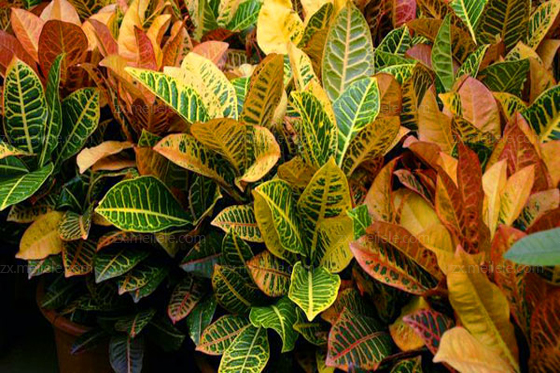
2. Croton picture two
Croton is a famous foliage plant, and its most famous feature is its unique leaves. The plant's leaf shape and leaf color changes are very magical, with an indescribable beauty of color and posture. Moreover, it is understood that croton is the foliage plant with the most changes in color and heartbeat in all of nature, so the plant's ornamental value is very high. The plant's unique leaf shapes and colorful color changes make people marvel again and again whenever they see them. Therefore, many modern friends greatly appreciate croton and grow it.
Summary: Although the growing methods for croton are very simple, it is said that croton is a plant not suitable for indoor growing. So even if everyone likes croton, it is best to place it outdoors for growing, as that is safer.
(Note: This article is an original article from Meilele Decoration Network. Reproduction is prohibited without permission. If malicious reproduction is found, legal action will definitely be pursued. If you like it, please share it more.)
[You may be interested in]
☑ The flower language of blue roses ☑ The flower language of rosemary ☑ The flower language of lilies ☑ The flower language of sunflowers ☑ Haworthia truncata
☑ How to grow Kalanchoe blossfeldiana ☑ The flower language of four-leaf clovers ☑ The flower language of calla lilies ☑ How to grow wintersweet ☑ Cymbidium faberi
Therefore, many modern friends greatly appreciate croton and grow it.
Summary: Although the growing methods for croton are very simple, it is said that croton is a plant not suitable for indoor growing. So even if everyone likes croton, it is best to place it outdoors for growing, as that is safer.
(Note: This article is an original article from Meilele Decoration Network. Reproduction is prohibited without permission. If malicious reproduction is found, legal action will definitely be pursued. If you like it, please share it more.)
[You may be interested in]
☑ The flower language of blue roses ☑ The flower language of rosemary ☑ The flower language of lilies ☑ The flower language of sunflowers ☑ Haworthia truncata
☑ How to grow Kalanchoe blossfeldiana ☑ The flower language of four-leaf clovers ☑ The flower language of calla lilies ☑ How to grow wintersweet ☑ Cymbidium faberi