How to Grow Alocasia macrorrhizos and the Secrets to Making It Thrive
Although Alocasia macrorrhizos (giant taro) is somewhat toxic, it is also an excellent ornamental plant, and many people plan to grow it. Since you want to grow Alocasia macrorrhizos, you need to know the methods for growing it, so that you can grow it correctly and effectively. This article introduces the growing methods for Alocasia macrorrhizos.
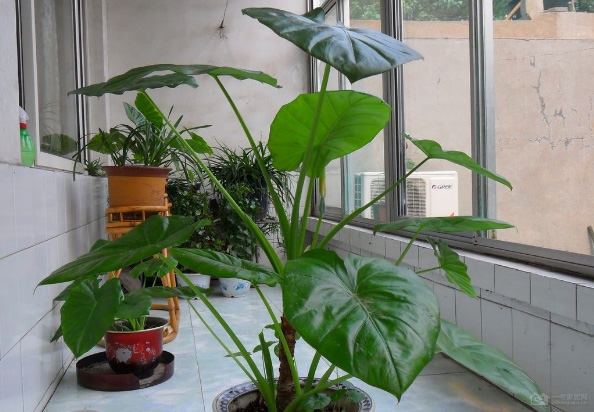
Growing Methods for Alocasia macrorrhizos
Alocasia macrorrhizos prefers a warm, humid environment with slight shade, but it needs plenty of sunlight during the flowering period; otherwise the spathe will be tinged with green, affecting its quality. You must ensure 35 hours of light per day, or the leaf stalks will elongate and reduce its ornamental value.
Alocasia macrorrhizos is not very cold-hardy, so it should be moved into a greenhouse in mid-October. In summer it needs shading, and you should frequently spray water to cool it down and maintain humidity.
Alocasia macrorrhizos prefers moist, fertile soil, which is what people often call "heavy fertilizer and heavy water" - it needs plenty of watering during the growing season. Alocasia macrorrhizos is a very common green houseplant, but because it is a tropical plant, in the south it generally does not bloom. However, if the temperature and other conditions at home are suitable, it will also flower.
It does not have high requirements for soil, but it grows best in well-drained sandy loam or humus loam containing organic matter. Because Alocasia macrorrhizos is fond of warm, humid and semi-shaded environments by nature and is not cold-tolerant, during the growing season you must keep the potting soil moist at all times.
In summer, the flowerpot should be placed in a semi-shaded, well-ventilated spot, and water should be sprayed frequently around it and on the leaf surfaces to increase air humidity, lower leaf temperature and keep the leaves clean.
Because Alocasia macrorrhizos grows very quickly, fertilization during its growth must be moderate; applying a light fertilizer of nitrogen, phosphorus and potassium 1-2 times a month is enough, otherwise it easily causes the lower part of the stem to become bare, affecting its ornamental value.
Most of the growing methods for Alocasia macrorrhizos are those introduced in this article. Those who plan to grow Alocasia macrorrhizos can first learn its methods, then make specific arrangements, and pay more attention when growing it, to ensure that Alocasia macrorrhizos is grown beautifully and lushly green.