How to Grow Spider Plants Well: Master 4 Key Points for Careful Cultivation
The spider plant has a graceful form, with green leaves drooping low and dancing in the wind like leaping cranes, adorning the home. It not only has ornamental value but also carries auspicious meaning, making it quite popular among enthusiasts. So, how do you grow spider plants well? In fact, you just need to master the 4 key points of spider plant cultivation.
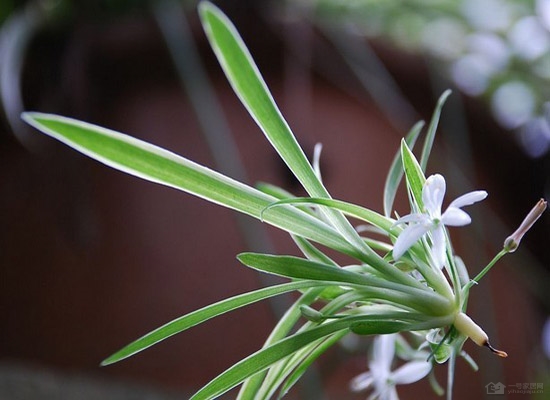
The spider plant is also known as pendulous pot grass, Guilan, hook orchid, and folded crane orchid; in Western Europe it is also called spider grass or airplane grass, and it originated in South Africa. It belongs to the Liliaceae family as a perennial evergreen herbaceous plant. To grow spider plants well, there are the following 4 key points.
I. Repotting and Changing Soil
For potted spider plants, in order to achieve lush stems and leaves, the soil and pot should be changed once every year in March to April. If the pot is relatively deep and the base fertilizer is sufficient, repotting can be done once every two years. When repotting, knock the plant out of the pot, cut off dead and rotten roots and excess root systems, replace with new culture soil rich in humus, and then apply livestock hoof and horn pieces or decomposed cake fertilizer as base fertilizer. After planting, place it in a semi-shady, warm spot to recover. The most suitable growing temperature for spider plants is around 25°C. After the plant has recovered to healthy growth, hang the flower pot under a corridor eave or in a suitable indoor position. Generally, the height should be such that it does not bump your head, and attention should be paid to ventilation.
II. Appropriate Light
Spider plants prefer a semi-shady environment. In spring and autumn, avoid direct strong sunlight; in summer, when sunlight is especially intense, only let it receive some slanting light in the morning and evening, and shade 50%-70% of the sunlight during the day, otherwise the leaf tips will dry up. Variegated varieties are especially afraid of strong sunlight. Golden-edge spider plants grow more beautifully in weak light, with the yellow edges more obvious and the leaves more glossy. But in winter, it should receive more sunlight to keep the leaves tender and fresh green. Household potted spider plants should be placed in front of a south-facing window, otherwise the leaves will lose their luster or even wither.
III. Moderate Fertilization
Spider plants are foliage plants that are relatively tolerant of fertilizer. If fertilizer and water are insufficient, they easily become scorched and aged, with yellowing leaves, losing their ornamental value. From late spring to early autumn, apply organic fertilizer liquid once every 7-10 days, but for variegated varieties such as golden-edge and golden-heart, less nitrogen fertilizer should be applied to avoid the variegated leaf color becoming lighter or even disappearing, which affects appearance. You may appropriately apply organic fertilizer fermented from bone meal, eggshells, and the like. After full fermentation, take an appropriate amount of diluted liquid and apply it once every 10-15 days, which can make the variegated leaves bright and vivid.
IV. Proper Watering
Spider plants prefer a moist environment, and the pot soil should be kept moist regularly. In summer, watering should be sufficient; around noon and in the evening, water should also be sprayed on the branches and leaves to prevent the leaves from drying out. Indoor areas often have a lot of dust. If a lot of dust accumulates on spider plants, it not only affects growth but also damages the fresh, bright appearance of the branches and leaves, so the branches and leaves should be sprayed and washed frequently to keep them bright and beautiful. Dead leaves and yellow leaves at the lower part should be removed at any time, and normal humidity should be maintained at ordinary times; it should not be too dry or too wet.
For plants, water, soil, sunlight, and fertilizer are indispensable. The same is true for spider plants, and they are very easy to keep alive. As long as you cultivate them with care, spider plants will reward you with a lush green breath of spring.