Can a cactus placed next to the computer really protect against radiation?
For a long time, many people have kept cacti in order to help themselves fight the radiation produced by computers or phones and avoid being troubled by radiation. But does a cactus protect against radiation? Some people are not quite sure about this question, so this article gives a detailed introduction to the relevant knowledge for everyone.
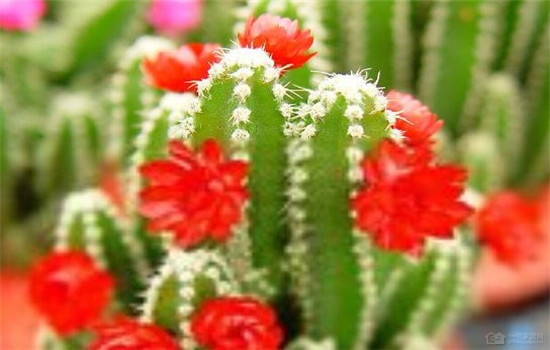
Experts believe that cacti have no radiation-protection effect at all. Many people think cacti have a radiation-protection function because cacti live in the desert, where the environment is dry and the "solar radiation" is very strong, so they associate this: a plant that survives such strong ultraviolet light must have a radiation-protection function, and thus they put a tall hat of being able to protect against radiation on the cactus.
In fact, this claim has no scientific basis at all, and only people who have learned nothing would take it as true. Anyone who has studied plant physiology will know that plants can only absorb red light, far-red light (infrared), violet light and ultraviolet light from solar radiation, which is the guarantee for them to complete photosynthesis. But computer radiation, besides containing light radiation such as infrared and ultraviolet, also contains a large amount of low-energy X-rays, non-ionizing radiation (low-frequency and high-frequency radiation), electrostatic electric fields, electromagnetic radiation and electromagnetic waves. These rays and electromagnetic waves cannot be absorbed by a tiny cactus; instead, the cactus will be scorched by them.
But why does everyone like to place a potted cactus on the computer desk? First, because it is widely spread online; second, because some unscrupulous merchants, in order to give their small potted plants a good market, loudly tout the radiation-resistance function of cacti, making this originally wrong claim even more deeply rooted in people's hearts; third, because placing a green plant on the computer desk also has the effect of pleasing the eyes and making the environment a bit better.
Sometimes I feel people are very cruel: for the sake of pleasing their own eyes and their own comfort, they do not hesitate to kill these green plants. In fact, placing plants such as cacti and aloe next to the computer is equal to slowly killing them. If you observe carefully, you will find that many plants show symptoms of rotten cores and wilting, and then die. This not only fails to protect against radiation, but instead kills another tiny living being, further adding to the sin of computer radiation. Therefore, people in the new era should respect scientific facts and no longer let computer radiation kill more plants.
In fact, computer radiation is not that terrifying. According to research by relevant experts, the radiation from electrical appliances and computers in our daily life does not exceed the range we can bear, so there is no need to worry too much. As long as you do not operate the computer for too long and exercise and move around often, it will not cause harm. Of course, pregnant women still need to take certain measures, since computer radiation does have a certain effect on the fetus.
Does a cactus protect against radiation? A cactus does have certain methods of resisting radiation, but its ability to resist radiation is not one hundred percent, so besides using cacti to resist radiation, you also need to adopt multiple methods to resist radiation; only then will its radiation-protection effect be better.