Ivy likes warmth and is not cold-tolerant; temperature must be watched when growing it
As a plant that many people grow, ivy naturally has its benefits. Ivy is fresh green in color, beautiful in appearance, can purify the air, and is good for the body. However, growing ivy is not particularly simple; ivy likes warmth and is not cold-tolerant, so plenty of attention is needed when growing it. Next, let the editor introduce the growing methods and points to note for ivy!
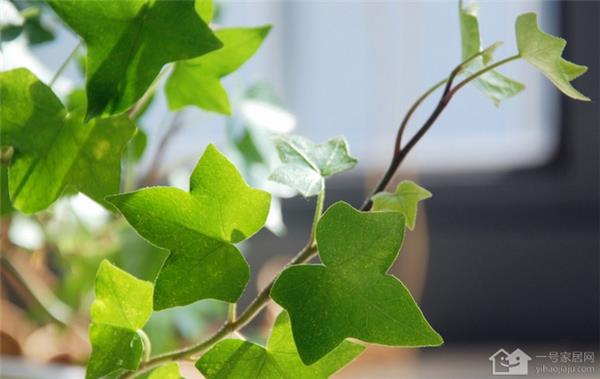
Growing methods for ivy:
1. Propagation by cuttings
Ivy is mainly propagated by cuttings. When taking cuttings, note: do not use perennial old branches as cuttings; instead choose thick, robust young shoots; be careful to protect the bud points on the cuttings, otherwise the survival of the new plant will be affected.
2. Suitable temperature
Ivy likes warmth, and the suitable growing temperature is 20°C-25°C. It fears heat and is not cold-tolerant. Therefore, when keeping it indoors, pay attention to ventilation and cooling in summer, and in winter the room temperature should preferably stay above 10°C, and must not fall below 5°C.
3. Moderate light
Ivy likes light and is also fairly shade-tolerant. Grown under semi-light conditions, its internodes are shorter, its leaf shape is uniform, and its leaf color is vivid, so it is best placed in a bright spot indoors. If in spring and autumn you can each choose a period to place it in a shaded spot outdoors so that it gets more sunlight in the morning and evening, it will grow vigorously with bright green leaves. But be careful to prevent direct strong light, otherwise it is prone to sunscald.
4. Appropriate watering
During the growing season, water by the rule of "dry then wet"; do not let the potting soil become too moist, otherwise it easily causes root rot and leaf drop. In winter, when room temperature is low, watering must especially be controlled, keeping the potting soil only slightly moist. The northern winter climate is dry, so it is best to spray and wash with clean water close to room temperature once a week to maintain air humidity; then the plant will look lively, with tender green and glossy leaves.
5. Reasonable fertilizing
For home cultivation of ivy, the potting soil should preferably be a growing medium made by mixing leaf mold or peat soil with 1/4 river sand and a small amount of bone meal. During the growing season, apply a dilute cake fertilizer solution once every 2-3 weeks. Generally, do not fertilize in summer and winter. When fertilizing, never apply too much nitrogen fertilizer alone, otherwise the patterns and patches on the leaves of variegated varieties will fade to green. The ratio of nitrogen, phosphorus and potassium should preferably be 1:1:1. In the peak growing season, you can also spray the leaves 1-2 times with a 0.2% potassium dihydrogen phosphate solution, which will make the leaf color even more beautiful. But note that when applying liquid fertilizer, avoid staining the leaves, so as not to cause the leaves to scorch.
6. Timely pruning
When ivy grows to a certain height, pay attention to pinching it back in time; pinching back can encourage more branching and make the plant fuller in shape.
Ivy diseases and solutions:
The main diseases include algal leaf spot, anthracnose, bacterial leaf rot, leaf spot, root rot, and phytophthora blight. Among pests, leaf roller borers, scale insects and red spider mites are the more serious.
Solutions for ivy diseases:
1. In late autumn or early spring, clear away dead branches and fallen leaves, and promptly cut off diseased branches and diseased leaves and burn them;
2. Before disease onset, spray a 65% zineb 600-fold solution for protection;
3. Fertilize and water reasonably, and pay attention to ventilation and light;
4. In the early stage of disease, spray a 50% carbendazim or 50% thiophanate 500-600-fold solution, or a 75% chlorothalonil 600-800-fold solution.
5. After disease onset, spray a 97% sodium rusticide 250-300-fold solution (with 0.1% washing powder), or a 25% triadimefon 1500-2500-fold solution.
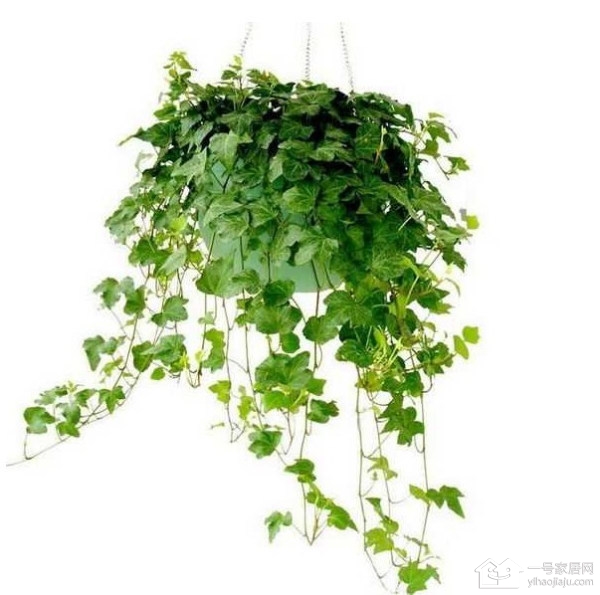
The above is the editor's introduction to the growing methods and points to note for ivy. Have you learned it? Ivy is one of the common potted green plants in the home. Growing plants requires care so that they can be well tended and grow healthily.